LIVE STREAMING 24 JAM – KOMPASTV

Halo, Sahabat KOMPASTV! Untuk pengalaman menonton yang lebih menyenangkan dan lebih baik, silakan ubah kualitas videomu ke 1080p HD!

Untuk pengguna laptop/PC/Smart TV: dari menu setting (ikon gerigi) di kanan bawah layar YouTube-mu, Lalu pilih QUALITY dan mode quality ke 1080p.
Bagi pengguna smartphone: dari menu setting (ikon titik tiga) di kanan atas layar YouTube-mu, lalu pilih QUALITY dan pilih ke mode quality ke 1080p.

===

Jangan lewatkan live streaming Kompas TV 24 jam non stop di https://www.kompas.tv/live. Agar tidak ketinggalan berita-berita terkini, terlengkap, serta laporan langsung dari berbagai daerah di Indonesia, yuk subscribe channel youtube Kompas TV. Aktifkan juga lonceng supaya kamu dapat notifikasi video terbaru dari Kompas TV.

Sahabat Kompas TV juga bisa memperoleh informasi terkini melalui website: www.kompas.tv

Media sosial Kompas TV:
Facebook: https://www.facebook.com/KompasTV
Instagram: https://www.instagram.com/kompastv
Twitter: https://twitter.com/KompasTV
LINE: https://line.me/ti/p/%40KompasTV

#kompastv #livestreaming #breakingnews

El Salvador’s Water Defenders and the Fight Against Toxic Mining

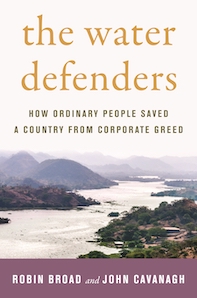
In 2017, El Salvador became the first country in the world to ban metal mining. Robin Broad and John Cavanagh present the story of the social struggles and legal battles behind that ban in The Water Defenders (Beacon Press, 2021). 

Broad and Cavanagh spent over a decade collaborating with the international solidarity movement supporting the Salvadorans’ fight against a proposed Pacific Rim gold mine. Their account is rife with valuable detail about the mobilizations, negotiations, alliance building, international campaigns, and legal maneuvers that stopped the Pacific Rim mining concession and led to the national ban.  

The authors emphasize the importance of reaching out to government officials, church authorities, and long-standing political adversaries in building a broad and strong coalition. We learn that a right-wing environmental minister, Hugo Barrera, handed the water defenders an essential bit of legal strategy, and a conservative archbishop became an anti-mining activist upon hearing, in an initially tense meeting with the water defenders, that cyanide was being used to extract gold dust from the mountains. 

“Unbeknown to the water defenders,” Broad and Cavanagh write, “there was more to Sáenz Lacalle than Opus Dei. The archbishop held a degree in chemistry. He knew well the toxic impact of cyanide. And with that knowledge, he did a 180-degree flip on mining.”   

The authors also emphasize the absurdity of institutions like the World Bank’s International Centre for Settlement of Investment Disputes (ICSID). Much of the tension in The Water Defenders stems from the almost-seven-year-long Pac Rim lawsuit against El Salvador at the ICSID. Pac Rim sued the Salvadoran government for not issuing them a mining permit. It took the ICSID six years and 10 months—and cost the Salvadoran government nearly $13 million in legal fees and expenses—to rule against the mine. The ICSID based its ruling on the very legal issue that Barrera had pointed out during a National Action Week on Mining in 2006: The mine did not own the land, and the landowners did not want the mine.  

And while both the authors and the water defenders met that legal decision with relief, if not celebration, Broad and Cavanagh wisely question the legitimacy of institutions like the ICSID and the rules they seek to enforce: “Why did a panel of three well-paid ICSID arbitrators—who … collectively made over $1.2 million in fees (excluding expenses) on the case—get to decide whether El Salvador’s mining law … was legal? Why should a panel of three de facto judges from other countries, using a biased set of rules, get to decide whether a sovereign nation’s laws were legal? We found this completely wrong, completely outrageous.” 

Outrage is a frequently occurring sentiment in a story that begins with “white men in suits” drilling for gold. In the early 2000s, Pacific Rim Mining Corporation—acquired by OceanaGold in 2013—started drilling exploration wells in Cabañas Department, about 40 miles northeast of San Salvador. The authors describe Pac Rim “as one entity operating in its Canadian headquarters, as a Cayman Island shell company, and on the ground in El Salvador.” 

At that time, there were no mines active in the region, and thus no opposition to mining. A local mayor from the right-wing ARENA party promoted landfills and industrial hog farms as “development” projects. Local opposition organized against him, stopping the landfill but not the 70,000 hogs. 

Brothers Marcelo and Miguel Rivera, Broad and Cavanagh write, were key members of that opposition. They founded the first library and culture center in the town of San Isidro, in Cabañas, by going door-to-door to collect donated books. They built a few shelves in their family’s living room and called it the San Isidro Foundation for Culture and the Arts. Soon they had more books than space and secured permission to use a municipal building that had been abandoned since the Civil War, when it was used to store corpses.  

The Rivera brothers and activists like Vidalina Morales and Antonio Pacheco of the local Association for Economic and Social Development (ADES) were quickly alarmed by the dried-up springs and groundwater sources caused by the mine’s exploratory drilling. They would become some of the earliest and most dedicated water defenders. They organized trips in 2004 and 2005 to visit mines in Honduras, where they saw the destroyed forests, dying rivers, skin diseases, and displaced communities caused by cyanide heap-leach mining firsthand. They returned more committed than ever to defend their forests, rivers, and communities. 

Pac Rim was also quite committed to digging up the gold dust that lay beneath those forests, rivers, and communities. They began to throw money around to the mayor and host all manner of happy public events to promote the ideals of “development” that mining promised. 

Broad and Cavanagh describe a few of these events, and the water defenders’ ingenious ways of subverting them. For example, Pac Rim bankrolled a local soccer tournament. Marcelo Rivera organized a team and raised the money to make uniforms that read “Out With Pac Rim” and “No to Mining.” They won the tournament. 

In another case, Broad and Cavanagh write, “At one of their community meetings, a Pac Rim official boasted that cyanide was so safe that he was more than happy to drink a glass of a favorite local drink, horchata, laced with a white power he claimed was cyanide. The official, we are told by Miguel, backed down when community water defenders insisted on authenticating the cyanide sample before the liquid was drunk.”  

Miguel Rivera then told the authors, “The company thought we’re just ignorant farmers with big hats who don’t know what we’re doing.” 

Unfortunately, there is something of that same assumption lurking in The Water Defenders. The insistence on repeating the descriptor “ordinary people” in the subtitle and throughout the book strikes an odd note. These are people who risked, and some lost, their lives to defend their homes and communities and in so doing also achieved something unprecedented, something remarkable: a national ban on metals mining. What then does the term “ordinary” do here? 

The answer lies, I think, in asides that Broad and Cavanagh make, such as this one, quoted in relation to the water defenders’ refutations of the miners’ claims about job creation: “The water defenders may not have had PhDs in economics, but they certainly had done their research.”  

Perhaps Broad and Cavanagh just want to sound pithy, or wink at their academic and urban English-language readers, but the logic here is insidious: True knowledge must be certified, or in other words, legitimate knowledge must proceed from an academic discipline—economics—and an academic institution, the university, capable of granting a PhD. Notice how “research,” that is, the intellectual work that the water defenders did, is positioned as less than a “PhD in economics.” I fear that the term “ordinary people” does something similar: It positions rural people as somehow less than the urban and academically certified. 

I do not think that Broad and Cavanagh do this on purpose—they write with admiration of the water defenders they met, befriended, and worked with—but this unacknowledged assumption haunts the book. The authors seem constantly surprised by the intelligence, creativity, and skills of the “ordinary people.” 

For example, they write, “The popular wisdom on the environment is that it is the wealthier people in richer countries who care the most. The poor, it is often argued, cannot afford to worry about the environment. What then led Marcelo, Vidalina, and other ordinary, poorer farmers to become Water Defenders, to lead the charge to protect watersheds in El Salvador?”  

I wonder for whom such “wisdom” is popular and who precisely makes such arguments? This sounds to me like the pro “development” reasoning of the very mining executives and World Bank arbiters the authors rightly criticize. And again, the insistence on describing the people fighting for their homes, for their land and water, and for their lives as “ordinary” and “poorer” farmers seems to reveal more about the class assumptions of the describers than the common attributes of the described. 

Something else that haunts this book is the brutal 2009 abduction, torture, and murder of Marcelo Rivera. The first sentence of The Water Defenders reads, “In late June 2009, the two of us received deeply disturbing news: Marcelo Rivera had been disappeared.” 

The authors write that they never met Marcelo Rivera and had first heard of him only a month before, in May 2009. That was when the National Roundtable on Mining in El Salvador was selected to win the Institute for Policy Studies (where Cavanagh works) Letelier-Moffitt Human Rights Award. They briefly describe Rivera’s disappearance and eventual discovery, murdered, at the bottom of a well.    

“Though we never met Marcelo,” they write on the second page, “we have been haunted by him and the circumstances of his death ever since. Who killed Marcelo? And why?” 

The authors go on to repeat this question at several points throughout the book. After describing the October 2009 award ceremony in Washington where Broad and Cavanagh first met a number of the water defenders in person, they write, “On that balmy evening in 2009, who could have guessed that Miguel’s questions [about the ICSID lawsuit] and Vidalina’s call to action would pull us two—and thousands of others around the world—into the vortex of three intertwined unknowns for nearly a decade to come?” 

The first of these unknowns, they write, “was the on the ground mystery: Who killed Marcelo and why? Not just who carried out the brutal killing. Who was the mastermind?” 

The second unknown was whether El Salvador could “possibly become the first nation on Earth to ban mining,” and the third was whether or not “little El Salvador [could] possibly prevail against the global mining industry in Washington, DC.”  

While The Water Defenders addresses the second and third of these questions in great length—and is valuable for doing so—it offers only a cursory treatment of the first. 

The timing and the context of Rivera’s murder make Pacific Rim an obvious suspect: The motive is there. Broad and Cavanagh write that San Isidro Mayor José Bautista also had political motives including but not limited to Rivera’s anti-mining organizing. The authors also tell us, unsurprisingly, that Salvadoran authorities never seriously investigated Rivera’s murder—nor the subsequent murders of other water defenders—but called it a “common gang crime” and arrested a few “gang members.”  

We never learn, however, what those “gang members” said about Rivera’s murder and their arrest or whether or not anyone else tried to investigate. Initial investigative questions are never posed in the book: Were there any witnesses to his abduction? If not, who was the last person to see Rivera? Where was he? Did the government or anyone else carry out forensic analysis of the area around the well where his body was found? Did any independent investigators speak to the men charged in his murder?  

While no family member, activist, or writer is responsible for investigating political murder—though often they are the only ones who do so—The Water Defenders fails to rigorously address the very question it uses as a narrative hook, and readers, too, are left haunted and wondering who killed Rivera and why. 

BITTE NICHT KLICKEN

Mois:
https://www.instagram.com/moiskid/

KeepsHaram:
https://www.instagram.com/keepsharam/

Maestro: https://www.instagram.com/majestic_maestro/
AbuGullo: https://www.instagram.com/abugullo/
Rouslan: https://www.instagram.com/rouslankortschagin/

Folgt auch dem MUIS Kanal für mehr Cringe von Abu & Maestro
https://bit.ly/398sEbq

KELLER-Kanal für Musikvideos:
https://bit.ly/3eAMltC

Modus KELLER Playlist:
https://spoti.fi/3cEjnZq

Wenn ihr uns Supporten wollt, werdet Abonnent und Ehrenmember über den blauen “MITGLIED WERDEN” Button unter dem Video!

Dewalt 5 AH Battery free with selected 20 V max outdoor tools $129

Coupon says battery or tool included, the dcs570 xr circular saw is 179 most days, seems like the better pick for a free include if you don’t own it already

edit: must be reading coupon wrong only the battery shows up as the free addition

Last edited by fromthesticks Today at 08:18 AM.

This content was originally published here.

Governor Nominates Several Sweetwater County Residents for State Boards | SweetwaterNOW

CHEYENNE — Governor Mark Gordon sent the Wyoming Senate his list of nominees for numerous state offices, boards and commissions and that list includes seven Sweetwater County residents.

These nominees are subject to confirmation by the Senate, according to the press release. Note that per state statute, the Investment Funds Committee nominees are appointed by a selection panel and not the Governor.

In addition, the Department of Audit director nominee is named by a majority of the Governor, Secretary of State and State Treasurer. All other nominees are appointed solely by the Governor, the release states.

Advertisement – Story continues below…

Sweetwater County Nominees

Community College Commission:
Dr. Jackie Freeze

Gaming Commission:
Dwane Pacheco

Occupational Health and Safety Commission:
Larry Craft

Unemployment Insurance Commission
John L. Freeman

Water Development Commission
Stan Blake

The complete list of nominees can be found here.

Will Bitcoin Crash Or Hit $50000 – CRYPTOBIRB Explains The Charts!

Technical analysis alone suggests that bitcoin is rather set for the further upside growth as of now but it seems to be a fair approach to NOT be fully exposed to risks during this uncertain week, as long as the threat of military conflicts are there – stay safe!

✅ Claim up to $3,500 bonus on Bybit 👉 https://partner.bybit.com/b/birb

▬▬▬▬▬▬▬▬▬▬▬▬▬▬▬▬▬▬▬▬▬▬▬

Join the most vibrant trading community with a 7-day free trial 👉 https://www.thebirbnest.com/free-trial
Established in 2017 and recognized by multiple reputable organizations, Blockchain companies, and exchanges.

The Birb Nest Website 👉 https://www.thebirbnest.com
The Birb Nest Twitter 👉 https://twitter.com/TheBirbNest
The Birb Nest Discord 👉 https://www.thebirbnest.com/discord
The Birb Nest Facebook 👉 https://www.facebook.com/TheBirbNest
The Birb Nest Instagram 👉 https://www.instagram.com/thebirbnestofficial
The Birb Nest Newsletter (FREE) 👉 https://www.thebirbnest.com/newsletter

▬▬▬▬▬▬▬▬▬▬▬▬▬▬▬▬▬▬▬▬▬▬▬

#BTC #Bitcoin #Crypto

DISCLAIMER: This video is not financial advice. Listeners should do their own research.

Mois im Knast auf tHuNfIScH tHuNfIsCh

Mois:
https://www.instagram.com/moiskid/

Folgt auch dem MUIS Kanal für mehr Cringe von Abu & Maestro
https://bit.ly/398sEbq

Maestro:
https://www.instagram.com/majestic_maestro/
AbuGullo:
https://www.instagram.com/abugullo/

Folgt auch dem KELLER-Kanal für Musikvideos:
https://bit.ly/3eAMltC

Videograf: Rouslan Kortschagin
https://www.instagram.com/rouslankortschagin/

Folgt der „Modus KELLER“ Playlist:
https://spoti.fi/3cEjnZq

Wenn ihr uns Supporten wollt, werdet Abonnent und Ehrenmember über den blauen “MITGLIED WERDEN” Button unter dem Video!

Progressive evangelicals in Brazil wage a battle ‘against Bolsonaroism’ ahead of elections | The World from PRX

In early December 2021, evangelical pastor Kenner Terra hopped on a flight from his home in the state of Espírito Santo and flew to São Paulo, where he met with dozens of progressive evangelical leaders to discuss the 2022 elections.

“We asked ourselves what are the principal problems in Brazil right now that a progressive evangelical alliance could help resolve.”

“We asked ourselves what are the principal problems in Brazil right now that a progressive evangelical alliance could help resolve,” he said.

The group gathered because they noticed that President Jair Bolsonaro’s policies are creating problematic issues, he said, including rollbacks in social and workers’ rights, a failed response to the pandemic and a weakening of democratic institutions.

The term “progressive evangelical” may seem contradictory by nature. In Brazil, like in the United States, evangelical Christians are usually considered to be more politically conservative — taking stands against abortion and gay marriage.

But in Brazil, the word evangelical describes all non-Catholic Christians, who make up about a third of the country. So-called progressive evangelicals are a small segment of this population.

They are up against a conservative evangelical majority that controls the powerful media and electoral machines that helped elect Bolsonaro and evangelical political leaders.

However, a recent poll suggests support may be slipping as evangelical progressives begin to organize against Bolsonaro, and as their voices get louder.

In September, activists from the Black Evangelical Movement participated in nationwide protests against the Bolsonaro government and its handling of the pandemic.

“We are here today on the streets to show that being evangelical does not mean that we are Bolsonaro supporters,” said one member in a video shared over social media. 

“We will be in the streets next year,” said Vanessa Barboza, one of the young leaders of the movement, which has local chapters in cities around the country. “We have political connections and we’ll be organizing people directly against Bolsonaro.”

Her story is similar to many others.

She said she joined a Pentacostal church in her youth. But over time, she found there was little space for deeper discussions there about feminism or racial discrimination in the church.

She helped to found the first feminist evangelical group in the country and the Network of Black Women Evangelicals in 2018. They hold frequent online forums, like this one live-streamed over YouTube in October. 

Next year, Barboza said they are going to work to fight political violence against Black female leaders and political candidates, which has been rising since the lead-up to Bolsonaro’s election in 2018.

There are dozens of progressive evangelical groups like hers around the country.

On a Sunday morning in late November, members of the Evangelical Front for the Rule of Law inaugurated a new space in Brasília, by holding mass. In a video shared online, a pastor in jeans and a black T-shirt preaches to a small audience, seated in white plastic chairs, about helping one another. Behind him is a large mural of lush green leaves and ivy. A five-person band plays softly in the background.

The group, with nearly 30,000 followers on Facebook and local chapters around the country, is one of the more prominent progressive evangelical organizations in Brazil.

“It’s not a battle against Bolsonaro. It’s a battle against Bolsonarism. The figure of Bolsonaro is weakening. But the future of his movement is strong.”

“Next year will be a very difficult year,” founding member Valeria do Nascimento Oliveira said. “It’s not a battle against Bolsonaro. It’s a battle against Bolsonarism. The figure of Bolsonaro is weakening. But the future of his movement is strong.”

She said they, too, will be in the streets: Pamphleting, door knocking and holding religious gatherings.

It may not be enough to counter the power of the more conservative evangelical churches. But these groups are flexing their muscles and showing that evangelicals are more politically diverse than they might appear.

And that diversity is set to play an important role as the candidates battle in the lead-up to next year’s election.

“It is possible for progressive evangelicals to organize … to develop a new project for society that’s more just in its relationships, and with a gospel that’s more about freedom and mercy.”

“It is possible for progressive evangelicals to organize,” said Brazilian Baptist pastor Ronilso Pacheco, who is currently studying at Union Theological Seminary. “It’s possible to organize, to develop a new project for society that’s more just in its relationships, and with a gospel that’s more about freedom and mercy.”

Poozkhand Season 3 Episode 42 | پوزخند فصل ۳ قسمت 42

فصل سوم برنامه پوزخند را مکمل ( کامل ) در لینک زیر مشاهده فرمائید
http://bit.ly/PoozkhanFasle3
فصل اول و دوم برنامه پوزخند را مکمل ( کامل ) در لینک زیر مشاهده فرمائید
http://bit.ly/PoozkhandFasle1-2
برنامه کمیدی پوزخند نیوز را مکمل ( کامل ) در لینک زیر مشاهده فرمائید
http://bit.ly/PoozkhandNews

‘Ready for Action’: City Officials, Community Organizers Converge Over Crime in Mt. Baker | South Seattle Emerald

Following a spike in crime during the coronavirus pandemic that culminated in three deaths near the Mt. Baker light rail station in June, community members at Artspace Mt. Baker Lofts (Artspace) urgently called upon City officials to tour the neighborhood and hear grievances from residents and business operators during an hour-long conference on the afternoon of Sept. 17.

Jamil Suleman, the Mt. Baker-based artist and business leader who organized the event, asked for officials and community members to set aside personal politics in order to relay the neighborhood’s reports of theft, arson, and toxic dumping to City officials. Among those in attendance were Mayor Jenny Durkan, Seattle City Councilmember Tammy Morales, Chief Adrian Diaz and Mark Solomon of the Seattle Police Department, as well as members of the Artspace staff and the adjacent preschool. Suleman expressed that having all these voices together was quite unprecedented, and in order for action to be swift, bureaucracy must be circumvented. Everyone had to understand firsthand. Everyone had to be there.

“It’s unfortunate that tragedies are the catalyst sometimes for getting everybody on the same page,” said Suleman. “But as long as we can avoid those tragedies in the future, I think activating this space and getting the community engaged to help each other out is the mutual way that we’ve always wanted to see.”

Before the discussion, Suleman set the tone for how serious things had gotten. He gathered the crowd around the entrance to the station, just feet from the play area at the Hoa Mai Bilingual Preschool (Hoa Mai). 

“Why am I at a preschool? This area right here is where a young man was killed [shot] in broad daylight,” said Suleman. “It was twelve noon on a weekday. Luckily the kids were inside at that moment,” he said, and asked attendees to imagine how traumatic the experience would have been if children had been present.

From the same spot, Suleman directed the crowd to a space behind the station near a closed parking lot. He explained that less than a week before the shooting, a suspected arsonist lit a fire that killed two people at a homeless encampment.

“When we started this community organizing work over a year ago, one of the main things that I was trying to say was that this place is not secure — that you are going to have homicides and there’s going to be fatalities. And now we are dealing with three deaths. So it took that to get everybody here,” said Suleman before a silent crowd. 

What could’ve been a divisive encounter unfolded as a rare moment of optimism and peaceful discussion between officials, police, and members of the community. Gloria Hodge, the center director for Hoa Mai, began the talk by expressing the challenges the preschool staff have endured — such as theft and break-ins — and her staff’s continued perseverance and dedication to the children in spite of these incidents.

“… [I]t’s important to me as the director to not only see that the children have quality care but that the working families have a place they can trust and rely on for their children to attend. I want to see that [our staff] with their passion and dedication can come to work and be safe,” said Hodge. “They never complain, you know. They’ve given me two syllables and those are ‘send help’ and ‘I’m scared.’ Never ‘I quit,’ they never kick rocks, never ‘more money,’ which they are very entitled to, but just very dedicated staff.”

According to Hodge, between the dates of the fire and the shooting, a burglary took place at the preschool — their third break-in within the span of a month. Hodge expressed a need for Sound Transit to hold more of a security presence outside the light rail station in order to prevent further incidents. Former District 4 City Councilman Abel Pacheco was in attendance, representing Sound Transit as their community relations manager.

Alex Chadsey, a musician and resident of the lofts, continued the conversation to discuss the residents’ experiences with crime, the dumping of trash on Rainier Avenue South late at night and the area’s numerous car break-ins. Chadsey also outlined the first steps towards reopening the station’s former Diamond parking lot as a more secure lot to be operated by the City.

City officials, including Councilmember Tammy Morales and Mark Solomon of the South Precinct, attended to hear community concerns but also took the opportunity to share progress in their respective departments and hopes for collaboration with the oncoming administration. From Morales, attendees heard about a $10 million addition to the City budget to fund supportive services and tiny house villages, which aim to reduce homelessness in areas such as Mt. Baker. 

Mayor Durkan expressed appreciation for the community’s shared concerns, saying, “The community knows what it takes to be safe.” Some of the ideas put forth by residents included adding service kiosks and other stoppage points such as installations or a small basketball court around the light rail station in order to increase foot traffic and keep eyes on the area without a higher police presence. 

Rex Brown, director of the City’s Safe and Thriving Communities division, believed the event and participation by officials to be a major success. “I did not hear anyone who wasn’t moved and ready for action,” he said. 

According to Suleman, the mayor’s office and representatives from City Council plan to reconvene with the community in the coming weeks to flesh out new ideas and keep  progress consistent.

“… [i]t was really good to see all of the progress that we’ve made and then leave it up to the community, specifically the mayor and others, to say okay, here are the next steps that we commit to to ensure that we can keep this kind of project going in the positive direction that it is,” said Suleman. “I think if we’re able to stay optimistic, we can actually connect people who typically might not work together around positive solutions that really uplift everybody.”

Luke Schaefer is a freelance journalist and screenwriter based in Seattle. He graduated from UW with a bachelor’s degree in journalism in 2021. He loves his bike, the films of John Waters, and the Reubens at Lost Lake Cafe. You can find his other writings at hotluke.com. 

📸 Featured Image: Attendees at the Sept. 17 included Rep. Kirsten Harris-Talley (rear left in blue and gold), Chief Adrian Diaz (front center), and Mayor Jenny Durkan (front center). Organizer Jamil Suleman stands behind Chief Diaz. Other attendees pictured include Abel Pacheco (to Suleman’s left), Alex Chadsey (front and left of Diaz), Gloria Hodge (front right in white coat and pink shirt), Rex Brown (rear right in black coat/mask, pink shirt), Mark Solomon (right rear in Seahawks mask), members of Artspace, and representatives from LEAD, MBHA, and Stazione 25. (Photo: Amanda Hohlfeld)

« Previous Page — Next Page »