Swank Farms Experience opens Oct. 1 with HopTober Fest

As the days become shorter, trees start to change their colors and the crisp of fall appears in the morning air, that means many San Benito County residents’ favorite seasonal pastimes are on the horizon. That includes the many events, activities and farmstand shopping opportunities on tap at Swank Farms just northeast of Hollister.

Swank Farms, which offers the autumnal Swank Farms Experience, will open to visitors on Oct. 1, kicking off the season with HopTober Fest—a celebration of craft beers featuring local breweries, live music and all the farm’s family-friendly games and activities. 

Dick Swank, owner of Swank Farms, said this year’s fall experience at the 4751 Pacheco Pass Highway venue plans to offer visitors an increasing variety of activities. On a recent tour of the farm, Swank pointed out the corn maze—with a new design this year—as well as the you-pick sunflower garden, pumpkin patch, goat pen (where younger visitors can go “fishing for goats”), cow train and a variety of kids’ activities, including Slide Mountain and two giant jumping pillows. 

New at Swank Farms Experience this year is a Trial of Lights toward the rear of the property, a nighttime excursion that will include family-friendly frights as Halloween approaches. 

“The goal is to have a really fun experience,” Swank said. 

Parents will have plenty of things to do as well, from live music throughout the season, to photo opportunities and local food and beverages, Swank explained. 

Swank has owned and operated Swank Farms for about 24 years—much of that time with his late wife, Bonnie, who designed the farm’s new barn that serves as an event center and gathering spot for visitors. 

“Fishing for goats” is one of many activities at the Swank Farm Experience on Pacheco Pass Highway during the fall season. Photo: Michael Moore

For HopTober Fest, patrons will be able to purchase tasting tickets that give them an opportunity to sample from a variety of beers crafted by local brewers—including Swank Farms’ own beverages.  

In addition to the fall season experience, Swank Farms continues to grow and sell produce year-round on just over 100 acres, according to the farm’s website. They sell their produce at a seasonal open-air market and farmers markets throughout the Bay Area and Central Coast. 

The venue also hosts weddings and other events throughout the year. 

“It’s been fun. The community has really supported us, and we appreciate it,” Dick Swank said. 

Swank Farms Experience is open 10am-10pm on weekends and other select days through the end of October, starting Oct. 1. Tickets are available at the farm and on the Swank Farms website, . 

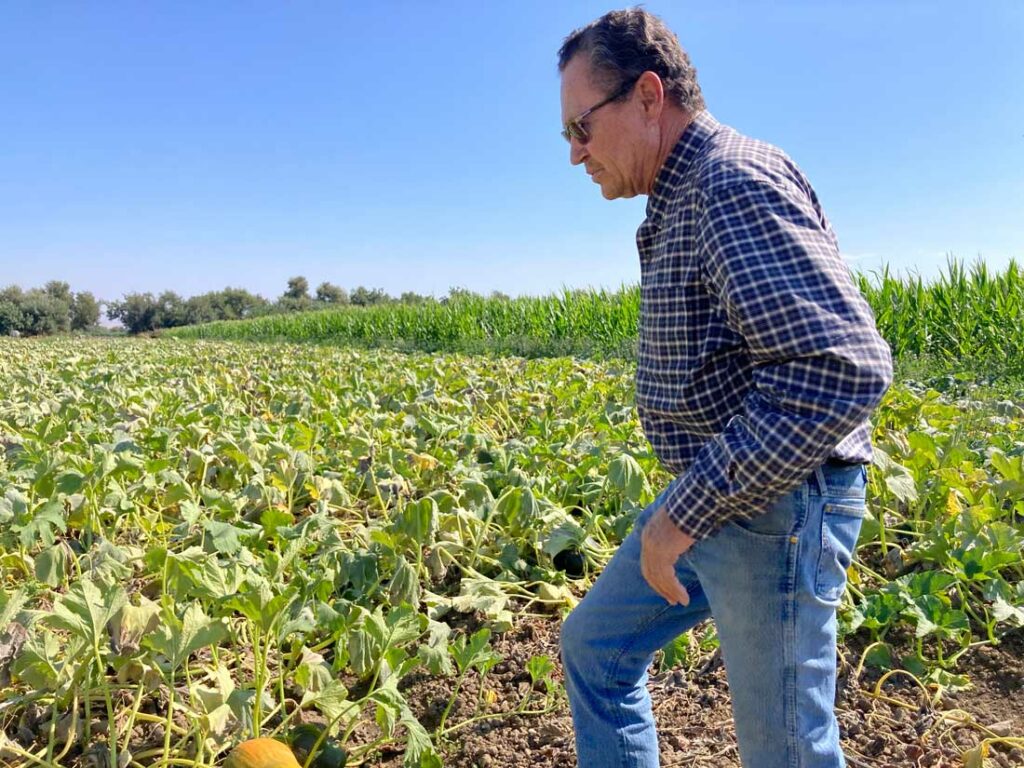
Dick Swank walks through Swank Farms’ pumpkin patch to observe how the crop is coming along before the farm opens to visitors on Oct. 1.
Photo: Michael Moore

Dish: Hawaiian Pork Chops

Hawaiian Pork Chops

ACTIVE INGREDIENTS:

6 pork chops
Pineapple rings
Dried out prunes
1 pound. carrots, reduced right into sticks

PREP WORK:

Gently flour chops and also brownish in a little oil. Lay chops in cooking recipe. Leading each with a pineapple ring.
Area a dried out trim in each pineapple. Lay carrots apart of chops. Cover and also cook at 350 levels for concerning 1 hr

Gently flour chops as well as brownish in a little oil. Lay chops in cooking meal. Lay carrots apart of chops.

Suspect in 1987 killing of Vallejo boy named person of interest in Martinez cold case murder of 9-year-old Eric Coy – ABC7 San Francisco

MARTINEZ, Calif. (KGO) — Martinez police confirmed to ABC7 News that Fred Cain III, the suspect arrested last week in Oregon after prosecutors say they linked him by DNA to the 1987 murder and abduction of 6-year-old Jeremy Stoner in Vallejo, California, is now a person of interest in a Martinez murder.

The killing in Martinez happened less than a month before the Stoner killing in 1987. The victim was 9-year-old Eric Coy.

The boy was killed after leaving to go to his cousin and best friends house in Martinez, California.

“The boy was brutally murdered after leaving his house, stabbed with a blunt object,” said one ABC7 News report in 1987.

“For the last two days, that play site has been a grim searching zone for police,” said another ABC7 News report days later.

No one was ever convicted of the killing but now, less than a week after prosecutors say they used DNA to link Cain to the murder of Stoner, authorities in Martinez are taking notice. They’re working with the Solano County District Attorney’s office to learn more about Cain, and if he could also be linked to Coy’s murder.

“Is he an official suspect in the case?” asked ABC7 News reporter J.R. Stone.

“Right now, he is a person of interest,” replied Lt. Patrick Salamid.

Salamid has spent the last 11 years working Coy’s case.

“Left his house on Warren Street and took a short cut through Martinez Junior High, within about 15 minutes his body was found on the grounds of the Junior High. They found that Eric Coy had suffered multiple stab wounds,” said Lt. Salamid.

Cain’s family members, who ABC7 News spoke with Wednesday night, say they don’t believe Cain lived in Martinez at that time, but say he did live in the nearby East Bay town of Pacheco.

In Coy’s case, there was a suspect sketch but it never amounted to anything. The boy’s body was found near a pedestrian bridge that is no longer there today, as the area is now overgrown with ivy.

As for the case going forward-

“I’m always optimistic, and maybe some DNA or some biological evidence will exist in the future, whatever they reanalyze but I can tell you we’re not going to stop investigating this case,”

Law enforcement transferred Fred Cain III from Oregon, where he was arrested, to California on Wednesday.

He will face a judge for the first time in Solano County on Thursday at 1:30 p.m.

If you’re on the ABC7 News app, click here to watch live

#engineeringgadgets #tech #mechanicalengineers #mechanicalengineering #machining #mechanic #short

Planet Innovation Channel This channel focuses on new technology and invention brings to audiences the interest and knowledge in various fields of science and technology. #tech #technology #shorts #suhag94 #idea #Blossom #DIY #Hacks #advice #great #What

Tagged:

Former Baldwin Park city attorney a ‘co-conspirator’ in $70K bribery scheme, indictment alleges – San Gabriel Valley Tribune

Baldwin Park’s former city attorney “knowingly and intentionally” assisted in a bribery and wire fraud scheme that funneled $70,000 in illicit payoffs to former Councilman Ricardo Pacheco to secure his vote on a cannabis permit, according to federal authorities.

The new allegations against Robert Tafoya became public last week following the federal grand jury indictment of Tafoya’s longtime friend and alleged co-conspirator, former Compton Councilman Isaac Galvan.

Tafoya has not been charged and is only identified as “Person 1,” an individual described in the indictment as “the city attorney for Baldwin Park from in or around December 2013 until October 2022.” Court filings, however, refer to Person 1 as a “co-conspirator” and suggest he assisted in at least two instances in which Pacheco sold his vote.

Tafoya resigned as city attorney that same month after the Southern California News Group published details about other allegations against him contained in the unsealed plea agreements of Pacheco, a councilman from 1997 to 2020, and Gabriel Chavez, a former San Bernardino County planning commissioner who served as Pacheco’s middleman in the bribery scheme.

Pacheco and Chavez each pleaded guilty to a single count of bribery in 2020 and 2022. In total, authorities seized $302,900 in bribes collected by Pacheco.

Their plea agreements, signed under penalty of perjury, allege Galvan, Tafoya and others — including Commerce City Manager Edgar Cisneros — participated in the corruption at various points. The federal investigation reportedly crosses into multiple cities, including Baldwin Park, Montebello, El Monte and Commerce.

Galvan and Tafoya allegedly were working together to secure a marijuana license to operate in Cisneros’ city.

A list of related cases filed alongside Galvan’s indictment indicate at least one other case — filed within the past year and currently under seal — is pending.

Tafoya’s attorney, Mark Werksman, did not respond to requests for comment. He previously denied that Tafoya had any knowledge or involvement in Pacheco’s dealings.

“Robert Tafoya is and always has been an honest, ethical attorney that has acted legally and in the best interest of the City of Baldwin Park,” Werksman said in 2022. “A bunch of corrupt politicians, who are cooperating in order to get lenient sentences, shouldn’t be believed at all.”

Asked about the allegations against Tafoya specifically, the U.S. Attorney’s Office, declined to “comment as to the identity of Person 1 in the indictment.”

Pleaded not guilty

Special agents with the FBI and IRS Criminal Investigations arrested Galvan, 36, of Compton, and Yichang Bai, 50, of Arcadia, the owner and operator of a cannabis grower that obtained permit in Baldwin Park, in the early morning of Monday, Sept. 18. Both were charged with one count of conspiracy, one count of bribery and eight counts of wire fraud. The two men pleaded not guilty to all counts during an arraignment that same day, according to court records.

The earlier plea agreements signed by Pacheco and Chavez alleged Tafoya set the various bribery schemes in motion.

Prosecutors believe Tafoya approached Pacheco prior to the City Council’s approval of its first cannabis cultivation ordinance in August 2017 and recommended that he support bringing cannabis to the city because Pacheco could “personally profit,” according to an exhibit attached to Pacheco’s plea agreement.

“Person 1 explained that defendant should find an individual he trusted who would not talk (the ‘intermediary’), instruct the intermediary to represent himself as a ‘consultant’ to companies seeking Cultivation Development Agreements, and promise to deliver a development agreement to the company in exchange for a $150,000 fee,” federal prosecutors wrote in the exhibit.

Money for votes

A week before the vote, Galvan — who helped Tafoya’s wife land a job at Compton City Hall — gave a $10,000 check with a blank payee line to Pacheco “to secure Pacheco’s support for a future consulting client’s marijuana permit,” according to the indictment and a news release. Pacheco passed the check off to a real estate agent friend who deposited it, then gave $6,400 in cash back to him.

The check came from a consulting company that Tafoya helped Galvan form, prosecutors said.

The following month, Tafoya allegedly provided a list of “the names of applicants for marijuana permits” and “the names of individuals associated with those applications” to Galvan.

After Bai’s company, W&F International, paid $40,000 to Galvan’s consulting firm, he arranged a meeting with Bai, his translator and Tafoya at Tafoya’s office to demonstrate the sway he carried. Galvan texted Bai’s translator after the November 2017 meeting: “See I don’t (expletive) around.”

A month later, Tafoya, through a friend, reportedly sent Galvan two “consulting services agreements,” one for Galvan’s company and another for a consulting company run by the friend. The agreement stated that the second consulting company would receive $225,000 once Baldwin Park issued a development agreement to W&F.

Pacheco supported W&F’s application during council votes on June 20 and July 18, 2018.

Bai later collected a $50,000 check and five $10,000 checks from an individual who owed him money and passed them to Galvan, who in turn passed the checks along to Pacheco and Tafoya, prosecutors allege. Tafoya agreed to have friends of a relative cash the five checks in exchange for $6,000 from the total, they allege.

Pacheco similarly had a third party cash the larger check and pay back a portion over the following months. The scheme was designed to “disguise the true source of the payment,” prosecutors said.

The Baldwin Park City Council unanimously supported W&F International’s application to relocate its proposed cultivation site in December 2018.

Meanwhile, Pacheco and Chavez, the planning commissioner, collected more bribes. The two men amassed at least $170,000 through sham consulting agreements — allegedly provided by Tafoya — from other applicants from 2017 to 2019.

Cash buried in backyard

The FBI busted Pacheco through a separate 2018 sting during which he took $37,900 from a Baldwin Park police officer, acting as an FBI informant, in exchange for supporting the police union’s contract. Federal investigators raided his home in response in December 2018 and found $62,900 buried in his backyard.

The following month, Pacheco deposited $20,000 in bribes from Bai into a legal defense fund.

Two years later, the FBI raided Tafoya’s office and the homes of Chavez and Galvan. Chavez later pleaded guilty to one count of bribery in October 2022.

The U.S. Attorney’s Office believes Tafoya was present at five different meetings between Pacheco and Galvan in which Pacheco openly discussed taking bribes.

After raid, agreement rescinded

The day after the 2020 raid on Tafoya, Baldwin Park revoked W&F International’s development agreement.

The company had been operating an illegal grow in Baldwin Park for months without any action from the city until the neighboring El Monte Police Department intervened. Baldwin Park officials at the time said they only inspected “nonoperating” cannabis businesses once a year at most and were unaware of W&F’s activities.

W&F was years behind on the required payments outlined in its development agreement. The company had not completed required improvements to the building, or secured necessary approvals from county health, county fire and the city’s building division.

The El Monte Police Department, acting independently on information obtained in its own cases, had sent detectives to check the exterior of W&F’s Littlejohn Street warehouse roughly a month before the revocation and found obvious signs of a grow, including marijuana leaves discarded in the trash.

Pictures from the raid showed a warehouse filled with marijuana plants. Police seized 15 boxes of marijuana, one rooted plant and security cameras at the time.

They arrested Bai on suspicion of cultivation of marijuana, possession of marijuana for sales and conspiracy, according to a news release.

Lawsuit targets fee collections

David Torres-Siegrist, an attorney representing several cannabis companies in Baldwin Park, is suing the city to try to stop its collection of mitigation fees tied to the cannabis development agreements. Those fees, which are meant to offset the negatives from the industry, weren’t established equally, according to the lawsuit.

Some of the development agreements allowed operators to avoid paying the fees until they received a certificate of occupancy, while others began accruing a balance immediately, putting them millions of dollars in the hole before a single cent could be earned.

Tafoya handled all of the original development agreement negotiations and continued to work on cannabis regulations even after the FBI raided his home. The City Council removed those responsibilities from Tafoya in April 2021 after the Southern California News Group found he had hired an attorney who successfully landed a cannabis permit during an earlier round of applicants.

Galvan served as a consultant for that applicant as well. The attorney in question, Anthony Willoughby II, was the son of Galvan’s personal attorney.

A federal case filed by Torres-Siegrist on behalf of David Ju, a businessman who purchased the development agreement awarded to Willoughby, alleges Tafoya, Galvan, Pacheco and Willoughby II “acted in concert to orchestrate a swindle on an elderly man dying of cancer who poured his life savings into a venture that was destined for failure from the get-go.” The lawsuit alleges the men violated the Racketeer Influenced and Corrupt Organizations Act, or RICO.

Ju paid $300,000 to buy the cannabis company, Tier One Consulting, and roughly $200,000 of the total went to Galvan, according to the lawsuit. The businessman later learned Willoughby had spent less than $4,000 securing the development agreement and had amassed tens of thousands of dollars in fees that Tafoya allegedly told Ju he needed to cover, the lawsuit states.

Ju estimates he lost at least $900,000 on the deal, according to the lawsuit.

‘Whole process is compromised’

“We’ve been telling the City Council this since 2021,” Torres-Siegrist said in an interview. “The whole process is compromised and at the heart of it is an out-of-control City Attorney’s Office.”

Baldwin Park Mayor Emmanuel Estrada inherited the cannabis mess after winning election in 2020. Since then, the City Council has hired a new city attorney, a new police chief, a new city manager and new code enforcement personnel, he said.

The city is using a reputable third party, HdL Companies, to assist with developing a more equitable system, he said. In the future, Estrada hopes that cannabis operators will only have to pay fees once they’re operational, he said.

The slow movement of the FBI’s case has made it difficult to take action against any of the companies that may have received a development agreement through corruption, he said. While the city knows at least two companies paid bribes based on prior court filings, officials didn’t know the names of any of the companies until W&F was named in last week’s indictment, Estrada said.

“It is very difficult for us to act on any of the contracts, but I would say that the city is working on making sure that moving forward we are holding everyone accountable and putting the right process in place to ensure that something like this doesn’t happen again,” he said. “For the most part, the city is moving kind of slow because we don’t want to end up blindsided.”

Jet Sports Training Week 6 Southern Arizona high school football top performers | ALLSPORTSTUCSON.com

NOTE: WE USE STATS PROVIDED BY SCHOOLS DIRECTLY OR TO MAXPREPS FOR THIS LIST. We compile a list the top performers up to 6 p.m. Monday from Friday’s games

THURSDAY, SEPTEMBER 21

Phoenix Goldwater 58, Flowing Wells 24

FLOWING WELLS (1-4)

RB Josyah Monarrez, 9-131, 2 TDs, 45-yard TD reception

RB Jayden Simmons, 13-51

LB Zaiden Williamson, 8 tackles

LB Isaiah Lomeli, 8 tackles

LB Tanner Kennedy, 7 tackles

Cienega 23, Tempe McClintock 19

CIENEGA (3-2)

QB Evan Weber, 10-19, 117 yards, 1 TD

RB Jimmy McCormack, 22-63

WR Ayden Billings, 3-60, 1 TD

LB Matt Feibush, 7 tackles

S Ari Dubin, 7 tackles, blocked FG, 90-yard kickoff return for TD

LB Manuel Griego, 6 tackles

Pusch Ridge 42, Queen Creek San Tan Foothills 0

PUSCH RIDGE (5-0)

QB Bubba Mustain, 10-10, 142 yards, 1 TD, 10 rushes, 70 yards, 2 TDs

RB Jacob Newborn, 9-70

FRIDAY, SEPTEMBER 22

Sunnyside 43, Nogales 6

SUNNYSIDE (2-3)

RB/LB Victor Gonzalez, 5-77, 2 TDs, 8 tackles

LB Jacob Cota, 10 tackles, 6 TFL, 3 sacks

SS Adrian Lopez, 8 tackles

NOGALES (0-5)

No stats available.

Ironwood Ridge 44, Sahuaro 7

IRONWOOD RIDGE (4-1)

QB Dominic Norris, 14-21, 240 yards, 1 TD, 10 rushes for 84 yards

WR Matthew Kroner, 7-126

LB Everett Giddens, 8 tackles, fumble recovery

LB Colin Wilson, 6 tackles

S Grant Dooling, 6 tackles

P Antonio Vassallo, 4 punts, 47.0-yard average

PK Isaac Rhonehouse, 46-yard FG

SAHUARO (2-3)

RB Brady Celentano, 20-100

RB Jermarell Webb, 88-yard kickoff return for TD

Walden Grove 33, Desert View 6

DESERT VIEW (3-2)

No stats available.

WALDEN GROVE (2-2)

QB Gabriel Smith, 15-20, 290 yards, 4 TDs

RB Robert Cash III, 22-189

RB/LB Carlos Montoya Jr., 2-64, 2 receptions, 122 yards, 2 TDs, 10 tackles, 3.5 TFL, 1 sack, 1 caused fumble

WR Jayvon Coleman, 6-73, 1 TD

SS Enzo Morales, 8 tackles, 1 TFL, 1 fumble recovery

LB Jayden Bitton, 6 tackles, 2.5 TFL

Mica Mountain 42, Casa Grande 27

MICA MOUNTAIN (5-0)

QB Jayden Thoreson, 9-17. 139 yards

RB Kason Colbert, 12-246, 3 TDs

WR Devin Hayward, 2-59

S Dominik Leon, 13 tackles, 1.5 TFL

LB Broden Schmidt, 12 tackles

DE JJ Mangrum, 6 tackles, 1 TFL

CASA GRANDE (3-2)

QB Eltorna Gant, 27-46, 314 yards, 3 TDs, 19 rushes, 74 yards

LB Gabriel Magana, 15 tackles, 4 TFL, 1 fumble recovery, 2 fumbles caused

Canyon del Oro 49, Marana 21

CDO (5-0)

RB Kayden Luke, 21-226, 3 TDs

WR Chance Cassel, 66-yard TD reception

FS Chase Laux, 9 tackles, INT (5th of season)

CB Izaiah Lucero, 9 tackles

CB Joe Alba, 8 tackles, 1 TFL

DE Austin Greer, 1 INT (50-yard return for TD)

MARANA (1-4)

QB Colton Meyer, 32-44, 308 yards, 2 TDs

WR/CB Dezmen Roebuck, 11-87, 6 tackles

WR Dominic Cillitto, 7-73

WR Andres Taylor, 3-58

S Dominic Olivas, 9 tackles, 1 TFL, 1 sack

CB Dermain Linen Jr., 8 tackles, 1 TFL

LB Moses Miller, 7 tackles, 1 INT

Buena 34, Pueblo 14

PUEBLO (3-2)

LB Ben Rash, 13 tackles

LB Jesus Cabrera, 10 tackles, 1 TFL

DE Jeremiah Parrish, 9 tackles, 1 TFL, 1 fumble recovery, 1 caused fumble

BUENA (5-0)

QB Nash Moore, 8-12, 144 yards, 2 TDs

RB Andres Bonilla, 13-90, 1 TD

WR Simon-Peter Johnson, 4-60, 1 TD

LB Cooper Kraus, 10 tackles

DE Landon Esquivel-Willis, 9 tackles, 1 TFL

DE Trenton Williams, 7 tackles

DB Jayden Thomas, 7 tackles

Catalina Foothills 28, Tucson 21

CATALINA FOOTHILLS (2-3)

RB Magnus Johansson, 19-236, 1 TD

RB/LB Boden Crane, 7-90, 1 TD, 8 tackles, 1 TFL

LB Jack Cartwright, 11 tackles, 4 TFL, 1 sack

LB Tanner Montijo, 8 tackles

TUCSON (1-4)

No stats available.

Rio Rico 37, Rincon/University 0

RINCON/UNIVERSITY (2-2, 0-1 4A Gila)

No stats available.

RIO RICO (2-3, 1-0 4A Gila)

No stats available.

Amphi 34, Cholla 6

AMPHI (3-2, 1-0 4A Gila)

RB’LB Jacob Espinoza, 19-127, 4 TDs, 4 tackles

RB Malique Maro, 13-113, 1 TD

QB Imanol Silva, 6 rushes, 56 yards

SS Rudy Rios, 5 tackles, 1 INT

CHOLLA (2-3, 0-1 4A Gila)

RB Ron Guerrero, 4-55

LB Alejandro Manriquez, 10 tackles

LB Jeremiah Alvarez, 9 tackles

LB Angel Hernandez, 8 tackles

LB Charles Apalategui, 8 tackles

Douglas 34, Empire 21

DOUGLAS (2-3, 1-0 4A GILA)

QB Ivan Higuera, 14-24, 237 yards, 4 TDs, 19 rushes, 88 yards

RB Jason Hurtado, 12-51

WR/CB Emiliano Berthely, 5-125, 9 tackles, 2 INTs

TE Isaac Higuera, 7-67, 2 TDs

DT Rogelio Ramirez, 8 tackles

DB Luis Castillo, 7 tackles

LB Andres Hoyos, 7 tackles

EMPIRE (1-4, 0-1 4A Gila)

LB Jordan Naveunxay, 9 tackles, 1 sack, 1 fumble recovery, 1 caused fumble

LB Luke Lambert, 9 tackles, 1 TFL, 1 blocked FG

CB Carson Justice, 7 tackles

CB Manga Eselle, 1 INT (60-yard return for TD)

Blue Ridge 14, Safford 13

SAFFORD (2-4)

RB Monster Rios, 24-105, 2 TDs

SS Chris Shatto, 12 tackles

FS Anthony Garrobo, 8 tackles

SS Collin Gunnett, 8 tackles, 1 TFL

LB Xavier Owens, 7 tackles, 3 sacks

Tanque Verde 58, Catalina 0

TANQUE VERDE (4-1)

RB/LB Gavin Gilbert, 6-94, 3 TDs, 10 tackles, 5 TFL

RB Sebastian Blakeman, 3-60

LB Brandon Phoebe, 6 tackles, 1 TFL

S Grayson Bradshaw, 5 tackles, 2 TFL

LB Anthony Torgeson, 47-yard INT for a TD

CATALINA (3-2)

No stats available.

Willcox 23, Tombstone 20

WILLCOX (2-3)

RB/LB Remington Todd, 19-131, 6 tackles

RB Ismael Cuevas, 17-129, 1 TD

LB Oren Allsup, 11 tackles

DE Ed Tingle, 9 tackles

LB Arec Fuentes, 7 tackles, 1 TFL

TOMBSTONE (4-1)

QB/S DJ Elias, 13-21, 264 yards, 2 TDs, 9 rushes, 80 yards

WR Malachi Keller, 7-98, 1 TD

WR Logan Stevens, 5-93, 1 TD

WR Andrew Greisemer, 3-78

DE Jacob Weichelt, 14 tackles, 2 TFL

Palo Verde 48, Cortez 6

No stats available.

St. David 49, Valley Union 14

VALLEY UNION (2-3)

No stats available.

ST. DAVID (4-2)

RB/LB Chase Pacheco, 16-122, 4 TDs, 11 tackles, 4 TFL, 1 sack, 1 INT

WR/DB Luke Haymore, 4-57, 12 tackles, 1 TFL, 1 fumble recovery

WR Keston Richardson, 50-yard reception of a pass

DB Gannon Carfafa, 14 tackles, 65-yard kickoff return for TD

DE Quinton Williams, 11 tackles, 4 TFL, 2 sacks

LB Cedar Haynie, 10 tackles, 1 TFL

San Manuel 62, Fort Thomas 12

SAN MANUEL (4-2)

RB/LB Dominic Rodriguez, 10-140, 2 TDs, 7 tackles, 1 TFL

RB Tanner Decker, 10-125, 3 TDs

DE Earl Andrede, 8 tackles, 1 TFL, 1 caused fumble, 1 fumble recovery

LB Jakob Tafoya, 8 tackles, 2 TFL

Baboquivari 42, Duncan 32

BABOQUIVARI (3-3)

Francisco Ismael Pacheco: Unraveling the Mysteries of Earth’s Climate

Francisco Ismael Pacheco: The Unsung Hero of Climate Research

Biography of Francisco Ismael Pacheco
1833 –

Introduction:
Francisco Ismael Pacheco was a pioneering climate researcher who made significant contributions to the understanding of weather patterns, climatic variations, and their impact on ecological systems. Born in 1833, his dedication and tireless efforts in documenting and analyzing weather data have left a lasting legacy in the field of climate research. Despite facing numerous challenges during his lifetime, Pacheco’s work has influenced subsequent generations of scientists and laid the foundation for modern climate science.

Early Life and Education:
Born in 1833 into a humble family in a small village near Valencia, Spain, Francisco Ismael Pacheco exhibited an early interest in meteorology and natural sciences. Growing up amidst agricultural communities heavily dependent on weather conditions for their livelihoods, he witnessed firsthand the consequences of unpredictable weather patterns on crops and local economies. This fueled his determination to unravel the mysteries surrounding Earth’s climate systems.

Pacheco’s passion for knowledge led him to pursue higher education at the prestigious University of Madrid. There he studied physics, mathematics, and geography while immersing himself in meteorological studies under some renowned professors. Inspired by the work of famous meteorologists like Luke Howard and John Dalton, he focused his research on systematic observation techniques that could shed light on long-term climate trends.

Career Breakthroughs:
After completing his studies with distinction, Pacheco sought opportunities to apply his scientific expertise practically. In 1860, at just 27 years old, he secured a position as an assistant researcher at Spain’s National Meteorological Institute. This marked the beginning of an illustrious career that would span several decades.

Pacheco dedicated himself to improving existing weather monitoring methods by designing specialized instruments capable of more accurate data collection across various locations simultaneously. He meticulously recorded daily weather observations, including temperature, precipitation, wind speed and direction, humidity, and atmospheric pressure. Recognizing the significance of long-term data sets for climate research, Pacheco tirelessly collected weather records from different regions across Spain to analyze interannual climate variations.

Throughout his career, Pacheco collaborated with esteemed scientists worldwide to exchange knowledge and insights about climate. His detailed observations facilitated the development of comprehensive maps illustrating regional climatic patterns — a pioneering effort in the field. He also established a network of weather monitoring stations throughout Spain to collect real-time data continuously.

Legacy:
Although Pacheco’s groundbreaking work in climate research gained international recognition among fellow scientists during his lifetime, his name remains relatively unknown in mainstream discussions of scientific history. While he never sought personal fame or recognition, Pacheco’s influence is widely acknowledged by contemporary scholars who study historical meteorological records.

Pacheco’s unparalleled efforts laid the groundwork for future advancements in our understanding of Earth’s climate system. Today’s climatologists still benefit from his meticulous documentation and methodology when examining long-term changes in atmospheric conditions around the world. Many credit him as one of the precursors to modern meteorology and its application within the broader scope of climate science.

Conclusion:
Francisco Ismael Pacheco was an unsung hero whose insatiable thirst for knowledge pushed him beyond conventional boundaries as a pioneering climate researcher despite being born into modest circumstances. Throughout his life dedicated to science and meteorology, he not only made significant contributions but also inspired subsequent generations of researchers to continue exploring Earth’s complex climatic processes.

Pacheco demonstrated that passion coupled with tireless dedication can yield remarkable outcomes that can shape scientific disciplines for years to come. His legacy endures within academic circles focused on understanding our planet’s ever-changing climate dynamics while emphasizing the importance of long-term data collection and analysis as fundamental tools for progress.

Dish: pineapple bottom-side-up sundaes

Pineapple Upside-Down Sundaes
1/2 (10 3/4 ounce) all-butter extra pound cake, see note
1 (15 1/4 ounce) can pineapple details crammed in juice
1 tbsp butter
1/2 mug light brownish sugar, loaded
1/4 mug brandy, see note
2 tbsps orange juice
6 scoops costs vanilla gelato

Utilizing a sharp blade, reduced the icy cake in fifty percent. Cut the still-frozen cake fifty percent right into 6 pieces. Area a piece of cake on each of 6 treat plates.

Drain pipes the pineapple, booking the juice for one more usage (see note). Allot.

Include the brownish sugar, brandy and also orange juice. Include the scheduled pineapple bits. Boil 2 mins, mixing sometimes, to somewhat enlarge the sauce.

To offer, put an inside story of gelato over each piece of cake and also spoon the sauce equally on the top. As soon as, offer at.

Offers 6.

Chef’s note: In screening, we utilized the tiniest dimension Sara Lee icy extra pound cake, which is 10 3/4 ounces. It must maintain icy for an additional month if you cover the extra fifty percent in plastic cover as well as after that in aluminum foil.

For an alcohol-free sauce, alternative 1/4 mug of the pineapple juice drained pipes from the fruit as opposed to the brandy.

Nourishment worths per offering: 329 calories (32 percent from fat), 12 g fat (7 g filled), 48 g carbs, 1 g fiber, 3 g healthy protein, 53 mg cholesterol, 160 mg salt

Get rid of the still-frozen extra pound cake from the aluminum foil frying pan. Utilizing a sharp blade, reduced the icy cake in fifty percent. Cut the still-frozen cake fifty percent right into 6 pieces. Area a piece of cake on each of 6 treat plates. Include the scheduled pineapple bits.

Revolutionizing Agricultural Consultancy Through E-commerce

In today’s rapidly evolving digital landscape, e-commerce has revolutionized numerous industries, including agriculture. With the rise of online platforms and marketplaces, farmers and agricultural businesses now have unprecedented access to a range of tools and resources that can enhance productivity, streamline operations, and drive market growth. This article explores the transformative impact of e-commerce on agricultural consultancy, highlighting the potential it holds for improving productivity, market power, and supply chain management. Join us as we delve into the world of agricultural e-commerce and unveil the endless possibilities it offers to farmers and agri-businesses alike.
E-commerce has emerged as a game-changer in agriculture, transforming the way farmers and agricultural businesses operate in the 21st century. Through the power of technology, online platforms have become a one-stop destination for farmers seeking expert advice, innovative solutions, and market access. No longer are they limited to local resources and expertise; instead, they can tap into a global network of agricultural consultants, suppliers, and buyers at the click of a button.
But what exactly is driving this revolution in agricultural consultancy through e-commerce? And how does it translate into real-world benefits for farmers and agri-businesses? In the following sections, we will explore the impact of e-commerce on productivity, market power, and supply chain management in the agricultural sector. We will also examine the potential of e-commerce to enhance farm performance, improve consumer welfare, and shape the future of agriculture as we know it. So, fasten your seatbelts and get ready for an exciting journey into the world of agricultural e-commerce. The possibilities are endless, and the benefits are just waiting to be discovered.

Impact of E-commerce on Productivity in the Agricultural Sector

E-commerce has revolutionized the way we buy and sell products, and its impact is not limited to the retail industry. In recent years, the agricultural sector has seen a significant transformation due to the integration of e-commerce platforms into its operations.

With the advent of e-commerce, farmers and agricultural producers now have access to a wider market reach and can directly connect with consumers. This shift in the distribution model has had a profound impact on productivity in the agricultural sector. Here are some key ways in which e-commerce has influenced productivity in this industry:

Streamlined Distribution Process

Traditionally, farmers would rely on intermediaries such as wholesalers and retailers to sell their produce to the end consumer. This process often led to inefficiencies, increased costs, and delayed delivery times. However, with the rise of e-commerce platforms specifically designed for the agricultural sector, farmers can bypass these middlemen and sell their products directly to customers.

By eliminating the need for intermediaries, farmers can now streamline their distribution process and improve overall productivity. They can sell their products online, ship them directly to customers’ doors, and reduce the time and costs associated with traditional distribution channels.

Access to a Larger Customer Base

One of the most significant advantages of e-commerce in the agricultural sector is the ability for farmers to tap into a larger customer base. Through online platforms, farmers are no longer limited to selling their products locally. They can now reach customers in different cities, states, or even countries.

This expanded customer base not only increases the market demand for agricultural products but also provides farmers with new opportunities for growth. By leveraging e-commerce, farmers can expand their operations, increase production, and ultimately boost their productivity.

Improved Market Efficiency

E-commerce platforms also contribute to improved market efficiency in the agricultural sector. These platforms provide real-time information on supply and demand, allowing farmers to make informed decisions about production and pricing.

By having access to market data, farmers can align their production with demand trends, preventing oversupply or shortage of products. This leads to more efficient use of resources and increased productivity.

Direct Consumer Feedback

Another way in which e-commerce enhances productivity in the agricultural sector is through direct consumer feedback. With traditional distribution channels, farmers had limited interaction and feedback from end consumers. However, e-commerce platforms offer a direct line of communication between farmers and customers.

Farmers can receive feedback, reviews, and suggestions from consumers, allowing them to improve their products based on customer preferences. This direct feedback loop enables farmers to produce crops and goods that meet market demand more effectively, leading to higher productivity.

In conclusion, the integration of e-commerce into the agricultural sector has had a profound impact on productivity. By streamlining distribution, accessing a larger customer base, improving market efficiency, and receiving direct consumer feedback, e-commerce has transformed the way farmers operate and has bolstered productivity in the agricultural sector.

Potential of E-commerce in Agriculture

The potential of e-commerce in the agricultural sector is immense, offering numerous benefits and opportunities for farmers, businesses, and consumers alike. With the increasing digitization of the global economy, e-commerce has emerged as a game-changer for the agriculture industry. Let’s take a closer look at some key aspects that highlight the potential of e-commerce in agriculture.

Fragmented Nature of Agriculture

Agriculture is a highly fragmented sector, characterized by numerous small-scale farmers and dispersed markets. This fragmentation often poses challenges in terms of market access, distribution, and logistics. However, e-commerce provides a solution by connecting farmers directly with buyers, breaking down geographical barriers, and enabling efficient supply chain management. This direct-to-consumer approach ensures that farmers can reach a wider customer base and obtain fair prices for their produce.

Reduction of Intermediate Links

Traditional agricultural supply chains involve multiple intermediaries such as wholesalers, distributors, and retailers. These intermediate links often lead to increased costs, delays in delivery, and reduced profit margins for farmers. E-commerce platforms eliminate the need for these intermediaries, allowing farmers to sell their products directly to consumers or businesses. By doing so, agricultural producers can streamline their operations, reduce costs, and maximize their profits.

According to (source), “The combination of agricultural product marketing and e-commerce reduces intermediate links in the sales process, facilitating the flow of goods from producers to consumers.”

Historical Role of E-commerce in Agriculture

Contrary to popular belief, e-commerce has been an integral part of the agricultural sector for several decades. In fact, it has played pivotal roles in areas such as grain trading, where online platforms have revolutionized the way farmers buy and sell their grain. These platforms provide farmers with transparent pricing, access to a global market, and enhanced liquidity. Moreover, e-commerce has facilitated the introduction of new agricultural technologies and improved information-sharing among farmers.

(Source) mentions that “E-commerce has existed in agriculture for at least two to three decades, contributing significantly to the growth and development of the sector.”

In conclusion, e-commerce holds tremendous potential in revolutionizing the agricultural sector. By leveraging digital platforms, farmers can overcome the challenges of fragmentation, reduce the dependency on intermediaries, and enhance their profitability. As the agricultural industry continues to embrace e-commerce, it is crucial for stakeholders to adapt to this evolving landscape and leverage the opportunities it presents for growth and sustainability.

Market Power and Income Improvement

As the world continues to embrace the digital revolution, the impact of e-commerce on various industries is becoming increasingly evident. In the agricultural sector, the rise of online marketplaces and direct-to-consumer channels has brought about significant changes, particularly in terms of market power and income improvement. This article will explore how the erosion of agri-business firms’ market power and the increasing income opportunities for farmers are shaping the industry.

Erosion of Agri-business Firms’ Market Power

Traditionally, agri-business firms held significant market power due to their control over distribution channels and intermediary networks. They were able to dictate prices and exert dominance over both farmers and consumers. However, the advent of e-commerce has disrupted this status quo.

With the introduction of online platforms, consumers now have the ability to easily compare prices, access a wide range of options, and make informed purchasing decisions. This shift in power has compelled agri-business firms to be more competitive in terms of pricing, quality, and customer service. Companies that fail to adapt to this new landscape risk losing market share to more agile and digitally savvy competitors.

Increasing Income for Farmers

While the erosion of agri-business firms’ market power brings benefits for consumers, it also presents significant income improvement opportunities for farmers. By selling their produce through online channels, farmers can bypass intermediaries and establish direct connections with consumers. This cuts out the middlemen and allows farmers to capture a larger portion of the value chain, resulting in higher profits.

Moreover, e-commerce platforms provide farmers with increased visibility and access to a wider customer base. Instead of being limited to the local market, farmers can now reach consumers across different regions and even international markets. This expanded reach not only helps farmers diversify their revenue streams but also reduces their vulnerability to price fluctuations and market uncertainties.

Unlocking the Potential to Eradicate Rural Poverty

The impact of e-commerce in agri-business enterprises extends beyond individual income improvements. It has the potential to uplift entire rural communities and eradicate poverty in China. By empowering farmers to sell their products directly to consumers at fair prices, e-commerce platforms are bridging the gap between rural and urban areas. This, in turn, promotes inclusive economic growth and contributes to the overall development of the country.

Furthermore, the digital infrastructure supporting e-commerce in rural areas helps connect farmers with valuable resources such as information, training, and financial services. This enables them to enhance productivity, adopt modern farming techniques, and overcome longstanding challenges related to lack of access and awareness.

In conclusion, the introduction of e-commerce in the agricultural sector has had a transformative impact on market power dynamics and income opportunities. As agri-business firms face increasing competition and consumers gain more choices, farmers are benefiting from the ability to sell directly to customers and improve their income. With the potential to eradicate rural poverty, e-commerce in agri-business enterprises has truly become a catalyst for change in China.

Impact of COVID-19 and Growing Trend

The COVID-19 pandemic has undoubtedly caused significant disruptions across various industries worldwide. The agricultural e-commerce sector has also witnessed its fair share of impacts. However, despite the challenges, there have been notable trends that indicate a growing shift towards online purchasing in the agricultural sector.

Moderate Impact of COVID-19 on Agricultural E-commerce

The global agricultural e-commerce market has experienced a moderate impact due to the COVID-19 pandemic. The restrictions on movement and social distancing measures have affected traditional agricultural markets and supply chains. Farmers faced difficulties in accessing physical stores and markets, leading to a decline in offline purchases.

However, this setback has opened up new opportunities for e-commerce platforms. With limited access to physical stores and markets, many farmers turned towards online platforms to meet their agricultural needs. As a result, agricultural e-commerce platforms experienced a surge in demand and usage, creating a new avenue for farmers to purchase their necessary supplies.

Increasing Online Purchases by Farmers

One significant trend that has emerged during the pandemic is the increasing trend of farmers purchasing crop inputs online. This shift towards online purchasing reflects the growing acceptance and reliance on digital platforms in the agricultural sector.

Farmers are recognizing the convenience and benefits that online purchasing offers. Here are some reasons why farmers are embracing agricultural e-commerce:

  • Convenience: Farmers can now browse and purchase their required crop inputs from the comfort of their homes or fields, saving time and effort.
  • Access to a Wide Range of Products: Online platforms offer a diverse range of agricultural products, allowing farmers to choose from different brands, varieties, and prices.
  • Price Comparisons: Farmers can compare prices across multiple platforms, ensuring they get the best deal for their inputs.
  • Doorstep Delivery: Online platforms provide the convenience of doorstep delivery, saving farmers from the hassle of physically transporting their purchases.
  • Availability of Information: E-commerce platforms often provide detailed information about the products, including usage instructions, reviews, and ratings, enabling farmers to make informed decisions.

The increased online purchasing behavior by farmers highlights the potential of agricultural e-commerce platforms. This trend is not just a temporary consequence of the pandemic but could shape the future of the agricultural sector, even beyond the current crisis.

In summary, while the COVID-19 pandemic has moderately impacted the global agricultural e-commerce market, it has also accelerated a growing trend of farmers purchasing their crop inputs online. The convenience, accessibility, and wide range of products available through e-commerce platforms have contributed to this shift. As the agricultural sector continues to navigate the challenges brought about by the pandemic, it is crucial to recognize and adapt to the evolving landscape of agricultural e-commerce.

Enhancing Farm Performance and Market Potential

The adoption of e-commerce in the agricultural sector has the potential to revolutionize farm performance and open up new avenues for market growth. With the global B2B e-commerce market in agriculture projected to reach a staggering $11.86 billion by 2030, there has never been a better time for farmers to leverage digital platforms to their advantage[1].

Enhancing Farm Performance

Farmers can benefit in numerous ways by embracing e-commerce as part of their business model. Let’s take a closer look at some of the advantages:

  • Increased Efficiency: By transitioning to an e-commerce platform, farmers can streamline their operations and automate various processes. This saves time and resources, allowing for better allocation of manpower and improved overall efficiency.
  • Expanded Market Reach: Traditional agricultural markets are often limited by geographical constraints. However, with e-commerce, farmers can transcend these boundaries and tap into a vast global market. This allows them to access a larger customer base and increase sales opportunities.
  • Real-Time Market Insights: E-commerce platforms provide farmers with valuable data and analytics, allowing them to make informed decisions about pricing, inventory management, and market trends. By monitoring consumer behavior and demand patterns, farmers can optimize their supply chain and stay competitive in the market.
  • Lower Transaction Costs: Traditional agricultural markets often come with high transaction costs due to intermediaries and transportation expenses. With e-commerce, farmers can directly connect with buyers, eliminating the need for middlemen and reducing overall transaction costs.

By adopting e-commerce practices, farmers can unlock these benefits and enhance their farm performance in a rapidly evolving market.

Potential of $11.86 Billion B2B E-commerce Market

The global B2B e-commerce market in agriculture is poised for tremendous growth. According to industry reports, this market is projected to reach $11.86 billion by 2030[1]. This substantial figure highlights the immense opportunities available for farmers who choose to embrace e-commerce.

With the agricultural sector adapting to the digital landscape, farmers can leverage online platforms to connect with buyers and suppliers, both domestically and internationally. The B2B e-commerce market offers a range of opportunities, including:

  • Access to a Diverse Customer Base: E-commerce platforms provide farmers with access to a wide range of potential buyers, including wholesalers, retailers, and even end consumers. This opens up new markets and expands business horizons.
  • Facilitating Direct Trade: E-commerce eliminates middlemen and fosters direct trade between farmers and buyers. This not only enhances transparency but also ensures fair pricing and higher profits for farmers.
  • Value-Added Services: E-commerce platforms often offer value-added services such as logistics, financing, and market insights. These additional services can further enhance farm performance and improve the overall business ecosystem for farmers.

In conclusion, the incorporation of e-commerce in the agricultural sector has the potential to uplift farm performance and unlock new market opportunities. As the B2B e-commerce market in agriculture continues to grow, farmers should consider embracing digital platforms to thrive in an increasingly competitive global market.

[1]: source

Improving Supply Chain Management and Consumer Welfare

When it comes to improving the efficiency of supply chain management and enhancing consumer welfare, e-commerce has proven to be a game-changer. By leveraging technology and innovative solutions, e-commerce platforms are streamlining traditional processes and bringing about positive change in the way goods are produced, distributed, and consumed.

Reducing Waste and Integrated Supply Chain Management

One of the significant advantages of e-commerce in supply chain management is its potential to reduce waste. With integrated supply chain management systems, e-commerce platforms are able to optimize various aspects of the supply chain, resulting in reduced inefficiencies and wastage. Here’s how this works:

  • Inventory Management: E-commerce platforms enable sellers to have real-time visibility of inventory levels, ensuring that products are only produced or ordered as per demand. By minimizing over-production, businesses can significantly reduce waste and excess stock.
  • Logistics Optimization: E-commerce streamlines the logistics process by leveraging data and analytics to optimize routes, reduce transportation costs, and improve delivery speed. This not only lowers the environmental impact but also reduces the chances of product damage or spoilage during transit.
  • Reverse Logistics: E-commerce platforms also facilitate the management of product returns, allowing for efficient reverse logistics. This helps reduce waste by ensuring that returned items are processed correctly, minimizing landfill waste or unnecessary disposal.

By implementing integrated supply chain management systems, e-commerce platforms are contributing to a more sustainable and environmentally friendly approach to commerce.

Disrupting Agriculture Supply Value Chain

Another area where e-commerce has the potential to make a significant impact is in the agriculture sector. In certain regions, e-commerce platforms have the ability to disrupt the traditional agriculture supply value chain by bypassing intermediaries and connecting farmers directly with consumers. Here are a few ways in which this disruption occurs:

  • Direct Farm-to-Consumer Selling: E-commerce platforms provide farmers with the opportunity to sell their produce directly to consumers, eliminating the need for intermediaries such as wholesalers or retailers. This allows farmers to receive fair prices for their goods and consumers to enjoy fresh, locally sourced produce.
  • Increased Market Access: E-commerce platforms provide farmers, especially small-scale and remote farmers, with a broader market reach, thereby increasing their potential customer base. This helps them diversify their income sources and reduces their dependence on local markets.
  • Simplified Trading Approaches: E-commerce in agriculture simplifies the trading process by enabling transparent transactions, reducing barriers to entry, and providing a level playing field for both small and large farmers. This brings about fair competition and ensures that consumers have access to a wider variety of products.
  • Streamlined Agricultural Processes: E-commerce platforms also offer tools and technologies that help farmers streamline their operations, such as supply chain tracking, smart agriculture tools, and access to market intelligence. These resources empower farmers to make data-driven decisions and optimize their agricultural practices.

With the growing potential for e-commerce to boost growth and improve consumer welfare in the agricultural sector, it is clear that this digital transformation is reshaping the way goods are produced, distributed, and consumed, ultimately leading to a more efficient and sustainable supply chain.

Conclusion

In conclusion, the impact of e-commerce on the agricultural sector cannot be underestimated. The potential of e-commerce in agriculture is vast, with the ability to revolutionize agricultural consultancy and improve productivity. E-commerce not only reduces intermediate links but also erodes the market power of agri-business firms, leading to increased income for farmers. COVID-19 has further accelerated the growth of agricultural e-commerce, with farmers increasingly relying on online purchases.

By utilizing e-commerce, farmers can enhance their farm performance and tap into the potential of the $11.86 billion B2B e-commerce market in agriculture. Additionally, e-commerce improves supply chain management, reduces waste, and disrupts the agriculture supply value chain, ultimately benefiting both farmers and consumers.

With the goal of sustainability and efficiency in mind, companies like CropWater play a crucial role in the agricultural sector. Our expertise in agricultural water management enables us to provide tools and services that help farmers make informed decisions about water use, leading to increased crop productivity and water conservation. To learn more about our services, visit CropWater.

Frequently Asked Questions

  1. How can e-commerce revolutionize agricultural consultancy?

    E-commerce can revolutionize agricultural consultancy by providing a platform for agricultural consultants to offer their services online. This allows farmers and individuals in the agricultural industry to easily access and avail consultancy services from anywhere, saving time and resources.

  2. What are the benefits of using e-commerce for agricultural consultancy?

    Using e-commerce for agricultural consultancy brings benefits such as increased accessibility, convenience, and efficiency. It allows consultants to reach a wider audience, offer their services 24/7, and provide personalized recommendations and solutions.

  3. How can agricultural consultants utilize e-commerce platforms?

    Agricultural consultants can utilize e-commerce platforms by creating an online presence through websites or online marketplaces. They can list their services, provide information about their expertise, offer online consultations or packages, and engage with clients through messaging or video calls.

  4. Is e-commerce suitable for all types of agricultural consultancy?

    E-commerce is suitable for various types of agricultural consultancy, including but not limited to crop consulting, soil testing, livestock management, pest control, and sustainable farming practices. It provides a versatile platform for consultants to offer their expertise.

  5. What challenges can arise when implementing e-commerce in agricultural consultancy?

    Challenges can include building an online presence, marketing and reaching the target audience, integrating payment gateways, ensuring data security and privacy, and managing logistics associated with physical products such as fertilizers or equipment.

VIDEO | Precinct Tap + Table serves a successful Dinner on the Farm at Witte’s Vegetable Market

VIDEO | Precinct Tap + Table serves a successful Dinner on the Farm at Witte’s Vegetable Market

This content was originally published here.

Next Page »