The best Bosch Prime Day 2023 deals

Bosch has discounted its power and analog tools heavily for Prime Day 2023. Save on drills, band saws, vacuums, and more.
Source
Bosch has discounted its power and analog tools heavily for Prime Day 2023. Save on drills, band saws, vacuums, and more.
Source

Craftsman's Amazon Prime Day 2023 deals on power tools can save you a lot of money on drills, saws, ratchet sets, and everything in between.
Source

Dos veces al año la Sima de las Palomas abre sus puertas para mostrar toda su riqueza de la mano de los arqueólogos que trabajan durante el verano en la Campaña de Excavaciones oficiales de la Escuela de Campo “Sima de las Palomas del Cabezo Gordo” de la Prehistoria y Paleoantropología del Cuaternario de la Región de Murcia.
El Concejal de Cultura y Turismo, Raúl Lledó acompañado por Cristina Aranda, Técnica de Turismo, e Irene Pedreño, guía de Turismo, ha presentado la Jornada de Puertas Abiertas en la Sima de las Palomas, que se llevará a cabo el domingo 5 de marzo en horario de 9 a 14 horas.
El Cabezo Gordo es un paisaje protegido con gran interés biótico, paisajístico, paleontológico y cultural. En este espacio natural del municipio de Torre Pacheco se encuentra la Sima de las Palomas, considerado el segundo yacimiento Paleontológico más importante después de Atapuerca.
El domingo 5 de marzo y durante toda la mañana, se podrá visitar la Cueva del Agua, donde ver una gran galería minera, y un lago natural donde se filtra el agua en el interior de la montaña; también se podrá visita el interior de la Sima de las Palomas, donde se retrocede más de 50.000 años, para descubrir nuestros orígenes y conocer más sobre el Homo Neanderthalensis; además, cuentacuentos y visita al Centro de Interpretación, en la Cueva del Pie del Gigante, con la proyección de vídeos que explican las diferentes teorías sobre la desaparición del Homo Neandethalensis y si llegó a extinguirse realmente. Una jornada en la que los amantes de la fotografía, podrán participar en el concurso fotográfico “El Cabezo Gordo, descúbrelo”, y pasar una mañana con los arqueólogos en la Excavación de la Sima de las Palomas.
El Concejal de Cultura, ha resaltado la importancia de acercar la Sima de las Palomas y sus hallazgos a la sociedad, y así poner en valor la importancia del Yacimiento, uno de los más importantes de la Península Ibérica, en cuanto a restos Neandertales, según ha apuntado Lledó.
El próximo domingo, 5 de marzo se celebra la Jornada de Puertas Abiertas “Sima de las Palomas”, en horario de 9.00 a 14.00 horas, con inscripción previa.
Para más información sobre la visita, los interesados pueden consultar la web del Ayuntamiento (www.torrepacheco.es) o llamar a la Oficina de Turismo 968579937.
Y los interesados en participar en esta actividad deben inscribirse en www.turismoregiondemurcia.es
In today’s fiercely competitive business landscape, customer satisfaction and loyalty are critical for long-term success. Customer Relationship Management (CRM) solutions have emerged as a powerful tool to help businesses build and nurture strong customer relationships. By harnessing the full potential of CRM solutions, businesses can pave their way to success.
CRM solutions offer a significant advantage by streamlining customer data and interactions. These solutions consolidate customer information into a unified database, eliminating data silos and providing a holistic view of each customer. This centralized approach enables businesses to track customer interactions across multiple touchpoints, including phone calls, emails, and social media engagements.
With CRM solutions, businesses gain real-time access to customer data, enabling them to personalize interactions and deliver exceptional experiences. By understanding customer preferences, purchase history, and needs, businesses can provide tailored recommendations, targeted marketing campaigns, and proactive customer support.
CRM solutions play a crucial role in empowering sales and marketing teams. These solutions provide a centralized platform to manage leads, opportunities, and sales pipelines. By automating processes, businesses can efficiently track leads, assign tasks, and monitor sales activities. This streamlined approach enables sales teams to prioritize leads, follow up effectively, and close deals faster.
Furthermore, CRM solutions provide valuable insights for marketing teams. By analyzing customer data, businesses can identify trends, patterns, and customer segments. This enables targeted marketing campaigns, personalized messaging, and improved lead generation. The result is a higher marketing return on investment (ROI) and increased conversion rates.
CRM solutions empower businesses to provide superior customer service, leading to enhanced satisfaction and loyalty. With a centralized database, customer service representatives can access complete customer information, allowing them to deliver personalized support and resolve issues promptly. Quick access to customer history, preferences, and previous interactions empowers representatives to provide a seamless and tailored customer experience.
Additionally, CRM solutions facilitate proactive customer service. By tracking customer behavior and preferences, businesses can anticipate needs and offer relevant solutions or recommendations. This proactive approach enhances customer satisfaction, fosters long-term loyalty, and generates positive word-of-mouth referrals.
By enabling businesses to build strong customer relationships, CRM solutions ultimately drive growth and efficiency. Improved customer satisfaction and loyalty result in increased customer retention, repeat sales, and higher customer lifetime value. Additionally, streamlined processes, automated workflows, and enhanced collaboration foster operational efficiency and reduce costs.
CRM solutions also provide valuable analytics and reporting capabilities. Businesses can track key performance indicators, measure sales and marketing effectiveness, and identify areas for improvement. This data-driven approach empowers businesses to make informed decisions, refine strategies, and adapt to changing market dynamics.
CRM solutions are indispensable tools for businesses aiming to succeed in today’s customer-centric marketplace. By streamlining customer data, enhancing sales and marketing efforts, improving customer service, and driving business growth and efficiency, CRM solutions empower businesses to thrive. Embracing CRM solutions is a strategic investment that unlocks the full potential of businesses, allowing them to build long-term and profitable customer relationships.

The best power drills will save you time and energy when assembling furniture, wall mounting a TV, or other DIY or home repair projects.
Source
[]
SkateBIRD now available for PS5, PS4 – Gematsu 1000){ //load desktop placement placement.setAttribute(“data-id”, “5f806c9dbad07f0642de98c5”); placement.setAttribute(“data-display-type”, “hybrid-banner”); } else { //load mobile placement placement.setAttribute(“data-id”, “5f806cb5d0b2e22f7c503a7c”); } document.querySelector(“#ad-container-1”).appendChild(placement); window.top.__vm_add.push(placement); }); ]]>
Source
Have you spotted a bird with a red head that you want to identify? Surely it can’t be that hard, but there are so many birds that have red on their heads so how are you supposed to know where to start?
25 Birds with Red Heads:
Well, these are the most common birds that have red heads or have red on their heads or throats.
500 birds with red anywhere on their heads were cross-referenced with all 1000 species of birds sighted in North America to give you the top 25 birds with a red head. The percentages show how often these birds were recorded in checklists on ebird.org.
This article gives you identification information and photos to help you identify these birds with red heads.
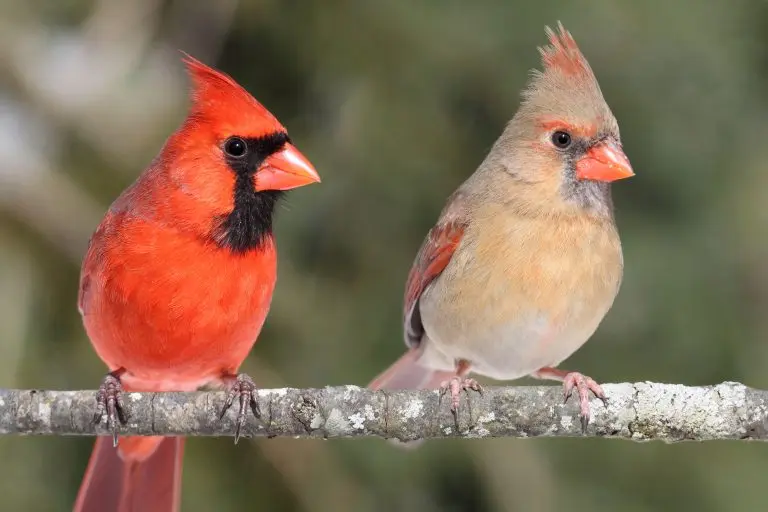
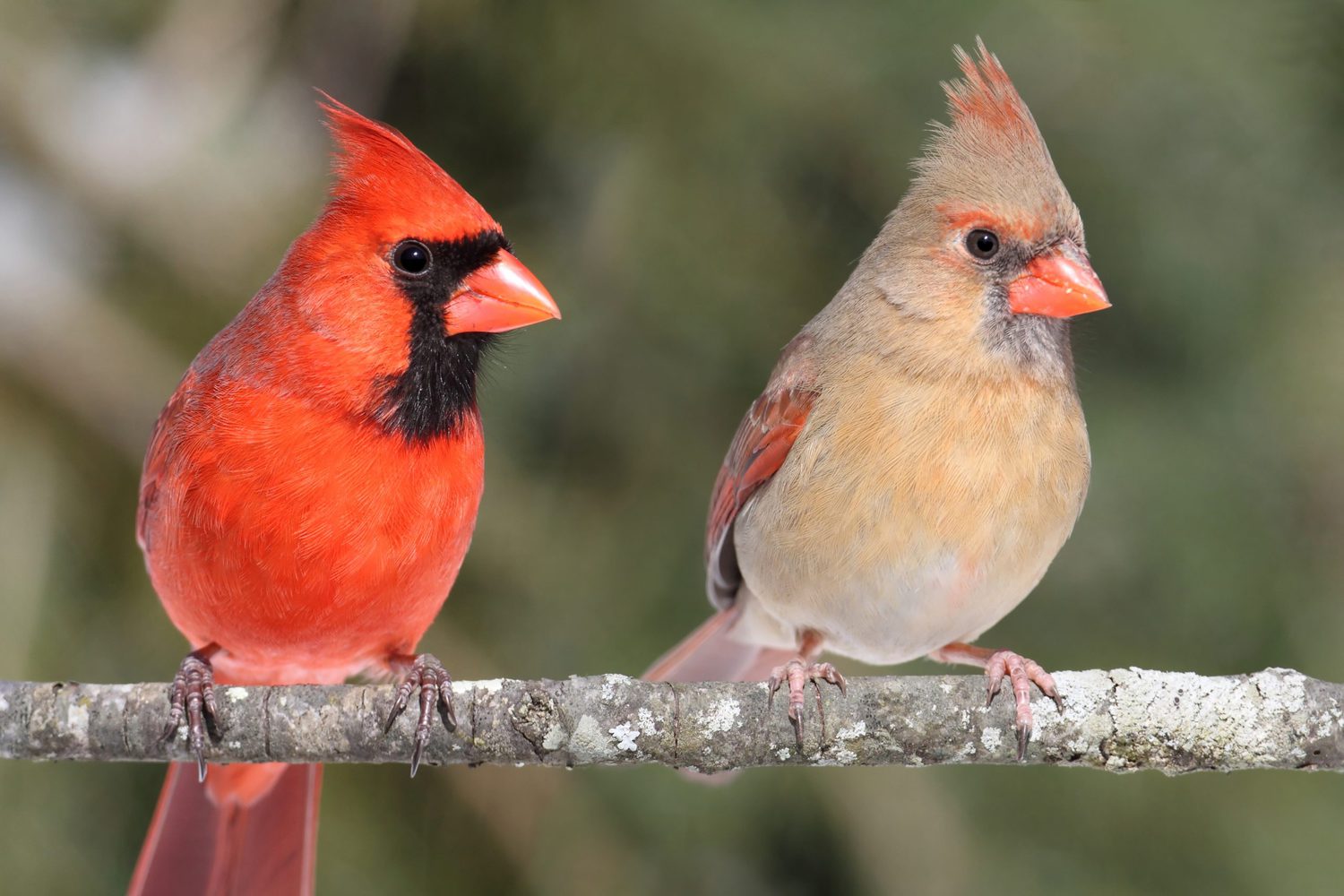
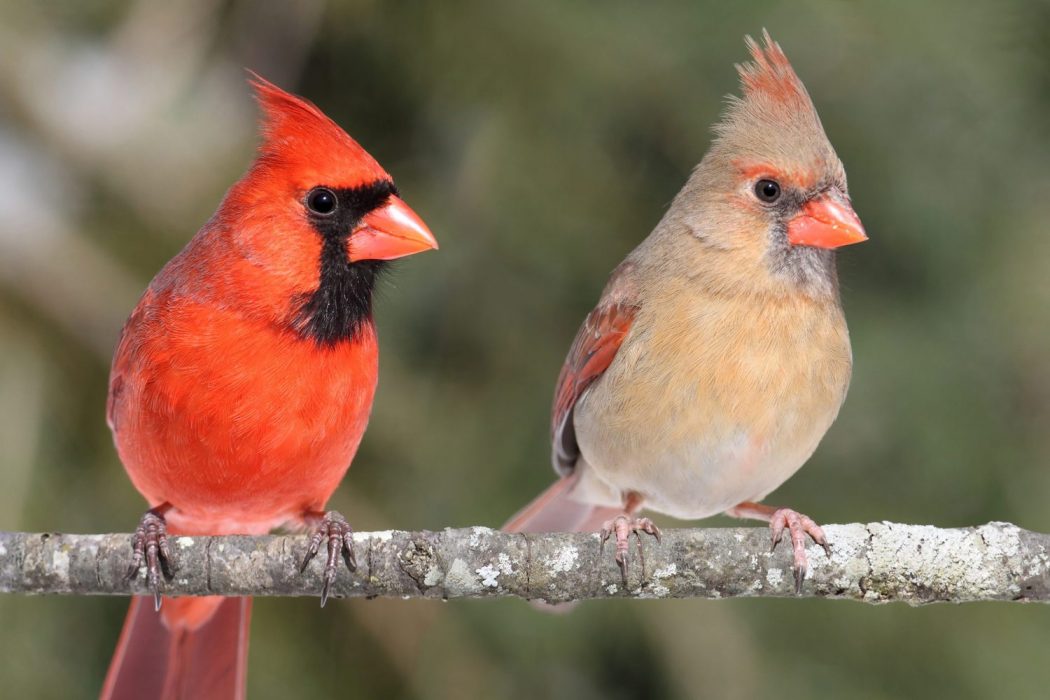
The bright red male Northern Cardinal is a bird with a red head, body and tail, with black around their faces. They are a great sight, especially against a white winter background. The females are also a little showy with their brown coloring, sharp brown crest, red highlights, and red beaks.
Northern Cardinals are found in eastern and southern states and will sometimes attack their own reflection during breeding season as they obsessively defend their territories.
You can attract more Northern Cardinals to backyard feeders with sunflower seeds, peanut hearts, millet, and milo.
They will feed on large tube feeders, hoppers, platform feeders, or food scattered on the ground.
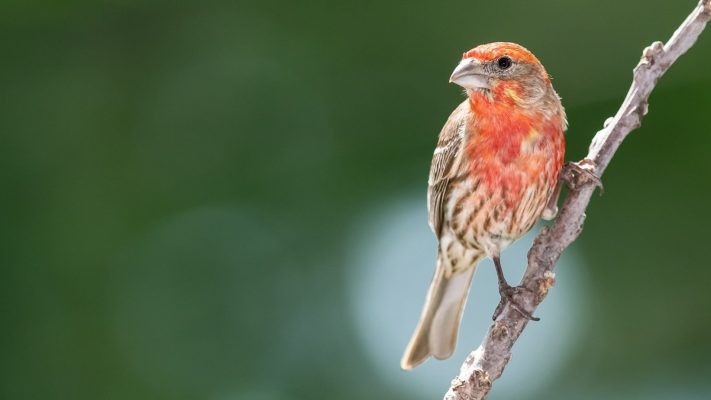
House Finches are another bird with a red head and breast in the males and brown-streaked coloring in the females. Originally only in western states it was introduced to the eastern states and has done very well, even pushing out the Purple Finch.
They can be found in parks, farms, forest edges, and backyard feeders. They can be found in noisy groups that are hard to miss.
You can attract more House Finches to backyard feeders with black oil sunflower seeds or nyjer seeds in tube feeders or platform feeders.
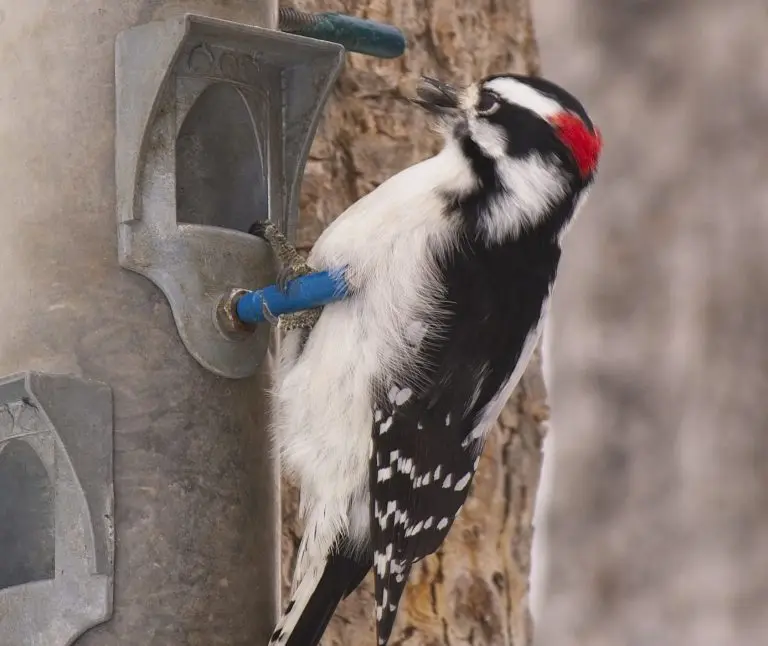
Downy Woodpeckers are small birds that are common at backyard feeders. They are common across most states.
This bird has a red head patch at the back of their heads in the males. Male and females woodpeckers look different. Males often have a red patch.
They are often mixed in with other birds such as chickadees and nuthatches. They have black and white coloring. They look similar to the Hairy Woodpecker.
To attract more Downy Woodpeckers to your backyard try suet feeders but they will also eat black oil sunflower seeds, millet, and peanuts on platform feeders.
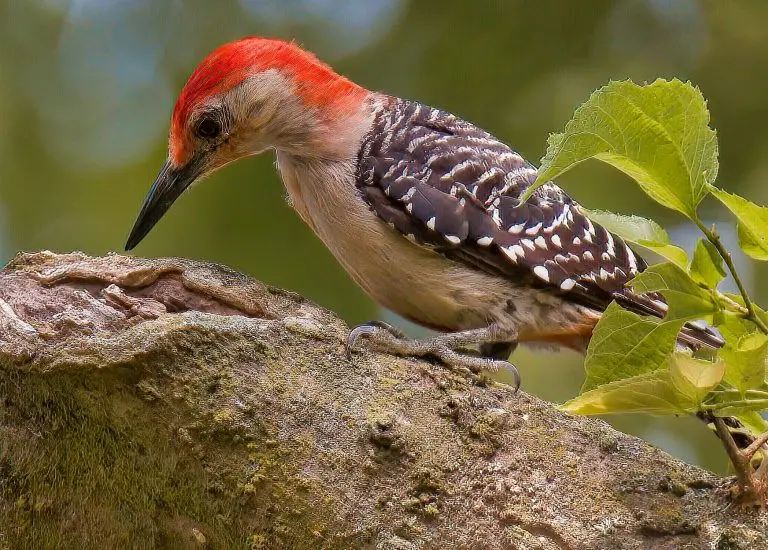
Red-bellied Woodpeckers have a pale red belly that can be difficult to spot. This bird with a red head and nape also has a black-and-white striped back.
They are found in Eastern states. They make a loud call in spring and summer and are found in woods and forests, especially with deadwood. They are a woodpecker that migrates.
You can attract more Red-bellied Woodpeckers with suet feeders and they will sometimes feed on hummingbird feeders.
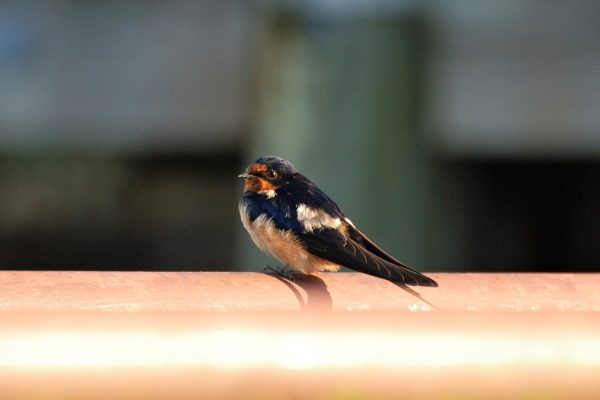
Barn Swallows have rusty red faces and tawny underparts and blue backs, wings, and tails. They breed across most of North America before migrating south for the winter.
They are usually found darting over fields and open water in search of food and make mud nests in human-made structures, such as barns.
You can attract more Barn Swallows to your backyard with ground-up eggshells on a platform feeder or by providing a suitable place to nest by leaving an outbuilding or barn door open.
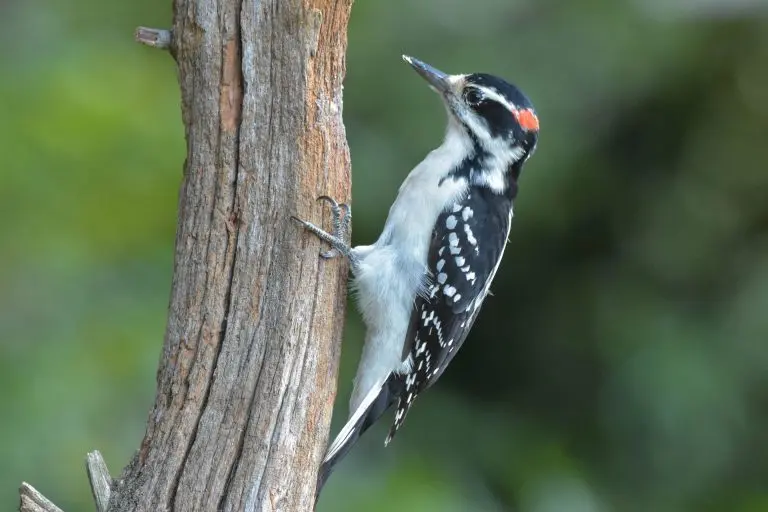
The Hairy Woodpecker can be found across most of North America. These black and white birds have a red spot on their heads.
They are slightly larger than their look alike the Downy Woodpecker. They can be found in large trees and can be heard tapping if you listen for them.
Woodpeckers are fascinating and there are many interesting woodpecker facts to learn.
You can attract more Hairy Woodpeckers with suet feeders, especially in winter.
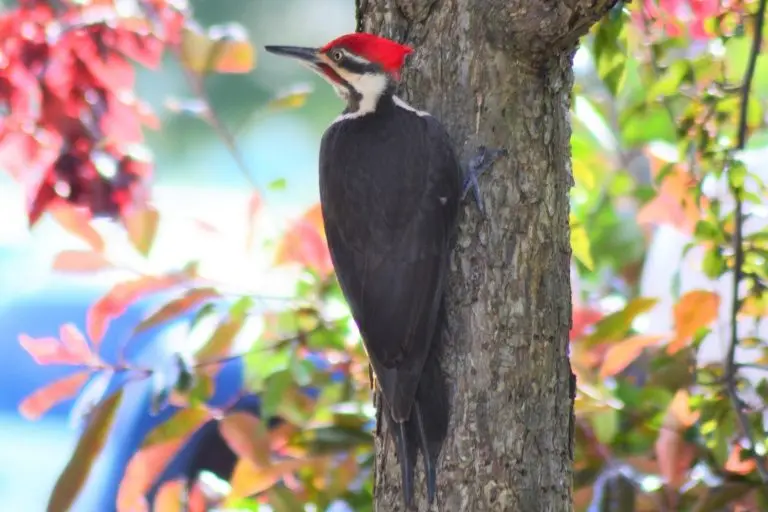
The Pileated Woodpecker has a red head in the form of a bright red crest against a predominantly black body with white stripes. It can be found in Eastern states and along the coast in the north-west.
It is a large bird being nearly the size of a crow and prefers dead wood to forage for carpenter ants. You can attract more Pileated Woodpeckers with suet feeders.
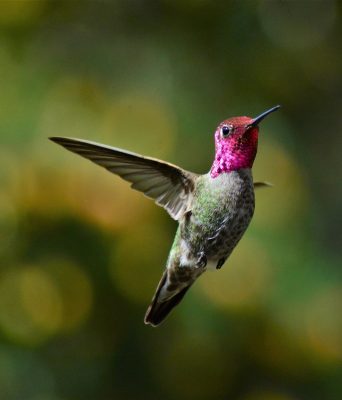
Anna’s Hummingbirds have rose-pink throats and emerald green across most of their bodies in the male. Females hummingbirds are less colorful.
They are about the size of a ping-pong ball and will often be found at hummingbird feeders or plant large colorful blossoms to attract hummingbirds in spring.
They are common along the Pacific Coast and they make a fantastic diving display during the breeding season with the males diving near vertically.
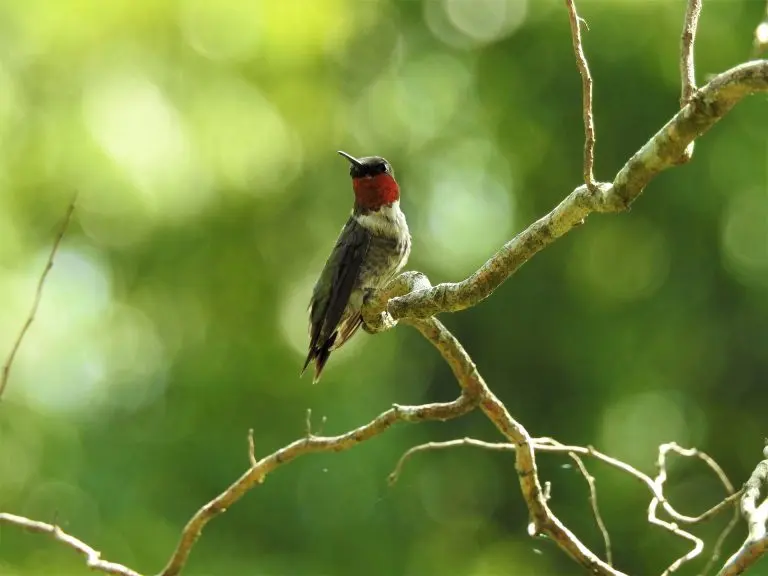
The Ruby-throated Hummingbird is predominantly green with a red flash of ruby at the throat in the male. Male and females hummingbirds are different with females being less brightly colored.
They breed in eastern states before migrating south.
They can be found in flower gardens or woodland edges and often visit hummingbird feeders. Hummingbirds feed on tubular flowers such as trumpet creepers or cardinal flowers, honeysuckle, jewelweed, bee-balm, red buckeye and red morning glory. They also fed on insects.
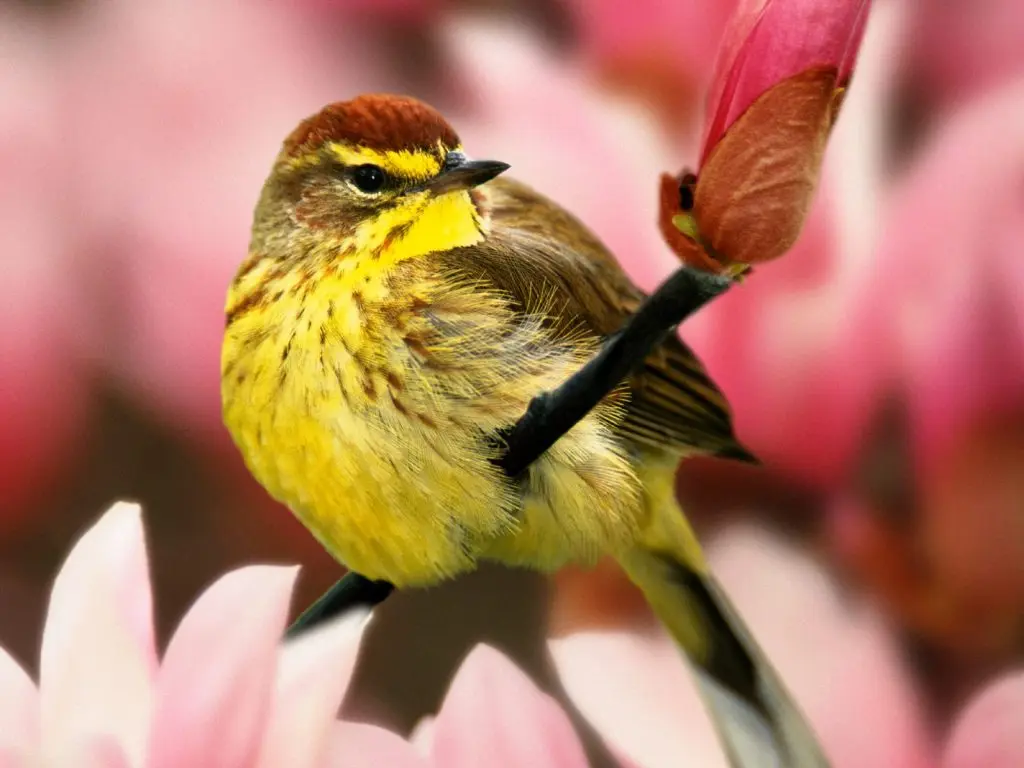
The palm warbler has a rusty red patch on the top of their heads and is a browny-olive color on the back and yellow underneath over the rest of its body. The breed in Canada but can be found in eastern states during the migration and all year along the far south coast and Florida.
Spring and fall is the best time to spot warblers in weedy fields, forest edges, and scrubby areas. They are often found foraging along the ground for insects, mixed in with other birds such as Sparrows, Juncos, and Yellow-rumped Warblers.
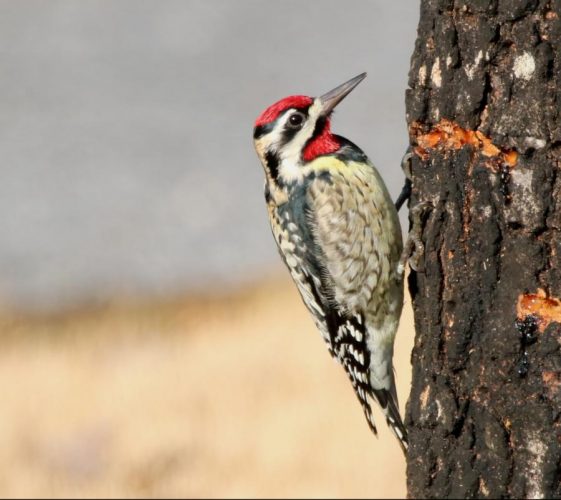
Yellow-bellied Sapsuckers are black and white birds with a red patch on the top of their heads and throat and with a pale yellow belly.
They breed in the far north and Canada and winter in the southeast. They can be spotted in forests and leave tail-tale rows of shallow holes in tree bark where they have been eating sap using their brush-tipped tongue. They may visit suet feeders.
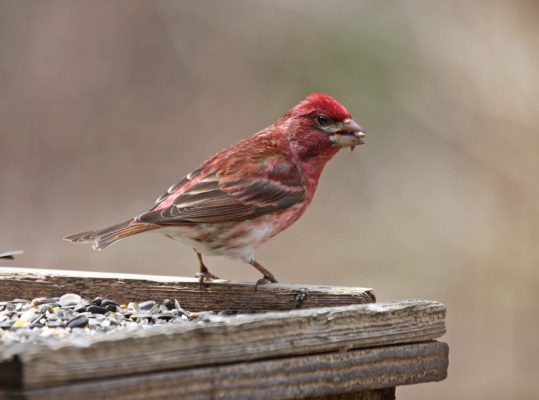
Purple Finch look very similar to House Finch with the reddish-purple head and breast with more brown on the back and wings.
They breed in Canada and overwinter in eastern states but can be found all year in the north-east are Pacific coast. They readily come to feeders for black oil sunflower seeds.
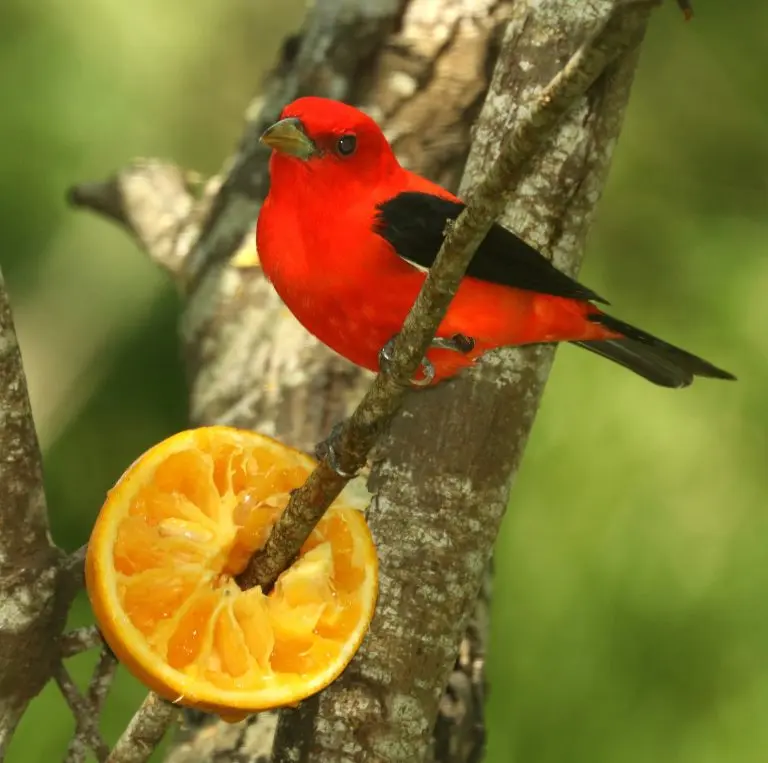
Scarlet Tanagers are birds with red heads and bodies, that is very bright, and with black wings and tail. They breed in eastern forests in summer before migrating to South America.
Scarlet Tanagers can be hard to spot as they stay high in the forest canopy.
You can attract more Scarlet Tanagers by planting berry plants such as blackberries, raspberries, huckleberries, juneberries, serviceberries, mulberries, strawberries and chokeberries.
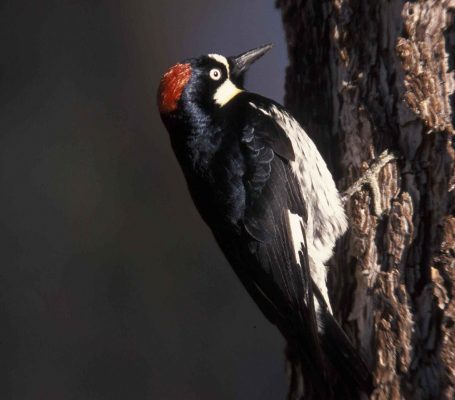
Acorn Woodpeckers have bright red crests, white faces, black backs, and whiteish-black underparts. Their range is small in North America just some areas in southern states and a little along the California coast.
They live in large groups in western oak woodlands and store thousands of acorns by jamming them into the specially made holes in trees. There are quite a few interesting and gross facts about Acorn woodpeckers.
They make loud parrot-like squarks from the top of trees. They may visit seed and suet feeders.
Check out these quick photo ID guides:
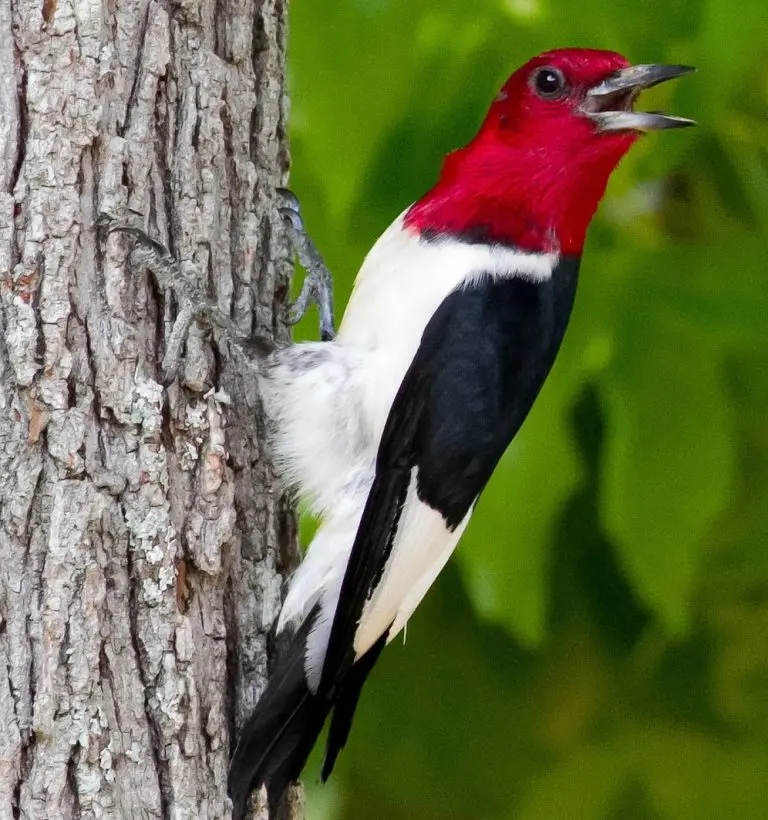
Red-headed Woodpeckers are birds with red heads as their name would suggest. They have white bodies and white and black wings. They can be found all year in eastern states and breed but migrate from the far north-west of their range for winter.
They can be found in open woodlots and dead timber in swamps or pine savannas. They store food such as insects and seeds in cracks in wood or under bark or roof shingles.
They are fierce defenders of their territory and will even remove or puncture the eggs of other species’ nests. Red-headed Woodpeckers can be attracted with suet feeders and fruit.
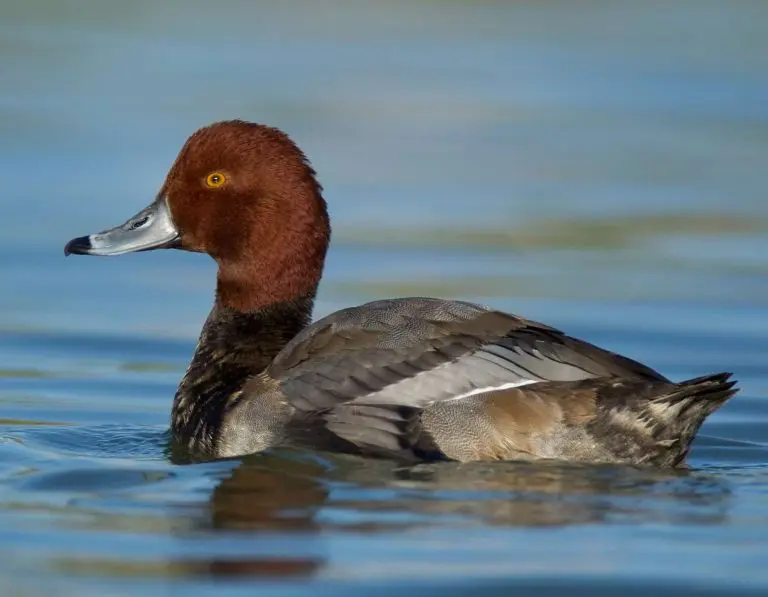
The Redhead duck has a reddish-brown head, black breast and tail, and grey body.
They can be found across all states especially in winter where they can be found in flocks numbering the thousands, especially along the Gulf Coast.
In summer they can be found nesting in reedy ponds of the Great Plains and West.
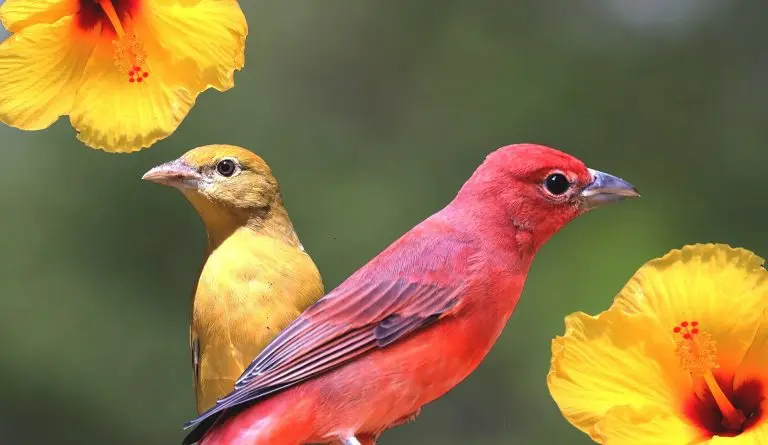
Summer Tanager males are bright red all over, with the females being yellow. They breed in southern and eastern states before heading to Central and South America for winter.
They are forest songbirds and can be found in open woodlands and feed on bees and wasps in mid-flight. They catch them and kill them by beating them against a branch and rubs the stinger off before eating them.
You can attract more Summer Tanagers to your backyard with berry bushes and fruit trees.
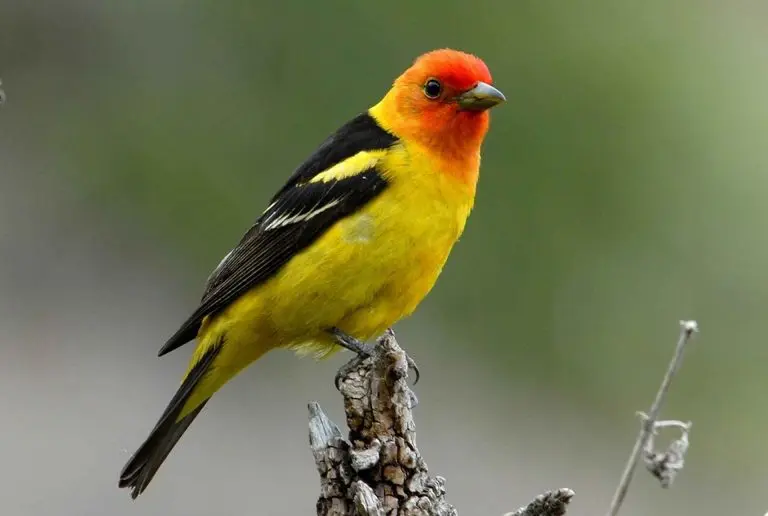
Western Tanagers have a flaming orange-red head, yellow body, and black wings. they can be found all over western states breeding towards the north and then migrating south for winter.
They live in open conifer forests but stay hidden in the canopy, despite their bright coloring. The red coloring probably comes from eating insects that produce a pigment that the Western Tanagers cannot produce themselves.
You can attract Western Tanagers with dried fruit, cut oranges, and other fruits from bird feeders.
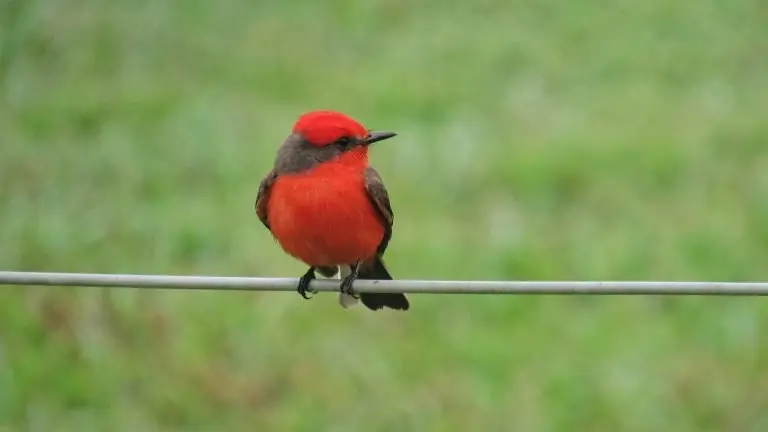
The Vermilion Flycatcher has a bright red crest and throat and breast and black along the back and wings with a black eye stripe.
They can be found all year in the far south in desert landscapes catching insects or sitting on exposed perches.
They are fairly common in the southwest but also along the Gulf Coast in smaller numbers.
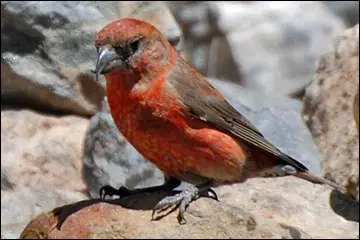
Red Crossbill males are brick red overall with darker wings and tails. They can be found year-round in northern and western states and in winter in eastern states.
They feed on conifer seeds and forage in flocks from tree to tree, even breaking unopened cones with their powerful beaks. As well as coniferous forests they can be found along roadsides consuming grit in the mornings.
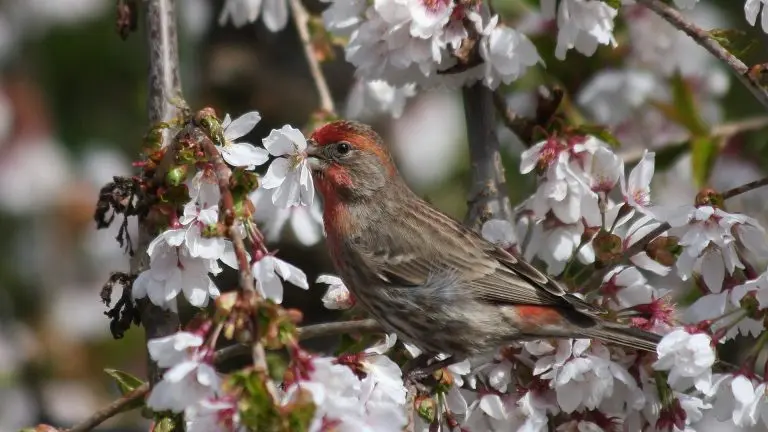
Cassin’s Finches have a red crown and rosy pink head and breast with whiteish belly and brown back and wings. they can be found in mountain forests in western states foraging in flocks for seeds.
They are not as common in backyards as House or Purple Finches but they may be attracted with sunflower seed feeders especially in winter or fruiting shrubs such as cotoneaster, mulberries, firethorn, grape and apple.
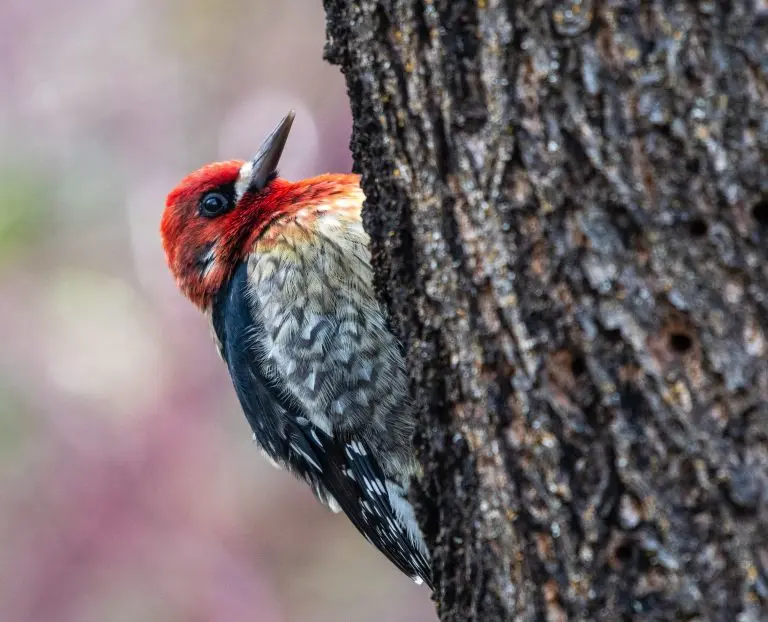
Red-breasted Sapsuckers are birds with red heads and breasts with black and white backs and wings and off-white bellies. They can be found along the Pacific Coast all year primarily in coniferous forests.
They make holes in trees to drink the sap and then hummingbirds will make use of them to also feed. They also eat fruit and insects.
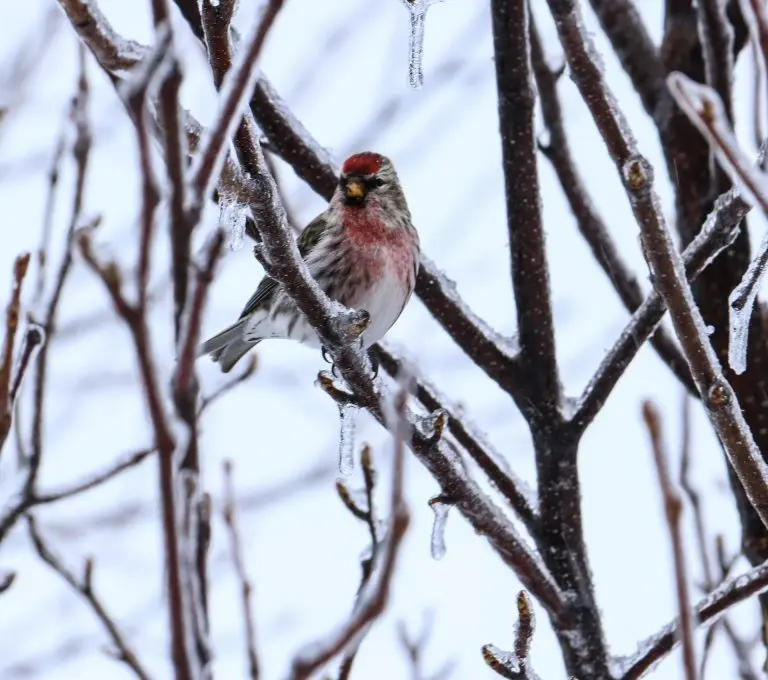
Common Redpolls have red foreheads, pinky breasts, and are brown and white over the rest of their bodies. They can be found in winter in northern states and less frequently in central states.
In winter they will sometimes tunnel into the snow to stay warm during the night. They can eat up to 42% of their body mass every day and can store up to 2 grams of seeds in a stretchy park of their esophagus.
They can be found in weedy fields or feeding on catkins in trees but they will also come to feeders for small seeds such as nyjer seeds or thistle.
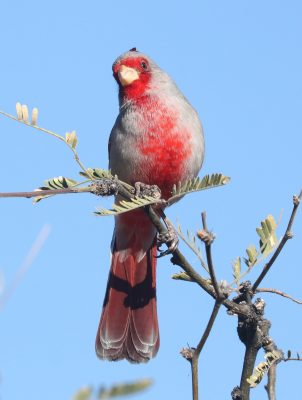
Pyrrhuloxia males are grey with red accents to the face, crest and have red running down the breast and tail. They are residents of the hot deserts of the southwest.
During the breeding season, they fiercely defend their territory but in winter they can be found in flocks of up to 1000.
Pyrrhuloxia feed on seeds but also insects and can be found at feeders with sunflower seeds but more often prefer them scattered on the ground.
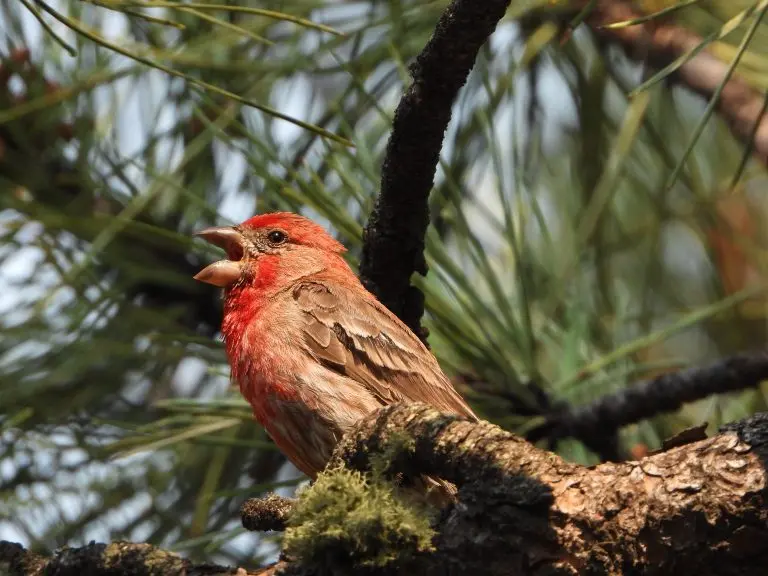
Pine Grosbeaks are a species of finch with the males having red heads, breasts, and backs and grey over the rest of their bodies and wings. They are large for finches and relatively slow.
They can be found in parts of the West during summer in open spruce and pine forests, or in winter in northern states. You can attract Pine Grosbeaks to black oil sunflower seed feeders in winter in the northern states.
As you can see there are many birds with red heads, but this list should help you start to identify any birds with a red head that you spot.
[]
“),e.close(),a)){var r=e.createElement(“script”);r&&(r.type=”text/javascript”,r.text=a,e.body.appendChild(r))}}catch(q){n(q,”JS exception while injecting iframe”)}return d},n=function(a,c){t.ueLogError(a,{logLevel:”ERROR”,attribution:”A9TQForensics”, message:c})},X=function(a,c,b){a={vfrd:1===c?”8″:”4″,dbg:a};”object”===typeof b?a.info=JSON.stringify(b):”string”===typeof b&&(a.info=b);return{server:window.location.hostname,fmp:a}};(function(a){function c(a,c,b){var d=”chrm msie ffox sfri opra phnt slnm othr extr xpcm invs poev njs cjs rhn clik1 rfs uam clik stln mua nfo hlpx clkh mmh chrm1 chrm2 wgl srvr zdim nomime chrm3 otch ivm.tst ivm.clk mmh2 clkh2 achf nopl spfp4 uam1 lsph nmim1 slnm2 crtt spfp misp spfp1 spfp2 clik2 clik3 spfp3 estr”.split(” “); F=ac&&”webdriver”in navigator&&(a=!0);return a?(b=43,m=c.toString(),!0):!1}];for(l=0;lf-d)){b.push({x:a.clientX,y:a.clientY});if(50b.length))){var l=b[0].x,g=b[49].x,k=b[0].y,h=b[49].y;a=h-k;for(var e=l-g,l=k*g-l*h,g=a/e*-1,s=b[49].ts-b[0].ts,k=!0,h=0;hd&&0g&&c(50,0,{xDiff:d,yDiff:g});r(a,”click”,t)}catch(m){n(m,”JS exception – checkFirstClick”)}};q(a,”mousemove”,s,!1);q(a,”mouseup”,B,!1);q(a,”mousedown”,p,!1);q(a,”click”,t,!1);q(a,”click”,g,!1)},O=function(){if(u.isFirefox()){var a=0;void 0!==window.onstorage&&a++;var b=document.createElement(“div”);b.style.wordSpacing=”22%”;”22%”===b.style.wordSpacing&&a++;”function”=== typeof b.getAttributeNames&&a++;2=a.screen.availHeight||1>=a.screen.availWidth||1>=a.screen.height||1>=a.screen.width||0>=a.screen.devicePixelRatio)&&c(10);var E=window.setInterval(function(){try{var a=b();a.isSel&&(c(a.headlessCode,!0===a.isTest?1:0,a.info),window.clearInterval(E),I(y))}catch(d){window.clearInterval(E),n(d,”JS exception – detectSelenium”)}},1E3);window.setTimeout(function(){try{window.clearInterval(E),I(y)}catch(a){n(a,”JS exception – clearInterval for detectSelenium”)}}, 1E4);var K=a.PointerEvent;a.PointerEvent=function(){c(11);if(void 0!==K){var a=Array.prototype.slice.call(arguments);return new K(a)}return null};e();N(a);L();S();0!==a.outerHeight&&0!==a.outerWidth||c(29);O();!w()||navigator.plugins&&0!=navigator.plugins.length||(x?c(38,0,”chrm”):u.isFirefox()&&c(38,0,”ff”));V(R,10);x&&w()&&a.chrome&&!a.chrome.csi&&!a.chrome.loadTimes&&c(25);z();y=J(null,Math.random().toString(36).substr(2));p=v(y,”contentWindow”)?a:y.contentWindow;d(p);G(p,42);0===A(navigator,”connection”, “rtt”)&&c(44);P();Q()}catch(Y){n(Y,”JS exception – “)}})(z)})(ue_csm,window,document); ue.exec(function(d,c){function g(e,c){e&&ue.tag(e+c);return!!e}function n(){for(var e=RegExp(“^https://(.*.(images|ssl-images|media)-amazon.com|”+c.location.hostname+”)/images/”,”i”),d={},h=0,k=c.performance.getEntriesByType(“resource”),l=!1,b,a,m,f=0;f=a.encodedBodySize&&(b=e.exec(String(a.name)))&&3===b.length){a:{b=a.serverTiming||[];for(a=0;ah&&(m=b,h=a))}g(m,”_cdn_mp”)}d.ue&&”function”===typeof d.ue.tag&&c.performance&&c.location&&n()},”cdnTagging”)(ue_csm,window); } /* ◬ */ 

Birds with black heads are common throughout North America. You’re apt to find a wide range of birds with this kind of coloration, anything from songbirds to scavengers can have black feathers on their heads. Some birds are completely black, while others just have black patches on their head and cheeks.
They can be found anywhere from the southwestern deserts to the chilly coasts off New England, and even in your backyard.
Black is a fairly common color in the bird world, and there are many more than just 25 species with black on their heads! We chose a variety of different types of birds for our list to give you a sample of the many species you may see in North America.
 Image: Ramos Keith, USFWS | pixino.com
Scientific name: Haematopus palliatus
The American oystercatcher is a distinguished and easily-spotted shorebird. Found along the Gulf and East coast, this shellfish-eater stalks along the beach at low tide, where it can find the best oysters and clams stranded by the waves.
Both sexes share golden eyes, a red beak, and a black head. Some juveniles have a black tip on their otherwise orange beak.
 Arctic Tern | image by Gregory Smith via Flickr | CC BY-SA 2.0
Scientific name: Sterna paradisaea
This small tern is entirely white and gray except for the black patch of feathers on its face and head. This hood, which just covers its eyes, is present on both males and females.
Arctic terns spend the breeding season in northern Canada and Alaska. They migrate south to Antarctica in one of the longest migrations known to spend the winter. Unusually long-lived, some have lived to be over 30 years old.
 Acorn Woodpecker | Image: pixabay.com
Scientific name: Melanerpes formicivorus
The acorn woodpecker often looks perpetually surprised, thanks to its wide eye with a bright yellow iris. This black, white, and red woodpecker inhabits the Pacific coast of California and Oregon, as well as some of the southwest into Mexico.
Acorn woodpeckers have a black head, interrupted in the middle by a white band. They congregate in groups where they hide away acorns and have complex social rituals. Their call sounds like waka-waka-waka.
 Image: 4Me2Design | pixabay.com
Scientific name: Icterus galbula
The male Baltimore oriole is mostly a bright red-orange, except for his black head and wings. Females are dusky yellow-orange with gray wings and lack the dark head of the males.
Look for them in the eastern United States. They migrate south into Florida and Mexico during colder weather.
Unlike other songbirds, Baltimore orioles prefer fruit or nectar to seeds. They can be persuaded to come to your backyard with fresh offerings of jam or fruit.
 black vulture head | image: Everglades National Park
Scientific name: Coragyps atratus
Unlike other birds that have black heads because of the color of their feathers, black vultures have black skin on their heads. They have evolved to have heads devoid of feathers because of their diet – already dead prey. Because their head often gets bloody while tearing prey apart, it’s easier to keep clean without feathers.
Native to the Southeast and Mexico, Black Vultures can be spotted near roadkill or other vultures. Interestingly, they don’t have a very good sense of smell. Instead, they follow other vultures to find meals.
 Image: Avia5 | pixabay.com
Scientific name: Poecile atricapillus
Males and females have a black cap on their heads, as well as a black chin patch. They are gregarious and curious and can hang nearly upside-down to grab seeds from branches. Look for this endearing songbird in the northern United States and most of Canada.
It’s very easy to attract black-capped chickadees to feeders. They are game for almost any kind of feeder and will feast on sunflower seeds, mixed seeds and suet.
 Black Phoebe |USFWS Pacific SW Flickr
Scientific name: Sayornis nigricans
The black phoebe is a delicate songbird that makes its home along California‘s coast, Mexico, and parts of South America. They don’t mind people and are comfortable in suburban areas.
This flycatcher prefers to look for prey on perches near water. Both males and females have a sooty black head and creamy white belly. They are resourceful and use nearby mud to make their nests.

Scientific name: Gavia immer
Common loons are birds of lakes and coasts. They don’t discriminate between salt and freshwater, so they can be found on both east and west coasts, as well as inland. In summer they mostly head to Canada to breed, but can also be found in the Great Lakes and in lakes of New England. In the winter, they spend more time on the coasts.
Breeding season birds have deep black heads and a vertically striped black and white collar. Their long slender bill, and how low their body sits in the water, makes their silhouette easy to distinguish from most ducks and waterfowl.
 Male Bobolink | image by USFWS Midwest Region via Flickr
Scientific name: Dolichonyx oryzivorus
Male bobolinks have dramatic coloring on their heads. The front is jet black, but the back of the head is light yellow. Females, which are yellow and brown, have little in common with the male’s breeding plumage.
In North America, you can find bobolinks in the northern United States. They migrate to South America from the Great Plains and Northeast each year.
 Male rose-breasted grosbeaks eating from our platform feeder
Scientific name: Pheucticus ludovicianus
Native to the Northeast and the northern Great Plains, the male rose-breasted grosbeak stands out for his bright red breast patch among black and white feathers. His head is entirely black.
Females are more subtle, with entirely brown and white striped plumage. Their sweet song is famous for sounding like that of a very happy robin.
 image: Pixabay.com
Scientific name: Turdus migratorius
It’s practically impossible to miss an American robin. They live throughout most of the United States year-round, while some of the population migrates seasonally between Canada and Mexico.
Males and females look the same. Both have a black head, gray back and wings, and orange breast. They adapt well to human infrastructure and it’s common to see them pecking around in a yard for worms after a rain.
 Black Scoter | image by Becky Matsubara via Flickr | CC BY 2.0
Scientific name: Melanitta americana
The black scoter male is entirely black except for a bright orange ‘knob’ at the base of his bill. Females are dusky brown, but they have a black cap on their heads.
They are native to saltwater coasts and can be found along the Pacific coast north into Alaska, as well as the Gulf and East coast north into Canada. They breed in western Alaska and the eastern coastlines of Canada.
 Image: Tom Koerner/ USFWS Mountain-Prairie
Scientific name: Pica hudsonia
Relative to the highly intelligent crow, the black-billed magpie sports a long tail and dark black head. Males and females are talkative and like to sit in visible places. Their long tail feathers help them stand out even more.
These western birds are well-adapted to humans and don’t mind suburban areas. Attract a few to your yard by offering platform bird feeders, which can accommodate larger birds.
 Canada Geese | image by: birdfeederhub.com
Scientific name: Branta canadensis
The flying V-formations of Canada geese are easy to spot during the fall and spring, when they migrate north and south. This large goose is easy to recognize. It has a brown body, black tail and legs, and black neck and head with a white chinstrap.
Both males and females look the same, and you’re more likely to hear them before you see them, especially during fall and spring! With their loud “honk”, they are common in parks with ponds.
 Lesser Goldfinch (male) | image by Gregory Smith via Flickr | CC BY-SA 2.0
Scientific name: Spinus psaltria
Lesser goldfinches have yellow undersides and black backs, but the degree of coverage varies depending on their location. Birds east of the Rocky Mountains are completely yellow underneath and black up top, while birds on the Pacific coast have only a black head patch and wings.
Entice some to visit your yard by offering nyjer seed one of their favorite snacks.

Scientific name: Spinus tristis
Found in backyard gardens and bird feeder setups across North America, the American goldfinch is one of the most popular songbirds on the continent. During the breeding season, the male’s cheerful yellow plumage is divided up by black wings, tail, and a black patch on its head.
Females are yellow and black too, but they lack the black head patch that is so characteristic of the male goldfinch. Attract them with nyjer seed and seed producing flowers.
 Black-throated Gray Warbler | image by Patricia Ware via Flickr
Scientific name: Setophaga nigrescens
Identify the black-throated gray warbler by way of its black-and-white striped head. Males have more defined stripes, but both sexes sport a black patch over the eye, chin, crown. They also share a small yellow dot right in front of the eye.
A common songbird of the forests west of the Rockies, they prefer oak and pine forests, where they are bold and confident as they hop around.
 Scott’s Oriole (male) | image by Bettina Arrigoni via Flickr | CC BY 2.0
Scientific name: Icterus parisorum
The boldly colored Scott’s oriole visits the U.S. southwest during the spring and summer. They enjoy desert habitat, and nest in yuccas, junipers and pinyon pines. They particularly like areas with abundant yucca, which they use to forage for insects and nectar.
Females have a yellowish-gray head, but males sport a dark black head that extends to their chest and upper back. While females are a more olive yellow, males are bright lemon yellow.
 Great-tailed Grackle | image by Alan Schmierer via Flickr
Scientific name: Quiscalus mexicanus
This large, feisty black bird wants you to know that he is here and ready to party. Great-tailed grackles are gregarious and social. They’re entirely black-feathered from beak to tail. In bright sunlight, their feathers often shine with a blueish tint. This same coloration is present in other common U.S. grackle species such as the common grackle and boat-tailed grackle.
If you plan to attract grackles to your yard, try to give them a separate feeder. They form large flocks, especially in the evening, and will joyfully scare off other birds. Look for great-tailed grackles in the Southwest and Texas.

Scientific name: Corvus brachyrhynchos
Crows are intelligent and adaptable, two traits that help them thrive in human-dominated environments like cities and suburbs. Find them across North America in environments ranging from undisturbed forests to parking decks.
Both males and females are entirely black-feathered. They shine with a dull iridescence in the sunlight and have strong black beaks. Their larger and also fully black cousins, the common raven, are found in the western United States.
 Image: Jasmin777 | Pixabay.com
Scientific name: Falco peregrinus
Peregrine falcons are a success story – these ‘masked’ birds of prey were successfully recovered from near-extinction levels caused by DDT poisoning in the mid 20th century.
Males and females have a black head and yellow-ringed eyes, creating an effect that sometimes looks like a mask. Spot them mostly on the edges of the continent: the Gulf Coast, Pacific Coast, and Eastern seaboard are all fair game. Breeding colonies are also in the Rocky Mountains.

Scientific name: Caracara plancus
The crested caracara makes its way on this list because of its black crest. Both males and females have this black ‘mohawk’ of feathers.
Spot the caracara in the southwestern United States. It likes to walk on the ground and can be identified easily because of its crest and bright yellow legs. Even juveniles have the crest; it is brown, but over time, it darkens to black.
 photo by: Fernando Flores | CC 2.0
Scientific name: Buteogallus anthracinus
This robust hawk makes an impression in the skies of the Southwest United States and south into Mexico and Central America. While they don’t hang around backyards, you may be able to spot one near a river, where they swoop down to grab fish.
Both males and females are soot-colored, except for a white tail stripe. Their dark black heads match the same color as the rest of their bodies.

Scientific name: Pipilo erythrophthalmus
Spot the charcoal-black head of a male Eastern towhee in the eastern United States. It’s easy to spot them in undergrowth if you can’t already hear their ‘chewink’ toned call. Attract them to bird feeders with seeds scattered on the ground.
Only males sport the black head and back. Females are a dusky brown, but they still share ruddy underparts like the males. Their western counterpart, the spotted towhee, also sports a black head.
 Image: paulbr75 | pixabay.com
Scientific name: Leucophaeus atricilla
During the breeding season, adults have a fully black head, white patch around the eye and dark red beak. However they undergo quite a change for the winter season, when their head changes to be mostly white with a little gray patch behind the eye and a black beak.
Laughing gulls are common along the east coast and Gulf of Mexico. You’ll see them at beaches and docks, and are known for their loud laugh-like calls.

The administration approved the controversial ConocoPhillips venture while also limiting future drilling in other parts of Alaska.
Source
