John Lujan and Frank Ramirez advance to runoff for Texas House seat | The Texas Tribune
Sign up for The Brief, our daily newsletter that keeps readers up to speed on the most essential Texas news.
Republican John Lujan and Democrat Frank Ramirez are advancing to a special election runoff to fill the seat of former state Rep. Leo Pacheco, D-San Antonio, a seat the GOP is eager to flip as it looks to gain new ground in South Texas.
With all vote centers reporting Tuesday night, Lujan was getting 42% of the vote, while Ramirez was receiving 20%, according to unofficial returns. Democrat Desi Martinez, a lawyer, was in third with 18%, followed by Democrat Katie Farias, a local school board member, at 12%. The other Republican on the ballot — Adam Salyer, the 2020 nominee for the seat — finished last at 9%.
The special election was triggered by Pacheco’s resignation last month to teach at San Antonio College.
The district, anchored in the South Side of San Antonio, is Democratic-friendly, though Republicans believe they have a shot at capturing it as they seek to capitalize on President Joe Biden’s underperformance across South Texas last year.
Lujan has run three times before in the district, the first time in a 2016 special election where he flipped the seat before losing the regular general election months later. Lujan is backed by Gov. Greg Abbott, House Speaker Dade Phelan, and a number of deep-pocketed GOP groups, which have helped him raise more than double what the Democratic candidates combined raised.
Still, Lujan campaigned with a bipartisan appeal, leaning on his business experience and law enforcement background. He even said he supported Medicaid expansion, though he clearly lined up with his party on issues like abortion and gun rights.
Pacheco endorsed Ramirez to succeed him, as did Bexar County Judge Nelson Wolff.
The Democratic field seized on some of the issues of the day, with Farias campaigning against what she called a “war on women” under the state’s new abortion law banning the practice as early as six weeks into pregnancy.
Disclosure: San Antonio College has been a financial supporter of The Texas Tribune, a nonprofit, nonpartisan news organization that is funded in part by donations from members, foundations and corporate sponsors. Financial supporters play no role in the Tribune’s journalism. Find a complete list of them here.
The 2021 Texas Tribune Festival, the weeklong celebration of politics and policy featuring big names and bold ideas, wrapped on Sept. 25, but there’s still time to tune in. Explore dozens of free, on-demand events before midnight Thursday, Sept. 30, at tribfest.org.
USACE, Dept. of Housing Block Environmental Justice for Caño Martín Peña Residents
When her children were studying at the Santiago Iglesias Pantín Elementary School in Barrio Obrero, Aileen Morales had to carry them on her back every time the streets next to Caño Martín Peña were flooded. She did not want them to arrive at their classrooms with their legs wet or with the stench caused by the dirty waters that for decades have affected the peace of communities, every time they experience heavy rains.
Morales, who is a resident and community leader in the Parada 27 sector, has been watching the news for more than a decade reporting on the flooding events related to the Caño. She has also participated in annual meetings with members of the US Army Corps of Engineers (USACE). The flooding problems and the need to dredge this urban body of water are widely known issues both in Puerto Rico, and in some political circles in the United States, as a matter of environmental justice and health. But for years, the need to take action remains a pending agenda filed in government documents. This, despite the multiple efforts and proposals presented by leaders of the eight communities surrounding the Caño Martín Peña.
“They [USACE] come here, they take a lot of photos. They’re aware of this. Every time they come here they say they’re about to start [the dredging], they always say this is the year. We’re tired of showing them around the community,” Morales said in conversation with the Center for Investigative Journalism (CPI, in Spanish).
“We were excluded [from the budget approved by Congress in 2018] on a technicality, but I say that’s an excuse. The project is ready to get going. The money isn’t getting here,” said the vice president of the Grupo de las Ocho Comunidades del Caño Martín Peña (G8 Community), a coalition that brings together community-based organizations in the area.
The eight communities surrounding the channel, between Hato Rey and Santurce, are: Las Monjas; Israel & Bitumul; Barrio Obrero Marina; Buena Vista Hato Rey; Parada 27; Barrio Obrero San Ciprián; Buena Vista Santurce; and Cantera.
In 2018, the USACE excluded the ENLACE del Caño Martín Peña Corporation, which works with the government to manage social and infrastructure projects in the eight communities, taking from the $2.5 billion allocation in federal funds destined for flood control. At the time, the federal government’s argument was that the Caño project was one of ecological restoration and not one of flood control.
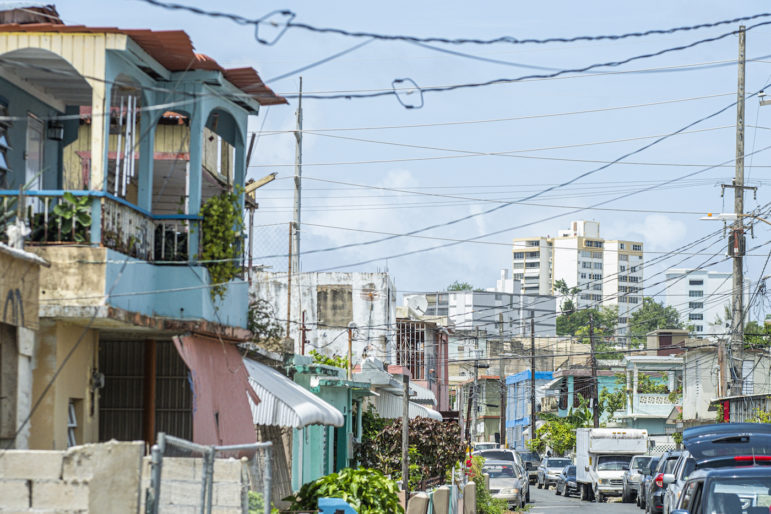
Photo by Luis R. Vidal | Center for Investigative Journalism
Almost three years later, the uncertainty about whether the USACE will include the Caño’s dredging in its budget is still pending. The urgency for funding availability for ecological restoration projects in the area prompted members of the US Congress to send two separate letters in January of this year to the Assistant Secretary of the Army for Civil Works, R.D. James, and then-outgoing Director of the Office of Budget and Management (OMB), Russ Vought, to push for dredging funds.
However, a few days later, USACE Project Manager Brenda Calvente told the CPI that the budgetary priority will instead be given to those projects that are already underway.
“The Civil Works Budget uses the performance and guidelines established per each fiscal year (enclosed FY2021) to guide the allocation of construction funds. It gives priority to the projects with the highest economic, environmental, and safety returns and focuses on on-going projects, rather than starting additional projects,” Calvente said, after the CPI asked what it will take for the dredging of the Caño to be considered a priority project within the USACE’s budget.
However, seven new construction projects were included in the Work Plan that the USACE presented to Congress for its $7.3 billion budget for Fiscal Year 2021. Although Public Law 116-260 requires that two of these seven projects be for ecological restoration, the dredging of the Caño Martín Peña was left out.
The seven new projects consist of a dam in Idaho, coastal projects in Mississippi, works on a New Hampshire basin, works on the Rio Grande and its tributaries in New Mexico, construction related to the Allegheny River in Pennsylvania, mitigation projects in Morganza, Louisiana, and projects on the Houston Ship Channel, Texas.
Included in the Fiscal Year 2021 budget, USACE also lists several ongoing projects for completion this year. One of these is a pilot project for the use of dredged material in the San Juan Bay. The federal agency did not answer why it told the CPI that it gives priority in the budget to existing projects, if there are at least seven new construction projects in the 2021 budget submitted to Congress.
When asked why an ecological restoration project that through dredging will help mitigating floods, is not equally considered a priority flood control project, Calvente said, “(The) project does not meet the parameters to be justified as a flood risk management project since inundation levels will be reduced outside the federal project limits.”
“A Design Agreement between the Department of the Army and ENLACE was executed in 2017 to initiate the design phase. Design activities are ongoing,” the USACE officer explained in regards to the status of the dredging proposal.
Government of Puerto Rico fails to comply with resolution on federal recovery funds
The promises made to the approximately 26,000 residents of the communities adjacent to the Caño have not only been ignored by the federal government, but also by the government of Puerto Rico.
In November 2019, former Gov. Wanda Vázquez Garced ordered the Puerto Rico Department of Housing (DV) to amend the Action Plan so that the Caño Martín Peña communities were eligible to request federal funding through the Community Development Block Grant (CDBG-DR) Program. Because they are sectors located in flood-prone areas, the Caño communities could not request money from the $18.5 billion in CDBG-DR funds that were made available to Puerto Rico after the passage of hurricanes Irma and María in September 2017.
The order to the DV came after the approval of Senate Joint Resolution 118 presented by former Senator representing the district of San Juan, and now San Juan Mayor Miguel Romero.
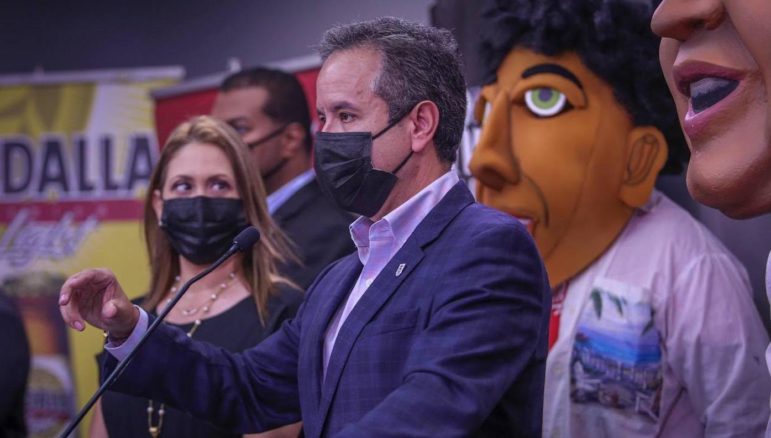
Photo provided by the Capital’s Press Office
However, 14 months after the approval of Joint Resolution 118, the DV has failed to fulfill the mandate. The fourth and fifth amendments to the Action Plan that the DV applied at the end of 2020 for the use of CDBG-DR funds did not include the changes requested for the benefit of Caño residents. While the US Department of Housing and Urban Development has already approved the fourth amendment, it is still evaluating the fifth amendment.
With Gov. Pedro Pierluisi’s arrival in January, the DV now has William Rodríguez as its designated secretary. However, Joint Resolution 118 of 2019 remains unfulfilled.
Former Housing Secretary Luis Fernández Trinchet invited Romero — former senator and author of the resolution — to a meeting between the DV and ENLACE on September 30, 2020. That meeting produced a proposal from Maretzie Díaz Sánchez, deputy secretary of the DV, for the CDBG program. She suggested that $540 million be set aside from the $8.3 billion in federal funds from the Community Development Block Grant Mitigation (CDBG-MIT) Program for major projects that contribute to the development and improvement of the Caño and its communities.
In a letter that ENLACE sent to the DV on November 20, 2020, the entity provided a detailed list of the critical priority projects that would be moved forward with the availability of the $540 million from CDBG-MIT funds.
As opposed to Fernández Trinchet, Díaz Sánchez remains at her post at the DV after the change in administration in January.
Just as there has been a breach of Joint Resolution 118, the proposal to set aside $540 million of CDBG-MIT funds for critical projects in the Caño has not materialized either.
During the transition hearing of the incoming administration held on December 17, Mario Núñez, executive director of the Caño Martín Peña’s Proyecto ENLACE, advocated both for compliance with Joint Resolution 118, and for the DV’s commitment to set aside $540 million in federal mitigation funds. In his presentation, he emphasized the urgency of these projects to facilitate the dredging of the Caño.
But, a month after his presentation before the transition committee Núñez said he did not know the reasons why the DV still had not worked on the amendments to request the federal recovery and mitigation funds.
“They didn’t really give us an explanation in a logical, valid way in our meeting in September with the Secretary. We really don’t know,” said Núñez, after the CPI asked if the DV had justified its non-compliance with Joint Resolution 118 of 2019.
Neither the current Secretary, William Rodríguez, nor Deputy Secretary Díaz Sánchez, have been available for an interview with the CPI since mid-January. When met with questions about why, the Housing press officer said they will offer a response after they meet with the Caño communities.
Meanwhile, Mayor Romero said he met with Rodríguez on January 26 and was aware of the projects that are in line to be financed with the $540 million in CDBG-MIT funds. When asked if he knows the reason why the DV has failed to comply with the amendments ordered by Resolution 118 of 2019, the municipal executive said the agency has complied, even though the CPI told him that the Caño Martín Peña communities have not yet been integrated into the Action Plan for the use of CDBG-DR funds.
“There’s a procedural aspect that the Housing Department will have to finalize at the local level, but ENLACE as well as the Corporación de la Península de Cantera have been asked for projects under the mitigation program and under the [CDBG] DR. That’s a fact and they will have the municipality’s full support,” said Romero.
“It’s a handful of projects that will also require lobbying efforts, but now that the government is aligned, and that governor Pedro Pierluisi has expressed his commitment to using all this money available to invest in the Caño, and to get it done,” the mayor said.
The communities’ Comprehensive Development Plan hasn’t been ignored
Aside from the government not coming through or its forgotten promises, Caño residents face yet another challenge that could delay their possible access to federal recovery funds.
After hurricanes Irma and María struck in 2017, the DV awarded a $37.5 million contract to Foundation for Puerto Rico to develop at least 60 community resilience plans based on the needs of their areas to guide their recovery processes. To date, none of these plans have been worked on, nor have the organizations and communities that will be part of the process been identified.
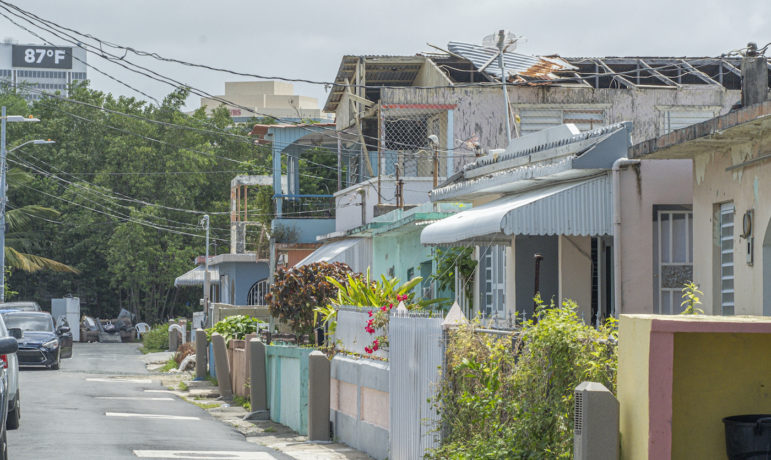
Photo by Luis R. Vidal | Center for Investigative Journalism
To questions made by the CPI to update the status of the use of these funds, Félix Aponte, chief officer of the Foundation for Puerto Rico’s Comprehensive Planning Program for Community Resilience, said that in the coming weeks they hope to open the call “that will allow our communities to access the necessary funds to develop their respective resilience plans.”
Núñez expressed his concern that access to CDBG-DR funds would be conditioned to undergoing a process that has not begun and that it would be a duplication of efforts for the Caño communities.
“In the case of Caño Martín Peña, the community worked on a Comprehensive Development Plan from 2002 to 2004. Public hearings were held on June 30, 2004, through the Highways and Transportation Authority, because this project was originally under the Authority for discussion and approval. The Planning Board finally approved the Comprehensive Development Plan in 2007,” the executive director of ENLACE said.
“At one point we were told that it had to be [done] through the Foundation for Puerto Rico, which was the organization that had been hired for communities to organize and prepare their comprehensive development plans. In the case of Caño Martín Peña, the community went through a participatory process of planning, reflection and evaluation that generated the document. So, don’t ask me to go through the same process again. My Comprehensive Development Plan, which — although it isn’t a flood mitigation plan — does address the element of climate change and the issue of flooding within the dredging,” he added.
The projects proposed in the Comprehensive Development Plan to improve the quality of life of the residents of the area and contribute to improving the functioning of the Caño are the result of years of local assemblies and deliberative processes in which representatives of the eight communities adjacent to the channel participated.
For this reason, the projects that ENLACE presented to the DV for the use of the $540 million in CDBG-MIT funds are not new, but instead respond to the proposals made by the communities several years ago.
For example, an Environmental Impact Statement document for the Caño Martín Peña Ecosystem Restoration Project was presented to USACE in 2015. One of the projects proposed in the document is the Paseo del Caño, a structure that would run through the entire body of water, would connect the different communities adjacent to the Caño and would contribute to restoring ecosystems damaged by pollution in the area.
The Paseo del Caño proposal was specifically one of the projects that ENLACE presented to the DV for the use of CDBG-MIT federal funds. Of the $540 million, $406 million would be used for boardwalk infrastructure in three areas that surround and connect the Caño, both in the northern area and in the southern part of the canal. The remaining $134 million in mitigation funds administered by the DV would be used primarily for the construction of “resilient houses” in some of the communities next to the canal.
“The infrastructure to manage these waters would be under the boardwalk. The benefits of these projects are for the community directly, but they also indirectly contribute to the city’s economic development,” Mariolga Juliá Pacheco, director of ENLACE’s Citizen Participation and Social Development Office, told the CPI.
“We already have an HH [hydraulic hydrological] study that shows how the flood footprint changes if it is dredged,” Juliá Pacheco added, to stress that the proposal is a flood control project and is directly related to ecological restoration, the waterway and the dredging of the Caño.
A demand for environmental justice for the Caño Martín Peña communities
The Caño Martín Peña is part of a system known as the San Juan Bay Estuary. One of its most important roles is to connect the San José Lagoon to the east of the channel, with the Bay of San Juan, located on the west side. So, any project aimed at restoring this urban body of water would not only benefit the nearly 26,000 people who reside in the eight communities adjacent to the Caño but would also improve the quality of aquatic ecosystems in different areas within the metropolitan region, Jorge Bauzá, the scientific director of the San Juan Bay Estuary Program (PEBSJ, in Spanish) told the CPI.
“Over the years [the Caño] has been clogging up for different reasons and we no longer have that hydraulic connection [between the San Juan Bay and San José Lagoon]. Ecological restoration means going back to the conditions of the 1892 and 1936 maps. Connecting will allow us to improve the quality of the water, which is at the core of having a healthy body of water that not only supports aquatic life, but that also opens recreational spaces,” Bauzá explained.
For the oceanographer, the proposed Paseo del Caño project addresses the need to improve circulation, which is one of the main requirements for any society that aspires to improve the quality of a body of water.
“This boardwalk will allow exchanging the canal, or Caño Martín Peña, for what will become its support, or mangrove forests. That boardwalk, by design, isn’t going to disconnect the system, but instead, will connect it. Once you improve the quality of the water in Caño Martín Peña and the San José Lagoon, once the water circulates, the San José Lagoon will improve, because ecological spaces, recreational spaces are opened. The boardwalk will not just allow people to see the restored Caño, but also to enjoy it,” added Bauzá.
Meanwhile, PEBSJ Executive Director Brenda Torres Barreto, valued the projects proposed in El Caño as an example for other communities in Puerto Rico. The scientist credited the process that led to the production of the Comprehensive Development Plan for the body of water and adjacent communities.
“This plan does take in account the community work. That district [the Caño Martín Peña], that relocation of homes for the development of water infrastructure, and then the dredging process, all of this is outlined in that plan,” Torres Barreto told the CPI.
“It’s a matter of environmental and social justice in the metropolitan area, at the heart of where it’s happening and from where it is envisioned that there will be a reconstruction for all of Puerto Rico,” said Torres Barreto.
The dredging and restoration of the Caño Martín Peña as a matter of environmental justice that transcends the direct benefits to the residents of the area was also echoed by Alejandro Torres Abreu, environmental sociologist and scholar of communities with bodies of water.
The professor at the University of Puerto Rico at Humacao also criticized the insistence of the US Corps of Engineers in giving priority only to those projects in which there is an economic justification, according to their development criteria.
“These federal agencies are implementing participatory processes, they are implementing restoration processes without necessarily understanding the imbalanced political, social and economic complexity between the federal government and the government of Puerto Rico. In this sense, these restoration policies, these policies to address core concerns such as climate change issues in different contexts, be it the Caño or Ocean Park, are policies that ultimately repeat a management response logic to these situations that are very unfair, very colonial, where federal government policies prevail and must be complied with however they’re laid out in the regulations, without necessarily considering the local, social and political dynamics of those communities where the projects are being developed,” Torres Abreu said.
Rafael R. Díaz Torres is a member of Report for America.
La entrada USACE, Dept. of Housing Block Environmental Justice for Caño Martín Peña Residents se publicó primero en Centro de Periodismo Investigativo.
#Bheeshma (Hindi) Promo 2 | Nithiin, Rashmika Mandanna | Tv Par Pehli Baar | 19th Feb 2022
Presenting Official Hindi Teaser Of Movie #Bheeshma
Goldmines Telefilms Pvt Ltd Presents “Bheeshma (Hindi)” Starring Nithiin and Rashmika Mandanna in lead roles, directed by Venky Kudumula. Creative Producer Manish Shah.
Tv Par Pehli Baar 19th Feb Sat 8pm Only On Dhinchaak, India’s leading movie channel, A Goldmines venture.
#BheeshmaHindiTeaser #Nithin #Rashmika #Dhinchaak #GoldminesTelefilms
————————————-
For More Movies Subscribe: https://www.youtube.com/GoldminesTelefilms
Follow Us On Facebook: https://www.facebook.com/OfficialGoldminesTeleFilms
Instagram: https://www.instagram.com/officialgoldminestelefilms
Twitter: https://twitter.com/GTelefilms
Raleigh Donates Food Hampers, Children’s Gifts – Bernews
On Saturday [Dec 18], Raleigh Alumni Relief Team gave holiday food hampers, hot dinner plates and children’s gifts to over 162 community members which included alumni and their family members.
A spokesperson said, “Raleigh Bermuda is grateful to the Montarsolo Family for supporting this initiative in giving to our families and children in need during this holiday. Thank you also to Mrs. Marva Trott who helped to cook all the hot food which were served to all families.”
Raleigh Executive Director Ms. Dany Pen said, “We are very grateful that we were able to help over 162 community members during this holiday. We had some very disappointing news when another organization had reached out to us and said they would provide hampers and turkeys but then last minute told us they would not give us anything.
“It was heartbreaking because we had families in need already lined up to receive the hampers. But thank you to the generosity of the Montarsolo Family and Mrs. Marva Trott, we were able to go get all the groceries, hot meals, and children’s gifts.
“We were able to give out bags of fresh fruits, 8lb bag of fresh potatoes, 5lb bag of rice, fresh bread, cassava pie, mac and cheese, stuffing and gravy and so much more to our families in need.”
Raleigh Bermuda Chair, Ms. Tasha Jones says, “With the continued help of our donors, volunteers, and supporters, we at Raleigh Bermuda always strive to support our extended family and our community year-round.
“At this time of year, we know that same support is vital to allow people and families in need to have a chance to enjoy the holiday season. We are especially thankful that the Montarsolo family and Mrs. Marva Trott gave us the needed opportunity to deliver assistance and I am extremely proud of our Alumni and volunteers who made it happen.”
A spokesperson added, “Raleigh Bermuda would like to highlight our Raleigh Alumni Relief Team Project Managers and Volunteers who helped to organize this ‘Holiday Giving’ to the community: Keri Pacheco, Chloe Baron, Jakhera Tucker, Jawonday Smith, Kandrea Romaine, Tajshana Tucker, Eric Wallace, Aries Mosley-Lee and Max Wallace.”
“Raleigh Bermuda serves over 200+ young people between the ages of 14 – 35 years old on island. The organization is well known for its alumni programme in the community and recognized for having one of the highest retention rates of young people on island.
“Raleigh Bermuda nurtures and fosters relationships with young people to support them as they transition into adulthood. The charity provides life skills that helps our young people become independent, confident, and leaders in our community.
“To make a donation via online banking, please visit Raleigh on P-Tix: https://www.ptix.bm/Event/560/Raleigh-Bermuda-Donation-Page. For more details on how to donate, please contact Raleigh Bermuda at [email protected] or call 333-5678 or visit www.Raleigh.bm.”
Uyanış Büyük Selçuklu 34. Bölüm 2. Fragman
►Uyanış Büyük Selçuklu 🏹 34. Bölüm Fragman
#uyanış #melikşah #sencer #uyanışbüyükselçuklu
#uyanış34.fragman
#Uyanış #uyanışdizisi #Uyanışbüyükselçuklu #selçuklu #melikşah #sencer #tursen
uyanış,uyanış dizisi,uyanış büyük selçuklu,uyanış trt1,uyanış izle,uyanış dizisi izle,uyanış fragman,uyanış yeni fragman,uyanış büyük selçuklu 34, bölüm fragman,uyanış büyük selçuklu 34 bölüm 2 fragman,uyanış büyük selçuklu 34 bölüm fragman analiz,uyanış büyük selçuklu 34 bölüm 3 fragman,uyanış büyük selçuklu 34. bölüm,uyanış büyük selçuklu 34. fragman,uyanış büyük selçuklu fragman,tursen,selçuklu dizisi,uyanış fragman 34,uyanış yeni bölüm,uyanış 34,sencer ölecekmi
uyanış büyük selçuklu,uyanış dizisi,uyanış dizisi izle
uyanış büyük selçuklu dizisi 34. bölüm,
uyanış büyük selçuklu 34. bölüm fragman,
uyanış büyük selçuklu 34. bölüm 2.fragman,
uyanış büyük selçuklu 34. bölüm 3.fragman,
uyanış büyük selçuklu 34. bölüm,
uyanış büyük selçuklu oyuncular
uyanış büyük selçuklu izle
uyanış büyük selçuklu fragman
uyanış büyük selçuklu yapımcısı
uyanış büyük selçuklu konusu
uyanış büyük selçuklu oyuncu kadrosu
uyanış büyük selçuklu alparslan
uyanış büyük selçuklu arslantaş
uyanış büyük selçuklu ahmed sencer
uyanış büyük selçuklu başrol oyuncusu
uyanış büyük selçuklu başrol
uyanış büyük selçuklu buğra gülsoy
uyanış büyük selçuklu berkyaruk
uyanış büyük selçuklu cendere
uyanış büyük selçuklu dizisi
uyanış büyük selçuklu ekin koç
uyanış büyük selçuklu elçin
uyanış büyük selçuklu fragman izle
uyanış büyük selçuklu hasan sabbah
uyanış büyük selçuklu hace
uyanış büyük selçuklu imam gazali
uyanış büyük selçuklu kadrosu
uyanış büyük selçuklu kadro
uyanış büyük selçuklu melikşah
uyanış büyük selçuklu oyuncuları
uyanış büyük selçuklu ömer hayyam
uyanış büyük selçuklu önizleme
uyanış büyük selçuklu sencer
uyanış büyük selçuklu yorgos
uyanış büyük selçuklu 34. fragman,
uyanış büyük selçuklu fragman,
uyanış büyük selçuklu 33. bölüm full izle,
Kılıcın parlattığı, kalemin aydınlattığı bir çağın öyküsü “Uyanış: Büyük Selçuklu”, her Pazartesi 20.00 TRT 1’de!
Tarihin kalbi yine TRT’de atacak. Selçuklu İmparatorluğu’nu anlatacak “Uyanış: Büyük Selçuklu” dizisi 31 Mayıs saat 20.00’de TRT 1’de!
Uyanış Büyük Selçuklu Oyuncu Kadrosu
Ekin Koç
Buğra Gülsoy
Hatice Şendil
Gürkan Uygun
Leyla Lydia Tuğutlu
Sevda Erginci
Mehmet Özgür
Cemal Toktaş
Osman Sonant
Leyla Feray
İlker Kızmaz
Ali Gözüşirin
Çiğdem Selışık Onat
Murat Garipağaoğlu
Nik Xhelilaj
Erdem Akakçe
Guest Editorial: Full Circle in the Industry: Yes or no?
By Suzette Ayotte
A few weeks back one of my customers — Tasha Tinagero, proprietor of Luckyduck Bicycle Cafe in Oakland, California — asked me to pen a profile of myself. She was curating an in-store promo highlighting brands owned and managed by women. And so I began …
Mint Socks. Solo-owned, solo-managed, solo-run. One woman; 20 hats. To those that have worked with Suzette – a 26-year bike industry veteran – the multi-hat approach is no surprise. Her get-shit-done mentality means that if it takes a Kentucky Derby of hats then that’s what it takes. Everything she does, she does with purpose.
Early PR career burn-out, I continued, led, reluctantly, to an inside sales gig at Ritchey. The thought of making cold calls did not sound fun but I’d recently been introduced to the Ritchey brand on a 500-mile charity ride and figured, at minimum, maybe I could get a cool bike. It’s just a PR sabbatical and it won’t be forever, I reminded myself.
It was 1996, and while we were just starting to use email for business communication most shops were not yet online. My job was to call bike shop boys on the phone all day long. I was single and in my early 30s, so it wasn’t your average sales call drudgery. More often than not, I got an order, and I always made my numbers. I took the job seriously, attacked it with purpose, and made some friends along the way.
Back then the industry was mostly all boys, with a few exceptions. Paving the way were product managers Sky Yaeger and Ellen Johnson; Ashley Korenblat and Jenn Dice were establishing themselves as the prodigies of advocacy and non-profit; and Mary Monroe, Dorothy Pacheco and Elayna Caldwell were marketing and promo gurus. Other than a handful of females, this was an all-male industry where every event was a sausage festival.
The story goes that the day I accepted that job at Ritchey became a career-defining moment. Not only have I stayed in the bike industry forever but I’ve come full circle and am not too proud to say that I am back where I started from, calling on bike shops all day long. This time I’m a small business owner, hawking my own brand, MINT Socks.
Some things haven’t changed. I still believe that if you want to sell, you have to pick up the phone. Despite technology, email can be a black hole. Other changes, though sluggish, are now part of the daily conversation not just in the bike industry but globally and politically. We’re white and we’re Black; we’re men, women and trans; we’re he, she and they, and we’re all genders. Our industry is not a perfect, balanced and diverse demographic but neither is our world. As a female veteran, believe me when I say we’ve made huge strides.
It used to be normal to be in OE meetings, attending Sea Otter dinners, at product launches or at BPSA events, to be seated at a table with anywhere from five to 20 men and be the only woman in the room. Sky, Ellen, Ashley, Jenn, Mary, Dorothy and Elayna remember it well, I’m certain. It was standard fare, and our minds weren’t blown by it; it just was. I, for one, am grateful for having had the experience of working within what truly was a “good old boys” network during some of those years and in some ways, felt select. Good or bad, it contributed to my character today and was most certainly confidence building.
Post Ritchey, post-13-year stint as fi’zi;k’s U.S. Marketing Director and a slew of clients later via my PR Agency, Aspekt PR, I’m grass-roots style, calling bike shops selling socks brand. In my profile for Tasha, I wrote, “she intends to grow her business the old-school way, like the Ritchey days, by calling on bike shops.”
Luckyduck Bicycle Cafe is living proof. I recently picked up the phone, made a cold call, a guy answered and invited me to stop by. I happened to be in town and so I did. And guess who was the running Luckyduck show? A woman.
FUNNY CAT MEMES COMPILATION OF 2021 PART 40 (FUNNY CATS)
🔥 Cute Corgi Plush Pillows 🔥 —-
▶ https://bit.ly/37M2OsZ
Dank cat memes compilation from 2020 and 2021 Features cute and funny Tiktok cats and cat memes to make you laugh. For the best cat and animal cute pet videos, subscribe to my channel!
#Funnycats #Meowthemall #Cats
BTC Bottom Breakout Confirmed – CRYPTOBIRB On The Charts
CryptoBirb takes a thorough look at #Bitcoin levels, and gives you his insights where you should focus on and why he thinks that #BTC bottom is in!
✅ Claim up to $3,500 bonus on Bybit 👉 https://partner.bybit.com/b/birb
▬▬▬▬▬▬▬▬▬▬▬▬▬▬▬▬▬▬▬▬▬▬▬
Join the most vibrant trading community with a 7-day free trial 👉 https://www.thebirbnest.com/free-trial
Established in 2017 and recognized by multiple reputable organizations, Blockchain companies, and exchanges.
The Birb Nest Website 👉 https://www.thebirbnest.com
The Birb Nest Twitter 👉 https://twitter.com/TheBirbNest
The Birb Nest Discord 👉 https://www.thebirbnest.com/discord
The Birb Nest Facebook 👉 https://www.facebook.com/TheBirbNest
The Birb Nest Instagram 👉 https://www.instagram.com/thebirbnestofficial
The Birb Nest Newsletter (FREE) 👉 https://www.thebirbnest.com/newsletter
▬▬▬▬▬▬▬▬▬▬▬▬▬▬▬▬▬▬▬▬▬▬▬
#crypto
DISCLAIMER: This video is not financial advice. Listeners should do their own research.