Cute 🌅❤️🏌🏼 / XO TEAM TikTok #xoteam #tiktok #shorts #tiktoktrend

We’re popular creators XO TEAM. Subscribe to us — https://www.instagram.com/the_xo_team/ 🤍

We love you, XO ♥️

XO TEAM TIKTOK — https://www.tiktok.com/@xoteam
XO TEAM INSTAGRAM — https://www.instagram.com/the_xo_team/
XO TEAM SNAPCHAT – https://www.snapchat.com/add/xoteamhouse
XO TEAM LIKE — https://l.likee.video/p/7xpwaj

Trucker blockade snarls US-Mexico border over Texas order – ABC News

AUSTIN, Texas — One of the busiest trade ports on the U.S.-Mexico border remained effectively closed Wednesday as frustration and traffic snarls mounted over orders by Texas Gov. Greg Abbott requiring extra inspections of commercial trucks as part of the Republican’s sprawling border security operation.

Since Monday, Mexican truckers have blocked the Pharr-Reynosa International Bridge in protest after Abbott last week directed state troopers to stop and inspect trucks coming into Texas. Unusually long backups — some lasting 12 hours or longer — have stacked up elsewhere along Texas’ roughly 1,200-mile (1,930-kilometer) border.

The Mexican government said that Abbott’s order was causing “serious damage” to trade, and that cross-border traffic had plummeted to a third of normal levels. On Wednesday, White House spokeswoman Jen Psaki called Abbott’s order “unnecessary and redundant.”

The gridlock is the fallout of an initiative that Abbott says is needed to curb human trafficking and the flow of drugs. Abbott ordered the inspections as part of “unprecedented actions” he promised in response to the Biden administration winding down a public health law that has limited asylum-seekers in the name of preventing the spread of COVID-19.

But critics question how the inspections are meeting Abbott’s objective, while business owners and experts complain of financial losses and warn U.S. grocery shoppers could notice shortages as soon as this week.

Frustration is also spreading within members of Abbott’s own party: Texas Agriculture Commissioner Sid Miller, a Republican, called the inspections a “catastrophic policy” that is forcing some trucks to reroute hundreds of miles to Arizona.

“I do describe it as a crisis, because this is not the normal way of doing business,” said Hidalgo County Judge Richard Cortez, whose county includes the bridge in Pharr. “You’re talking about billions of dollars. When you stop that process, I mean, there are many, many, many, many people that are affected.”

The shutdowns and slowdowns have set off some of widest backlash to date of Abbott’s multibillion-dollar border operation, which the two-term governor has made the cornerstone of his administration. Texas has thousands of state troopers and National Guard members on the border and has converted prisons into jails for migrants arrested on state trespassing charges.

Abbott warned last week that inspections would “dramatically slow” border traffic, but he hasn’t addressed the backups or port shutdowns since then. The governor planned a press conference for Wednesday afternoon in Laredo.

In a video posted to Instagram, Nuevo Leon Gov. Samuel García said he planned to meet with Abbott on Wednesday and reassure him that “he has no reason to worry over drugs, nor migration.” The video showed aerial shots of the Colombia port of entry upriver from Nuevo Laredo and images of Mexico authorities inspecting trucks. He said Mexico would implement “specific checkpoints” on Thursday “to show that there is not a single trailer carrying any of the two issues that we know worry him.”

The disruptions at some of the world’s busiest international trade ports could pose economic and political threats to Abbott, who is seeking a third term in November. Democrat Beto O’Rourke, the former presidential candidate who is running against Abbott, said during a stop in Pharr on Tuesday that the inspections were doing nothing to halt the flow of migrants and were worsening supply chain issues.

He was joined by Joe Arevalo, owner of Keystone Cold, a cold-storage warehouse on the border. He said that although Texas troopers have always inspected some trucks crossing the border “they’ve never, ever, ever held up a complete system or a complete supply chain.”

An estimated 3,000 trucks cross the Pharr bridge on a normal day, according to the National Freight Transportation Chamber. The bridge is the largest land port for produce, such as leafy green vegetables, entering the U.S.

Mexico supplies about two-thirds of the produce sold in Texas.

“We’re living through a nightmare, and we’re already suffering through a very delicate supply chain from the pandemic and to try to regrow the business,” Arevalo said.

The additional inspections are conducted by the Texas Department of Public Safety, which said that as of Monday, it had inspected more than 3,400 commercial vehicles and placed more than 800 “out of service” for violations that included defective brakes, tires and lighting. It made no mention of whether the inspections turned up migrants or drugs.

Jerry Pacheco, executive director of the International Business Accelerator and president of the Border Industrial Association, said the protests were costing businesses millions of dollars a day.

“It’s going to affect all of us, all of us in the United States. Your car parts are going to be delivered late, your computer — if you ordered a Dell or HP tablet, those are going to be disrupted.”

Ed Anderson, a professor at the McCombs School of Business at the University of Texas at Austin, compared the disruptions to those caused by February’s trucker blockade in Canada that forced auto plants on both sides of the border to shut down or scale back production.

Anderson said consumers would likely begin noticing the effects by the end of this week, if not sooner.

“Either prices are going to spike or shelves are going to be low,” he said.

Associated Press reporters Acacia Coronado. Susan Montoya Bryan in Albuquerque, New Mexico, and Mark Stevenson in Mexico City contributed to this report.

SPIDER-MAN – All Roads Lead To NO WAY HOME

20 years of Spidey has been leading to this! Check out the bonus 30-minute retrospective ALL ROADS LEAD TO NO WAY HOME, hosted by JB Smoove and Martin Starr and complete your #SpiderMan collection – now on sale for a limited time at https://www.spidey20th.com. #Spidey20th

#SpiderManNoWayHome is now on Blu-ray, 4K Ultra HD, and Digital! bit.ly/GetNWHNow

Subscribe to the Spider-Man Movie YouTube Channel for more exclusive content: http://bit.ly/SpiderManSubscribe

Follow Us on Social:
https://www.SpiderManNoWayHome.Movie
https://www.facebook.com/SpiderManMovie
https://www.instagram.com/SpiderManMovie

https://www.tiktok.com/@SpiderManMovie
https://www.youtube.com/SpiderMan

#SpiderManNoWayHome #TomHolland #Zendaya #JacobBatalon #SpiderMan #SpiderManHomecoming #SpiderManFarFromHome #PeterParker #MJ #NedLeeds #BTS #BehindTheScenes #SonyPictures #Sony

Dulquer Salmaan & Sonam Kapoor react on ZOYA FACTOR trailer comments | Mirchi Prerna

The cast of Zoya Factor is here to react on the trailer comments.

#DulquerSalmaan #SonamKapoor

Owner of the week: Jesse Pacheco | Outdoorsy.com

“My wife and I, along with another couple, were participating in a bike ride from Seattle to Portland,” owner Jesse Pacheco recalls when asked why he first joined the world of RVing. “Since it was our first time traveling to the Pacific Northwest, we thought it would be cool to make it a 10-day trip and drive up the Pacific Coast Highway, sightseeing along the way.”

How did this trip result in Jesse becoming an RVer? “At the time, we had an SUV with a bike rack that could hold all four bikes,” he shares. “While it would’ve worked for transport, we were concerned about leaving the bikes unattended on the back of the SUV. This was before we knew about Outdoorsy, so we did what any reasonable person would have done and spent all of our money buying and building a campervan that could hold four bikes inside and out of sight.”

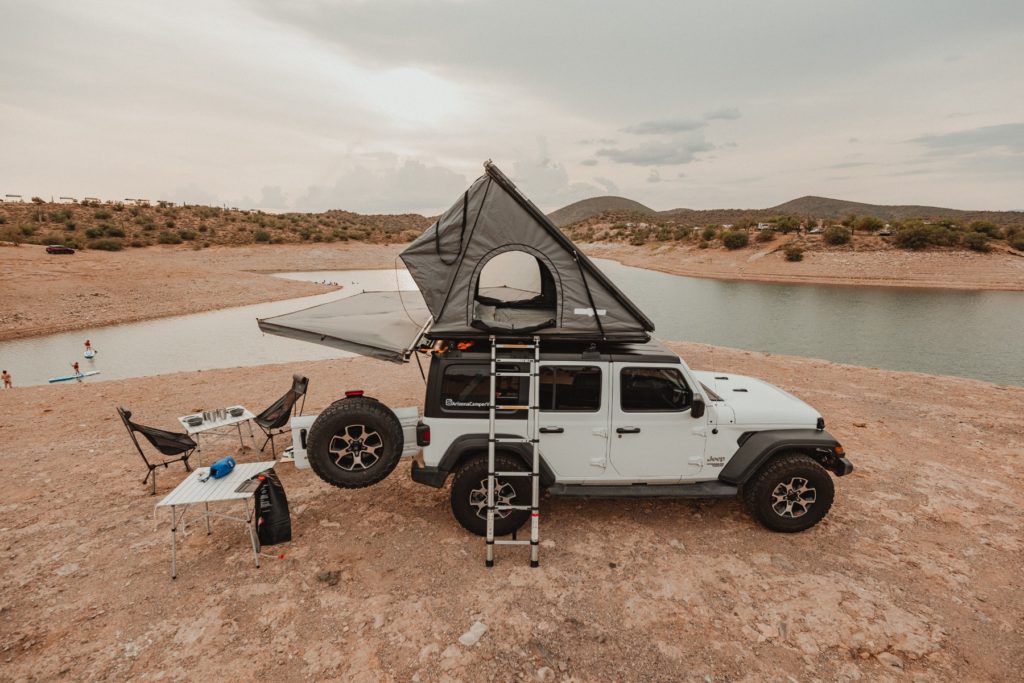
Pop-top Camper
Pop-top Camper

Even after putting all of that work into their camper van, the couple didn’t actually plan to continue camping in it. “Our plan was to sell the van after the trip and make a profit,” Jesse explains. “However, the trip was so amazing, we just couldn’t sell it. That’s when we discovered Outdoorsy.”

So Jesse got to work taking photos and getting his van listed on the Outdoorsy website. “Within a few days of completing our Outdoorsy listing, we got a last-minute booking and about $400 in our bank account from it,” he says. “We immediately knew we were onto something. That van became Arcadia, our most popular rental to this day.”

Since then, the Pachecos’ business has grown tremendously. “We’ve brought in over a quarter-million dollars in revenue since we started in Fall of 2019,” Jesse tells us.

In addition to all that income, the couple has also added multiple units to their rental fleet—and these aren’t just any units, they’re custom vans. “We build our own units,” Jesse explains. “We also offer unlimited miles and everything is included in the rental price. We’re probably leaving a lot of money on the table, not charging additional fees and mileage. However, we strive to treat our renters the way we would like to be treated.”

The result of providing such incredible vans and such excellent service? “We’ve made lots of friends through our rentals,” says Jesse. “Most are outdoorsy like-minded people too. We’ve had renters repeatedly fly across the country to rent from us! Another renter hired us to build a camper van for his family and became a good friend; we mountain bike together regularly now.”

“Everyone has a different motivation for traveling,” Jesse continues. “We just hope our vans provide everything they need to make their trip successful.”

All About Jesse

Favorite morning beverage: “Coffee—any coffee except decaf.”

Favorite campsite meal: “I love grilling. Carne asada, burgers, hot dogs, quesadillas, literally anything on a grill.”

Music you like to play on the radio: “Disney hits (we have 5- and 6-year-old kids).”

Best game to play on the road or at your campsite: “I Spy.”

Favorite season: “Spring.”

If you could travel anywhere in an RV, where would you go? “Australia.”

FIZEMOS VACA ATOLADA | Inverno 2021

A Vaca Atolada é a deliciosa combinação de costela bovina com mandioca, tem como não dar certo? É só seguir nossas dicas e preparar com Cubos de Costela Swift, que vêm sem osso e são perfeitos para o seu dia a dia. Trazem muita praticidade e rapidez, sem abrir mão do intenso e delicioso sabor da costela. Vamos aprender?

⤵️ INGREDIENTES

– 500 g de Cubos de Costela Swift
– Sal Granulado Defumado para Parrilla com Pimenta Swift a gosto
– 1 colher (sopa) de azeite
– 1 xícara (chá) de cebola fatiada bem fina
– 2 colheres (sopa) de Alho Picado Swift
– 1 colher (sopa) de farinha de trigo
– ½ xícara (chá) de tomate pelado picado
– 200 ml Caldo Culinário de Carne Swift
– Mix de Pimentas Swift a gosto
– ½ xícara (chá) de cheiro-verde picado

Montagem
– 2 colheres (sopa) de manteiga com sal
– 3 xícaras (chá) de Mandioca Swift
– Agrião a gosto

⤵️ MODO DE PREPARO
1. Tempere os cubos de costela com sal granulado defumado a gosto.
2. Aqueça uma panela de pressão, coloque o azeite para aquecer, e em seguida doure todos os lados dos cubos de costela. Retire e reserve.
3. Coloque na mesma panela a cebola fatiada e deixe dourar por 3 minutos. Junte o alho picado e cozinhe por mais 2 minutos.
4. Acrescente o tomate pelado picado e mexa. Retorne os cubos de costela e junte a farinha de trigo. Mexa bem para deixar homogêneo.
5. Coloque o caldo culinário de carne, 2 xícaras (chá) de água quente e tempere com mix de pimentas a gosto. Feche a panela e deixe cozinhar por 30 minutos após pegar pressão.
6. Desligue o fogo e deixe a pressão sair naturalmente. Abra então a panela de pressão e reserve 2 xícaras (chá) do molho da carne.
7. Finalize com cheiro-verde picado.

Montagem
8. Aqueça em uma frigideira a manteiga com sal. Junte a mandioca, tempere com o caldo da carne reservado e o mix de pimentas.
9. Sirva quente e acompanhado de agrião.

Dica: Use agrião e miniagrião para criar texturas em seu prato.
Rendimento: 4 porções
Tempo de preparo: 50 minutos

————————————

▶️ Compre on-line: http://bit.ly/CompreSwiftOnline
▶️ Inscreva-se no canal: http://bit.ly/YouTubeSwift

➡ Acompanhe a Swift nas redes sociais:
Instagram: https://bit.ly/InstagramSwift
Facebook: https://bit.ly/FacebookSwift

Record Collection: The White House’s Hidden Albums

One of the perks of being Jimmy Carter’s grandson is that you get to attend the family’s annual trip, a gathering for the whole extended Carter clan that’s organized by the former President and First Lady. John Chuldenko—whose stepfather is Carter’s son Jack—loves to attend these events, which might involve fishing in the Gulf of Mexico or lounging on a beach in Panama. Much of the time is passed just hanging out, chatting, exchanging old stories.

It was during one such sojourn that Chuldenko first heard about the record collection. His uncle Jeff was talking about an incident that happened during a White House party back during the Carter administration. Jeff—Jimmy Carter’s youngest son, who was in his twenties at the time—was hanging out upstairs in the residence with some friends, blasting a Rolling Stones album. Suddenly, the door flew open and there stood Rosalynn Carter and Second Lady Joan Mondale, who reacted to the music with—

“Wait, what do you mean there were records there?” Chuldenko wanted to know. “Where did you get records?”

Jeff explained that an official selection of LPs was kept in the residence. “So I’m like, ‘The White House has its own record collection?’ ” Chuldenko recalls. “ ‘Like, permanently?’ ” Jeff said he didn’t know anything more about it, and the conversation moved on. But when Chuldenko returned home to Los Angeles, he couldn’t let it go. “That started me down this rabbit hole,” he says.

Chuldenko is a creative guy with his hands in a lot of projects—a writer, director, and producer who works on everything from commercials to magazine articles to feature films. He’s also a big collector of vinyl. So when he heard about the possible existence of an official White House record library, he got excited. Maybe this could be a documentary film, he thought. But mostly, he was just eager to know more. He found a few brief articles about the collection online; otherwise, information was sparse. Did the White House ever really have such a thing? Which albums were in it? And was it still there?

So Chuldenko did what any good researcher would and contacted the library. Except in this case—another perk of being an ex-President’s grandson—the institution he reached out to was the Jimmy Carter Presidential Library. An archivist there passed along info for somebody in the White House curator’s office. Chuldenko sent off an email and soon got back an unpromising reply. “Basically the response was ‘Yeah, I don’t really know what you’re talking about, but we’ll do some digging.’ ”

Chuldenko figured that might be the last he heard from them, but eventually he received another email:

“Dear John: Yes, we do have a record collection stored at a secure offsite facility. Because it’s secure, I cannot pass along the exact location of where the records are being stored.”

That was it. “I must have read it seven times,” Chuldenko says. “I mean, at that point, all they had said was ‘We have it.’ It’s not ‘Hey, come see it.’ It was just:‘It exists.’ ”

In a way, there are actually two White House album collections. The first was assembled in the early ’70s by the Recording Industry Association of America, the DC trade group that represents record companies. The American Booksellers Association had donated tomes for a White House book library, the thinking went, so why not a similar collection of music?

The White House was receptive, and the RIAA put together a team to select music from the worlds of classical, jazz, popular music, and so forth. Johnny Mercer was tapped to oversee the pop picks. In retrospect, this was an odd choice. The idea was to build a library that reflected American tastes in the post-Woodstock era. Mercer, meanwhile, was the “Moon River” guy—one of the all-time great songwriters, to be sure, but hardly the person to capture that era’s seismic musical achievements.

Mercer and his team did their best to nod toward more modern sounds—the first Doors LP and Elton John’s US debut made the cut—but their choices leaned heavily on easy listening: Lawrence Welk, Don Ho, Perry Como. Chuldenko likes to point out that there was the same number of Pat Boone albums as entries from the Beatles.

That first collection of more than 1,800 LPs was presented to the White House in 1973. But it’s the second volume, put together at the end of that decade, that’s most intriguing. Once again curated by the RIAA, it was intended to bring the record library up to date. This time, the selection process would be headed by John Hammond, a hugely influential figure who had signed Bob Dylan, Aretha Franklin, and Bruce Springsteen. Hammond enlisted experts to oversee each genre, including Modern Jazz Quartet pianist John Lewis, who was responsible for jazz, and Boston music critic Bob Blumenthal, who led the pop picks. “The idea of helping choose the pop records for the music library at the White House just seemed like a gas, an enormous amount of fun,” says Kit Rachlis, then music editor at the Boston Phoenix, who was one of Blumenthal’s advisers on the project. “Who wouldn’t want to do that?”

Things kicked off with a celebratory lunch at the White House hosted by Rosalynn Carter. Blumenthal recalls that he took the opportunity to feel out the President’s staff. “I remember having visions of putting some fairly transgressive stuff on the list,” he says. “There was an album by Randy Newman at the time called Good Old Boys, and there’s a song on there, ‘Rednecks,’ which is one of the greatest critiques of both Southern and Northern racism. I wanted to put that in. His staff person said, ‘Oh, the President loves that album.’ I thought, Okay! That sort of gave me license to make choices I thought would be a good, representative sampling rather than having to censor myself.”

The list was hashed out during sessions in a Manhattan conference room, and true to Blumenthal’s vision, the selection was decidedly more adventurous this time around: soul, punk, salsa, gospel, funk, disco, and more. There were obvious picks representing rock-and-roll’s history, with entries from the likes of Chuck Berry, Little Richard, and Elvis Presley. And popular tastes were well represented by artists such as Donna Summer, Fleetwood Mac, and Earth, Wind & Fire. Blumenthal pressed for a Latin-music section that had records from Beny Moré, Joe Bataan, and Johnny Pacheco, among others.

There were also plenty of left-field LPs—music whose inclusion, Rachlis says, offered “a certain kind of subversive joy.” Funkadelic’s Hardcore Jollies made the cut, as did Never Mind the Bollocks, Here’s the Sex Pistols and Captain Beefheart’s Trout Mask Replica. A Gil Scott-Heron compilation. Talking Heads’ More Songs About Buildings and Food. The Ramones’ Rocket to Russia. And this time around, there were no selections from Don Ho, although Barry Manilow’s Greatest Hits did lend an easy-listening note to the proceedings. (“I don’t know whether I would have included that if I were doing it today,” says Blumenthal.)

The second installment of the library was unveiled during a ceremony at the White House in early 1981, attended by the President and First Lady. At that point, the Carters were on their way out; Blumenthal remembers seeing moving trucks outside the residence. The collection was likely taken out of the White House not long thereafter and put into storage. Chuldenko thinks the Reagans were the ones who sent it away—perhaps even before the new LPs could be unpacked and added to the library. It’s not like Ron and Nancy were ever going to be rocking out to “Teenage Lobotomy.”

Chuldenko was thrilled to learn that the music library was real, but what he really wanted was to see it—and maybe actually listen to some of the records. Even an ex-President’s grandson can’t just walk into the White House, however, and anyway, the vinyl was socked away in that secret facility, which Chuldenko imagined looking like the vast government warehouse at the end of Raiders of the Lost Ark.

Undaunted, Chuldenko put in an official request to check out the collection, explaining that he was working on a documentary film. It took some time, but eventually the White House offered to dig the records out and give him access. So in December 2010, Chuldenko showed up at 1600 Pennsylvania Avenue with a film crew and a small group that included Blumenthal and Rachlis. He also brought a turntable and speakers.

After the group arrived, they were ushered into the White House screening room. And there, finally, was the collection: record-filled boxes stacked up in front of the movie screen. The LPs had been kept in their original sleeves, which were inserted into color-coded binders (light blue for pop, yellow for classical, etc.). Each was adorned with the presidential seal and a foil stamp that read WHITE HOUSE RECORD LIBRARY. The whole thing reeked of gravitas and respectability—except that inside a binder, rather than some speech delivered by FDR in the ’40s, you might find a mint-condition copy of Macho Man by the Village People.

What to play first? They agreed on Van Morrison’s Astral Weeks, a profound and meditative record that has a way of transforming any listening session into a spiritual experience. As those extraordinary opening Richard Davis bass notes floated from the speakers, President Obama was upstairs, busy running the country.

It was a surreal scene, but there were thousands of records to explore and documentary footage to shoot, so they just kept digging. “With every box, there was this new treasure inside,” Chuldenko recalls. “I knew what was in there on paper, but it’s different when you actually hold these records. They had never been played. It was like walking into a record store in 1979. They were absolutely pristine.”

At one point, they decided to listen to a politically charged punk-rock landmark: the Clash’s self-titled 1977 debut. “I’m so bo-o-ored with the U-S-A!” Joe Strummer snarled—a chorus that had almost certainly never rattled the walls of the presidential residence prior to that moment. “We put that on,” Chuldenko says, “and it was just like, ‘Oh, my gosh, I’m playing the Clash . . . in the White House!’ I mean, what an incredible protest record. And it’s not like I brought it myself. I am playing the White House’s copy.”

Perhaps about now you’re wondering how you can watch this intriguing documentary about the world’s most exclusive record collection. Well, you can’t. In the end, Chuldenko never did make the film; 12 years later, the footage remains unseen by the public. He wasn’t able to drum up the financing, he says, and he’s been busy with a long list of other projects.

But something happened at the end of that trip to the White House that has stuck with him all these years—a moving moment that has kept him invested. It came at the end of the visit, when a staffer arrived to politely suggest it was time to wrap up and three guys in overalls appeared with hand trucks. “They start packing up the boxes and carrying them away,” Chuldenko says. “And it’s kind of sad! I couldn’t help but think, ‘Wait a minute: These are going back into deep, dark storage—quite possibly never to be seen again. And I don’t want this to go away.’ That was when I was like, ‘We’ve got to do something.’ ” Ever since, Chuldenko has been playing around with an idea: He would love to somehow create a third installment of the library.

After all, the current collection is missing all of the crucial music that’s been released over the last four decades. “There is no rap or hip-hop in there,” says Chuldenko. “There’s no electronic music. There are no boy bands, no Madonna or Britney Spears. No Michael Jackson! I don’t know how you do a third volume and not put in [Public Enemy’s] It Takes a Nation of Millions to Hold Us Back or NWA. These are landmark records that helped to shape our culture.”

Recently, his idea has started to gain some momentum. The White House Historical Association contacted Chuldenko a few months ago, asking him if he’d write about the record library for its quarterly journal and do a short interview on its podcast, The 1600 Sessions. That got him thinking about the footage he’d shot and the research he’d done—and also about that sadness he’d felt when the collection was carted away.

Now he’s starting to work on his long-­gestating plan to do a new installment. Rather than assemble a physical library, though, Chuldenko is thinking this would be an extensive written playlist, which would be published as a book. One idea is to have prominent people contribute album picks. Chuldenko would then film them talking about their choices and incorporate that footage into his documentary—which could be released in conjunction with the book. The White House Historical Association actually published catalogs for the first two record collections (these long-out-of-print books now bring big money online), so the idea makes a lot of sense.

Plus it would be a blast to bring the collection into the 21st century. The White House record library “is a treasure, and people need to know about it,” Chuldenko says. “We need to update this. We’ve got a lot of catching up to do.”

This article appears in the May 2022 issue of Washingtonian.

A DC native, Rob Brunner moved back to the city in 2017 to join Washingtonian. Previously, he was an editor and writer at Fast Company and other publications. He has also written for the New York Times Magazine, New York, and Rolling Stone, among others. He lives with his family in Chevy Chase DC.
HỌC TIẾNG ANH ONLINE TRỰC TUYẾN 1 KÈM 1 LANGMASTER – HỌC TẠI NHÀ HƠN XA ĐẾN LỚP

TÌM HIỂU THÊM VỀ CÁC KHÓA HỌC TẠI LANGMASTER:
➤ Khóa học Offline tại Hà Nội: https://bit.ly/2Vo8EMY
➤ Khóa học Gia sư Trực Tuyến 1 kèm 1: https://bit.ly/2Tg9qcf
▬▬▬▬▬▬▬▬▬▬▬▬▬▬▬▬▬▬▬▬▬▬▬▬▬▬▬
HỌC TIẾNG ANH ONLINE TRỰC TUYẾN 1 KÈM 1 LANGMASTER – HỌC TẠI NHÀ HƠN XA ĐẾN LỚP
Khóa học trực tuyến 1 kèm 1 của LANGMASTER, Thời gian học linh hoạt, Tương tác trực tuyến, 100% học cùng giáo viên chất lượng. Khóa học tiếng anh trực tuyến cho người đi làm. Môi trường học tập năng động, hữu ích và tạo cảm hứng cho học viên. Học Tiếng Anh Hiệu Quả, Giao Tiếp Tiếng Anh Trực tuyến Với LANGMASTER
▬▬▬▬▬▬▬▬▬▬▬▬▬▬▬▬▬▬▬▬▬▬▬▬▬▬▬
➡️ LỘ TRÌNH HỌC TIẾNG ANH GIAO TIẾP DÀNH CHO NGƯỜI MỚI BẮT ĐẦU BỞI LANGMASTER:

Bước 1️⃣: Xác định vấn đề của bản thân và chọn 1 phương pháp học cụ thể: http://bit.ly/2HqfbyQ

Bước 2️⃣: Làm quen với tiếng Anh cơ bản nhất: http://bit.ly/38tvyqd

Bước 3️⃣: Luyện tập phát âm tiếng Anh chuẩn như người bản xứ: http://bit.ly/3bG9JWr

Bước 4️⃣: Bổ sung vốn từ vựng tiếng Anh theo các chủ đề thông dụng: http://bit.ly/2uDbnHJ

Bước 5️⃣: Luyện tập tiếng Anh hằng ngày với các chủ đề giao tiếp: http://bit.ly/2OSIbU0

Bước 6️⃣: Luyện nghe để tăng tốc độ phản xạ với tiếng Anh: https://bit.ly/38DgQgt

Bước 7️⃣: Nghiên cứu thêm các phương pháp học hiện đại: http://bit.ly/2SqE43o

➡️ 101 CÂU CHUYỆN THÀNH CÔNG CỦA HỌC VIÊN LANGMASTER: https://bit.ly/2H8rTDc

▬▬▬▬▬▬▬▬▬▬▬▬▬▬▬▬▬▬▬▬▬▬▬▬▬▬▬
➤ ĐĂNG KÝ NHẬN TÀI LIỆU bắt đầu học tiếng Anh miễn phí tại:
https://forms.gle/CAcLFgHmnCNh8ZDe7
▬▬▬▬▬▬▬▬▬▬▬▬▬▬▬▬▬▬▬▬▬▬▬▬▬▬▬
➤ ỨNG TUYỂN các vị trí việc làm tại Langmaster tại:
http://careers.langmaster.edu.vn/
▬▬▬▬▬▬▬▬▬▬▬▬▬▬▬▬▬▬▬▬▬▬▬▬▬▬▬
#Học_Tiếng_Anh_Giao_Tiếp #Langmaster #Học_Tiếng_Anh_Online #Học_Tiếng_Anh_Trực_Tuyến

☎️: C.O.M.M.E.N.T S.Đ.T để được tư vấn trực tiếp

Dewalt FLEXTORQ 72 Piece Impact Screwdriver Bit Set + Tough Case TStak Caddy | eBay

This 56 Piece Dewalt Flextorq combination set includes the following Dewalt DT70703 47 Piece Impact Rated Screw Driver Bit Set Hex Shank + Black Safety Glasses Dewalt DT70556T 25 Piece Impact Extreme PZ2 Pozi Screwdriver Bit Set FLEXTORQ Tough Case DeWalt DT70716 TSTAK Accessory Caddy For Tough Case Cases – Wall Mountable DT70703 47 Piece Set The DeWalt DT70703-QZ 47pc Screw Driving Set including safety glasses and a tough case features every screwdriving bit you could need for most professional and DIY work whether on-site or at home. Including both long and short bits with hex shanks, this bit set is impact rated for use with impact drivers. The bits are heat treated for a longer lifespan and the set includes a compact Rapid Load bit holder which features a .

This content was originally published here.

High-Speed Rail board approves local section alignment

State High-Speed Rail officials this week adopted a track alignment for the San Jose to Merced section that goes through downtown Morgan Hill and includes a station in Gilroy.

On April 28, the California High-Speed Rail Authority board of directors certified the Final Environmental Impact Report and Environmental Impact Statement, and unanimously approved “Alternative 4” for the 90-mile section alignment.

The board’s vote completes the environmental clearance for nearly 400 miles of the High-Speed Rail’s 500-mile “Phase 1” alignment from San Francisco to Los Angeles and Anaheim, says a press release from the HSRA. The board’s April 28 actions also represent its first certification of a project section’s environmental studies in Northern California.

“Today’s approval represents another major milestone and brings us one step closer to delivering high-speed rail between the Silicon Valley and the Central Valley,” HSRA CEO Brian Kelly said. “The authority is poised to make the vision of high-speed rail in the Bay Area a reality. We look forward to continued collaboration with our federal, state and local partners to advance the project in Northern California.”

The HSRA began the EIR process for the San Jose to Merced section more than two years ago. The in-depth study considered the impacts of four section alignment alternatives, as well as a no-project alternative.

Alternative 4 will take the bullet train tracks through the downtown areas of Morgan Hill and Gilroy, along the existing Union Pacific Railroad tracks.

HSRA staff added that Alternative 4 will modernize and electrify the existing rail corridor between San Jose and Gilroy, allowing for both HSR and Caltrain service.

“Next to San Jose, Gilroy will be the next most significant transit hub on this stretch,” said Gilroy Mayor Marie Blankley. “Gilroy Transit Center is very much ready for this to happen.”

Morgan Hill city council members and city staff had expressed a number of concerns with Alternative 4 during the public comment period, including with the lack of HSR track grade separations at East Dunne, Tennant and Tilton. The council in June 2020 had sent feedback to the HSRA urging them to consider adding grade separations at those intersections, allowing vehicle, pedestrian and bicycle traffic to cross under the HSR tracks without the bullet train and road traffic interfering with each other.

“(Grade) separations at these crossings are the appropriate and necessary solutions to several environmental impacts specifically, but not limited to safety response times, circulation, and noise as disclosed in the EIR/EIS for which vague and unconvincing mitigation measures have been offered,” says the city’s June 2020 letter.

The HSRA board did not implement such considerations when adopting Alternative 4 on April 28.

Morgan Hill officials had preferred an alignment that took the HSRA system within the U.S. 101 right of way on the east side of town.

Mayor Rich Constantine said that when it comes to vehicle traffic, two of Morgan Hill’s intersections that cross existing railroad tracks—Dunne and Tennant avenues—are among the five busiest along the entire Caltrain corridor from San Francisco to Gilroy. That means the potential traffic hold ups and emergency response delays from High-Speed Rail crossings could be “significant” when the system is fully built out, Constantine said. 

“If the (High-Speed Rail crossing) gates are down for 30 seconds for each train, that’s a significant amount of time” to delay vehicle traffic, said Constantine, who is a retired firefighter. “If it’s an emergency—I’ve been in that situation where we respond to a call and have to stop because of a train.”

Morgan Hill Assistant City Manager Edith Ramirez added that city staff has continued to provide comments on the High-Speed Rail EIR, and continued to advocate for grade separations along the route as it crosses busy intersections in the city limits. 

The San Jose to Merced section goes from Scott Boulevard in Santa Clara to Carlucci Road in Merced County. The segment will travel through or near the communities of Santa Clara, San Jose, Morgan Hill, Gilroy and Los Banos. The project includes high-speed rail stations at San Jose Diridon and in Gilroy, as well as a maintenance facility south or southeast of Gilroy.

The section will connect existing HSR construction in the Central Valley with Diridon Station. The HSR will take travelers from Fresno to San Jose in one hour, according to HSRA staff.

San Jose Mayor Sam Liccardo said, “I am grateful, as are all of us in the City of San Jose, for the extraordinary work that’s now culminated in this environmental document reflecting thousands of hours of stakeholder outreach and an enormous amount of environmental analysis. Completion of this critically important high-speed rail project helps the state expand economic opportunity and affordable housing, two critical goals for all of us.”

The board’s certification of the EIR and EIS marks a key milestone in the statewide project, moving the project section closer to “shovel ready,” says the press release. Construction of the project section is not yet fully funded.

East of Gilroy, the alignment includes more than 15 miles of tunnels through the Pacheco Pass in the Diablo Range. The Board will consider certification for the final environmental document for the San Francisco to San Jose project section this summer.

California High-Speed Rail is currently under construction along 119 miles in the Central Valley at 35 active job sites, says the press releases. To date, more than 7,500 construction jobs have been created since the start of construction. 

When voters approved a $9.95 billion bond measure in 2008 to kick start the High-Speed Rail project, the total projected cost was about $30 billion and it was slated to be complete by 2030. Since then, the price tag has ballooned higher than $100 billion, and officials have yet to identify where most of the funding will come from to complete the first phase between San Francisco and Anaheim.

« Previous Page — Next Page »