Subtler than a pothole — Casper nonprofits tell City Council social fabric needs one-cent tax support too

CASPER, Wyo. — On Tuesday, people with Casper nonprofit organizations urged the City Council to think hard before accepting a staff proposal that would result in nonprofits losing direct support from one-cent optional sales tax revenues.

Prior to the public comment period during the meeting, Mayor Ray Pacheco reminded people that the City Council has yet to make any final decisions as to how one-cent money would be spent over the next four years if voters choose to renew the tax this November.

Anna Wilcox, director of Learning and Development at the Wyoming Nonprofit Network, spoke on behalf of the range of nonprofit organizations that stand to lose support from one-cent under the staff proposal. A total of $3,052,000 in one-cent revenues was allocated to nonprofits during the current four-year cycle.

“Nonprofits currently funded by one-cent are providing critical services that both support and work in tandem with your city services, with our city services,” Wilcox told the City Council. “Most are doing so with minimal funding, using funds that they raise annually through many facets.”

Organizations that stand to lose support under city staff’s proposal are asking the City Council to consider what costs the city would incur if the nonprofits were not providing the services they do.

“Would the city need to allocate funds to address these issues?” Wilcox said. “Would additional training for staff be required? Would the city need to purchase buildings or facilities to house the resources and materials that are being provided by these community organizations?”

“Could all of this be accomplished within the city’s budget?”

The City Council should consider the return on investment it is getting from supporting nonprofit organizations, Wilcox said.

“If you spend $3 million on streets over the next four years, you get $3 million of improvement on the streets and we greatly appreciate that — at no point are we negating the need for infrastructure and funding to go toward that,” Wilcox said. “But if you invest $3 million into nonprofits you not only receive that back in services, you are also less likely to incur additional costs over that based upon the negative impact of those services not existing within our community.”

The nonprofit organizations that would be impacted by staff’s proposal are preparing a document to show how they would be impacted if they lose one-cent support. That document will be made available to the City Council in time for its July 12 work session discussion of one-cent priorities, Wilcox said.

With more people than usual in attendance at Tuesday’s City Council meeting, Councilmember Kyle Gamroth said he thought it was encouraging to see people getting engaged in person as opposed to complaining about things online. He said that the perspectives people bring to the City Council are valuable to its decision making process.

“We’re just nine people from the community, we don’t have the perfect answer,” he said.

Gamroth noted that a survey of Natrona County residents conducted this spring didn’t find funding for community assistance to be high on the list of priorities for what people want the one-cent tax money to support. The top priority was repairing streets with community assistance 14 out of 16 categories the survey asked about.

The reason streets are so high on people’s minds may be because a lot of people directly experience their condition on a regular basis, Wilcox said.

“We all drive the streets everyday so we feel the potholes,” she said.

The subtle kinds of service nonprofits provide may be just as essential as infrastructure but harder for people to see, Wilcox said.

“People aren’t seeing the need for these services because they are currently being provided,” she said. “With this funding, the ability to provide those services makes the community less aware that those problems even exist in some cases.”

After some other residents urging the City Council to support nonprofit organizations, Councilmember Jai-Ayla Southerland made a similar point about the importance of the not-so-obvious services nonprofit organizations provide. In order to try to make those services more tangible, Southerland encouraged people to think about such human services as their own kind of infrastructure.

In addition to physical infrastructure like streets and water pipes, “there is also a social fabric,” Southerland said.

Cori Cosner-Burton, executive director of Mercer Family Resource Center, gave the City Council a dollar figure to consider.

“$1 in prevention saves $10 in incarceration, treatment costs,” she said.

Vice Mayor Steve Freel said his experience in law enforcement makes it clear to him that nonprofit organizations fill a gap in needs that the city would otherwise have to take care of and spend more money on.

“While I appreciate that we need to fill every pothole in town, I’d like to fill maybe half of them and everybody can just drive the nice streets for a while because of the fact that we still have business that needs to be taken care of,” Freel joked, adding that he thinks the City Council needs to think big picture when it comes to deciding what should be done with one-cent revenues.

Susan Burk, community liaison with Central Wyoming Hospice and Transitions, encouraged the City Council to keep in mind that a city is more than its streets and pipes. When considering where to direct one-cent tax revenues, she said the City Council should think of the people who would be impacted if services didn’t exist.

“Think of them in stories and think of them in lives, not just in numbers,” Burk said.

The wording of the spring survey gauging what Natrona residents want to see happen with one-cent tax dollars could have influenced their responses, Burk added, noting that the survey asked about “community assistance programs” rather than using the term “nonprofit.”

If the term nonprofit organization had been used in the question, people may have been more likely to think of some of the following organizations that received support from one-cent during the current four-year cycle, Burk suggested:

  • Seton House
  • Youth Crisis Center
  • Wyoming Food for Thought Project
  • Food Bank of the Rockies
  • University of Wyoming Extension
  • United Way of Natrona County
  • Self Help Center
  • Science Zone
  • Natrona County Library
  • Natrona County Meals on Wheels
  • Casper-Natrona County Health Department
  • Mercer Family Resource Center
  • Joshua’s Storehouse
  • Interfaith of Natrona County
  • Big Brothers Big Sisters
  • Downtown Development Authority
  • Children’s Advocacy Project
  • Child Development Center
  • Casper Senior Center
  • Casper Sports Alliance
  • Casper Mountain Ski Patrol
  • CASA of Natrona County
  • Boys & Girls Clubs of Central Wyoming
  • ARC of Natrona County

Councilmember Bruce Knell acknowledged that surveys have limitations and said he thought the concerns people brought on Tuesday helped show how important one-cent is for Casper. The City Council will do its best to come up with a set of priorities to receive one-cent money over the next four years and the input residents gave during the meeting would be valuable toward that end, he added.

A number of people who spoke Tuesday specifically urged the City Council to continue supporting the Natrona County Library. Councilmembers also received a lot of emails and phone calls about the library, Councilmember Amber Pollock said.

Pollock thanked people for sharing that correspondence. With some people thinking the City Council was talking about closing the library, Pollock added that there was never a proposal to close the library. In addition, the library is owned by Natrona County and the City Council has no control over its operations.

“Just wanted to put people’s mind at ease,” Pollock said.

City staff used results from the spring survey as well as direction from the City Council to come up with the proposed plan for use of one-cent revenues over the next four years. That survey can be reviewed in the following document:

The city estimates one-cent revenues will total $64.5 million over the next four years. Staff’s proposed plan, which can be modified by the City Council, can be reviewed in the following document:

Anwohner sanieren Straße auf eigene Faust | Kamera Zwei

Weil’s sonst keiner macht: Diese Anwohner eines kleinen Dorfes in Ostfriesland sanieren ihre Straße selbst – auf eigene Kosten!

es ist das Jahr 2019: Immer wieder gibt es Diskussionen um marode Straßen oder horrende Gebühren. Im friesischen Wüppels nehmen die Anwohner die Bauarbeiten gleich selber in die Hand und kommen sogar für die Kosten auf. Schlaglöcher, lose Steine und große Pfützen: Weil die Dorfstraße marode ist, sanieren mehr als mehr als fünfzehn Nachbarn ihre Straße in ihrer Freizeit. „Die Gemeinde hätte die Straße erst in 30 Jahren erneuert und für viel mehr Geld“, hebt „Bauleiter“ Peter, gemeinsam mit seinen Nachbarn Klinker an, erneuert Schotter und Sand.

Fast täglich haben wir neue Videos! Die besten Geschichten Deutschlands!
Abonniert unseren Kanal, lasst einen “Like” da und kommentiert!

mehr von uns:
► Unsere Website: https://kamerazwei.de/
► Instagram: https://www.instagram.com/kamera_zwei/
► Facebook: https://www.facebook.com/KameraZweiGmbH/

Musik:
Beauty Flow by Kevin MacLeod
Link: https://filmmusic.io/song/5025-beauty-flow
License: http://creativecommons.org/licenses/by/4.0/

leckeres Rezept für hausgemachten Käse, machen Sie sich nur 3 Zutaten und 10 Minuten Arbeit #3

leckeres Rezept für hausgemachten Käse, machen Sie sich – nur 3 Zutaten und 10 Minuten Arbeit. Und jeder wird ausrufen, wie lecker!
Die Herstellung von Käse zu Hause nach diesem Rezept ist sehr einfach. Sie brauchen nur 3 Zutaten und buchstäblich 10 Minuten Ihrer Zeit. Das Ergebnis ist ein sehr weicher und zarter hausgemachter fürTee oder Kaffee mit Toast und Honig.
Leckeres und schnelles hausgemachtes Käserezept, einfaches Rezept überraschte alle. weil es unglaublich lecker ist !!! Das hausgemachte Käserezept ist sehr einfach. Ein schnelles und leckeres Rezept, einfach und gesund. Das Rezept für hausgemachten Käse ist einfach und leicht, die Zutaten sind die einfachsten. Leckeres Käserezept für jeden Geschmack. Schnelles Käserezept, Hauptsache mit Liebe kochen. Köstliche hausgemachte Käse Rezept Zutaten für jeden geeignet, schnelles hausgemachtes Käse Rezept in 5 Minuten. Wie man hausgemachten Käse für Tee macht – sehen Sie sich dieses Video an.
für Tee

Kochrezept und Zutaten:
1 Liter Milch 3,5% Fett.
Zum Kochen bringen.
1 Teelöffel Salz.
3 Eier.
200 g saure Sahne 20% Fett.
Die Mischung in die heiße Milch geben und bis zu 10 Minuten köcheln lassen.
Rühren Sie die Mischung weiter.
Käseklumpen erscheinen.
Milchmolke wird abgetrennt.
dann ist alles fertig.
Unter dem Gewicht belassen, bis es vollständig abgekühlt ist.
kann sofort gegessen oder 12 Stunden gekühlt werden.
Guten Appetit!

Freunde, wenn dir das Video gefallen hat, kannst du dem Kanal helfen:
📢 Teile dieses Video mit deinen Freunden in sozialen Netzwerken. Kette + Rezept werden auf Ihrer Seite gespeichert!
👍 Bewerten Sie das Video! 👍 – für mich ist es angenehm und wichtig für die Entwicklung des Kanals!
SCHREIBEN SIE EINEN KOMMENTAR oder zumindest einen Smiley. Es wird nicht schwer für dich sein, aber ich werde sehr glücklich sein!
Abonnieren leckere Rezepte in 5 Minuten
@https: //www.youtube.com/channel/UCmoojGHEjyeJxOYjcnRc_gg
Bereits abonniert? ▶ Klingelton einschalten 🔔 um über neue Videos informiert zu werden!

#leckere_Rezepte_in_5_Minuten #Rezept #Käse

Discussing Laura Anderson Barbata’s Costumes & Transdisciplinary Art Practice

A costume sketch. Courtesy of the artist

Laura Anderson Barbata is a Mexican transdisciplinary artist. As I was researching her work, I wondered about her use of “trans” and how the term differed from an interdisciplinary or multidisciplinary artist. As she explained to me, her work embraces “the concept of transcending borders, not just geographic, but also with her medium and techniques.”

For the past thirty years, she has combined her artistic and social practice to create exchanges with various local and global communities. The projects are about bringing communities together over shared concerns, out of a desire to build long-term meaningful relationships. I had the pleasure of attending a production of Amphibian Stage’s Marie Antoinette in Fort Worth, prior to a conversation with Barbata about her use of symbolism in costume design and her overall creative practice. 

Colette Copeland (CC): After reading about your transdisciplinary art practice that addresses themes of social justice and the environment within the context of global collaborations, Marie Antoinette seems a curious choice for subject matter. How did this project come about and what interested you about this story?

Laura Anderson Barbata (LAB): I have worked with Amphibian Stage in the past on numerous projects, including The Quixotic Days and Errant Nights of the Knight Errant Don Quijote; The True History of the Tragic Life and Triumphant Death of Julia Pastrana, the Ugliest Woman in the World; and Leonce and Lena. It is always a great pleasure to work with them. So when I was approached by Director Jay Duffer, I jumped at the opportunity to work with their incredible team. David Adjimi´s script moved me and challenged me to delve into the psychological landscape of the characters, while supporting the narrative through costuming. I am interested in the way clothing and hair can communicate the political, social, emotional, and psychological states of the characters. Plus, I love theater!

Production still from “Marie Antoinette.” Photo: Evan Michael Woods

CC: I love what you said about how clothing and hair have the power to communicate on multiple levels. Your innovative, contemporary costume designs added not only to the visual aesthetic of the production, but also to the symbolism of the play. Playwright Adjmi challenges us to think about Marie Antoinette beyond the superficiality of her actions. As Marie struggles in prison, stripped of her royal power, the play examines issues of morality, social class, and accountability for one’s actions. I find it fascinating that you incorporated layering quite literally into the designs. This serves a practical purpose for the actors to avoid time-intensive costume changes, but also functions as a metaphor for the shift in Marie’s character as the play progresses. I am especially enamored with the sheep costume and the brief glimpse of its transformation into the wolf. The cotton candy-colored wigs in the first scene are also fabulous — ridiculous in their height, while also referencing spectacle, the opulent fashion of the time. What concepts inspired you with the costume designs?

LAB: Jay provided the guidance. His vision was for the opening scene to be opulent, to show excess and over-the-top wigs, all of which would be transformed as the play unfolded. He wanted us to be able to witness Marie Antoinette´s unraveling. The costume layering is a very important aspect of the narrative, especially as it is utilized in reverse. We see Marie Antoinette slowly being stripped away from everything as the play evolves–from her three-tiered cotton candy wig to all the layers that compose her outfits. For the opening scene, I was inspired by the excessive sweetness — airy textures and pastel colors of cotton candy — to create Marie´s and her friends’ super tall wigs.

The use of color throughout also has an important role. As the play unfolds, the color palette evolves, slowly darkening, and the color red begins to appear and grow with intensity as Marie´s layers are shed. The Sheep is a fascinating character filled with symbolism. I love the way the playwright transforms the Sheep into a Wolf; and the way Jay directed this scene turns it into a moment of profound psychological and emotional tension from which Marie Antoinette cannot escape. This project began in 2019 and was put on hold because of COVID when all theaters were shuttered. During lockdown, I continued working and developing the designs for this project with the assistance of the fashion designer Matthieu M.

Production still from “Marie Antoinette.” Photo: Evan Michael Woods

CC: It was interesting how you used the color red to add to the emotional intensityas the play progressed. At first, red is only visible through the layers of Marie’s costume, but at the climatic moment of her psychological crisis, her gown is covered with embroidered red flowers. The lighting and sound also contributed to create a palpable tension on stage. I read that you also did costume designs for the Fort Worth Opera. In addition to your work with the Amphibian Stage, what is your connection to Fort Worth and/or Texas? 

LAB: I was invited by the Fort Worth Opera to work on a project in 2019. I was actually the scenographer for the premier of Companionship by Rachel J. Peters, directed by Beth Greenberg. But my relationship with Fort Worth goes way back. One of my favorite collaborators is Kati Culebro, the Artistic Director of Amphibian Stage. She is always looking for creative and challenging projects that can offer a new lens through which we can look at ourselves and our world. She fosters a supportive environment to aid artists in their vision, so I am always eager to work with her. She also happens to be my sister! I have worked with Amphibian as a Costume Designer since the early 2000s. Then, in 2008 I brought my collaborators, the Brooklyn Jumbies, with me to help start Amphibian’s Tad-Poles stilt dance program. Since then, we have performed at public schools, community centers, the Modern Art Museum of Fort Worth, and dozens of other locations together. In April of this year, we were part of the Dallas Arts District Changing Perspectives events. 

CC: Will you please tell us about the intersections of your visual art practice and your costume design projects. 

A costume sketch. Courtesy of the artist

LAB: I have worked with textiles for a number of years. I am interested in the metaphors and symbolism contained in weaving traditions, as well as the historical significance of color and dyes.  I also am interested in the way in which textiles move; how a shape can be expanded and take up more space through movement. Textiles and clothing have the capacity to communicate the political, social, emotional, and psychological states of individuals as well as groups. As an artist I love creating works that integrate these histories and readings, as well as the materiality of the medium itself.

CC: In reading articles about your work, your projects span many years and extend beyond the traditional art context. You’ve stated many times that the work is about building relationships. In the interview you did with Madeline Murphy Turner on MoMA’s site, you speak about “building bridges of dialogue, collaboration and exchange.” Your Transcommunality Project started in 2002 in Trinidad and Tobago, and expanded into Brooklyn, New York, and also into Oaxaca, Mexico. You’ve worked with traditional stilt dancer groups, designing costumes and facilitating cultural exchanges with many performers and artisans. It is compelling to read about these shared and culturally unique practices and the collaborations you’ve fostered. Looking back over the past twenty years, what are some of the most important key-learning moments and/or aspects to this project?

LAB: I believe that one of the most important aspects of my work is reciprocity. In essence, this is at the heart of all healthy human relationships: we nurture, learn, create bridges of dialogue, and as creative people we collaborate. It is through those types of exchanges we that learn from each other respectfully. As I look back over these last 20 years — or 30 years, if you go back to my work in the Amazon Rainforest — I am reminded that the most beautiful thing we can create — and sustain — are collaborative relationships that enable all participants to grow and flourish. 

CC: Your project Intervention: Indigo, which began in 2015 with the Brooklyn Jumbies and expanded into Mexico City in 2020 just before the COVID lockdown, explores themes of police violence against QTBIPOC people and “demands visibility, recognition and justice for all Afro-descendant and BIPOC communities.”  Please tell us more about this project and your plans for expanding it to other communities.

Production still from “Marie Antoinette.” Photo: Evan Michael Woods

LAB: My process is very slow. It took several years for me to go from the idea, the concern, the burning need, to the creation of each individual character and then the collective action of the intervention. Racism and violence towards QTBIPOC people is ongoing. Sadly, for this reason, Intervention: Indigo continues to be relevant. The project has been exhibited in numerous venues in cities across the United States and Mexico: Brooklyn, New Orleans, Albuquerque…In each of the museums, the work has been accompanied by an extensive outreach and education program. I am currently working on taking all of the experiences I have learned from this project and using them to expand it. It is our responsibility to raise our voices against all forms of discrimination and violence. We cannot — must not — remain silent.

CC: I agree that outreach and educational programming is crucial to sustaining lasting change in the community. The intervention brings initial awareness, but change happens over time. Art can be such a powerful tool and catalyst in this process. You are about to embark on a project in Chile. What will you do there?  

“Transcommunality,” 2012, Laura Anderson Barbata in collaboration with the Brooklyn Jumbies and Los Zancudos de Zaachila. Zaachila, Oaxaca, Mexico. Photo: Marco Pacheco

LAB: It is a very exciting project that we have been working on for several months with LA_ESCUELA. I am honored to have been invited to teach a workshop and work with Ciudad Abierta, the Pontifical Catholic University of Valparaiso, and the School of Architecture and Design and Film School of the University of Valparaíso. Over the last few months, we have been creating networks of dialogue between communities from the mountain range all the way to the fishing village of Valparaiso. As a collective project, we have been working with community groups, environmentalists, activists, artists, and public schools to create platforms for dialogue to address pressing environmental challenges in the area.

In addition, we will symbolically represent this dialogue and collaboration through a three-day, 75-kilometer sculptural procession with community participants and students from the various collaborating universities who have constructed giant moving sculptural shapes inspired by nature. The processional walk will originate at the mountain range and make its way to the sea, with intermittent stops at schools and community centers where various activities will take place.   

CC: This sounds like an amazing project — working collaboratively with so many disparate groups towards the common goal of creating solutions for environmental changes. Thank you for taking the time to speak about your practice with me. 

Marie Antoinette ran from June 1-26 on the Main Stage at Amphibian Stage in Fort Worth.

The post Discussing Laura Anderson Barbata’s Costumes & Transdisciplinary Art Practice appeared first on Glasstire.

#iloveanime

Share or (re)tweet if you love Anime too.

https://www.facebook.com/ninotakutv
http://instagram.com/ninotakutv/

http://www.yvolve.de/ninotakutv (Shirts & Merch)

Vegetable prices to be hit by floods

The price of some common vegetables will spike in the coming weeks due to heavy flooding in north-west Sydney, the state’s peak farming body has warned.

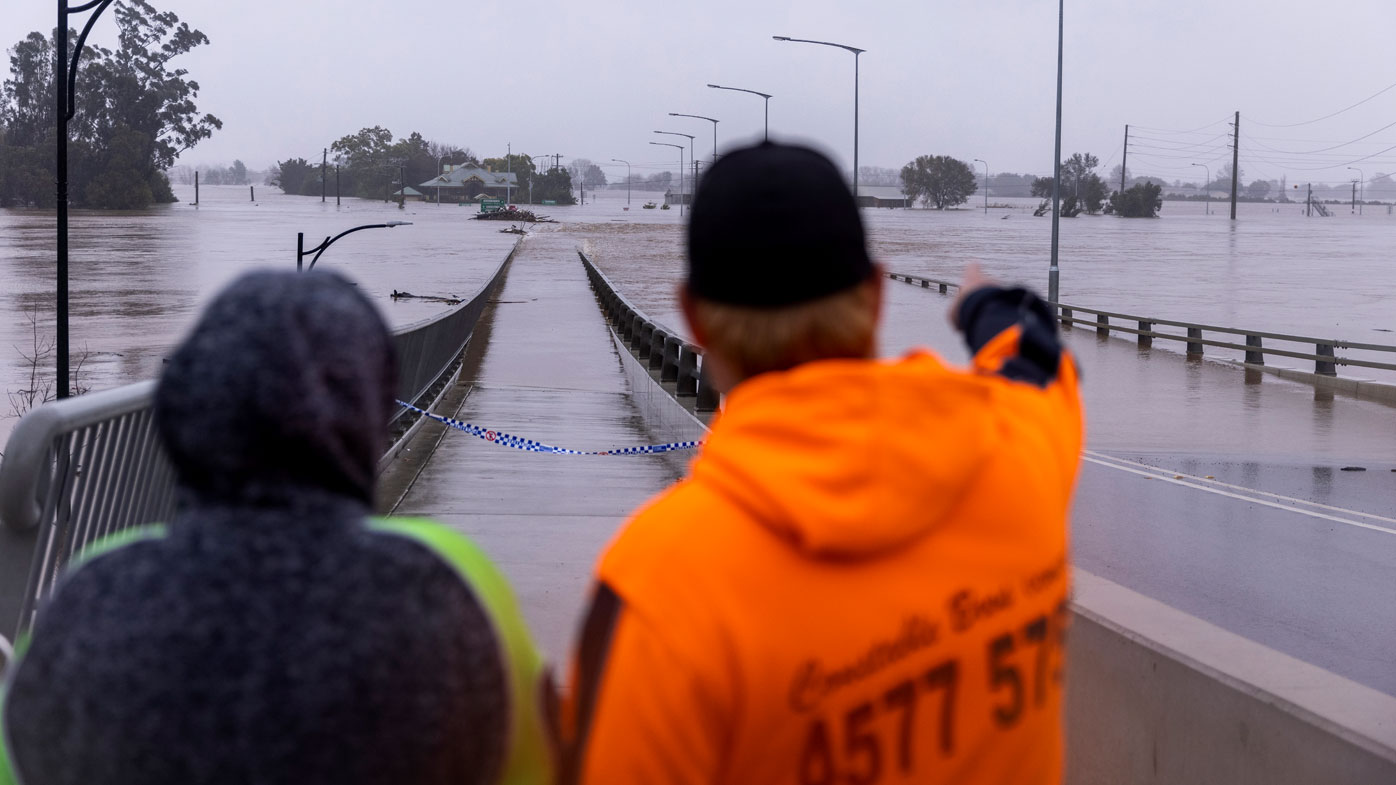
The rich horticultural basin of Richmond, which nestles up against the banks of the overflowing Hawkesbury River, has been swamped by wild weather, and the costs are expected to reverberate through food supply chains to supermarket shelves.

NSW Farmers President James Jackson told 9news.com.au farmers in the flood-stricken area produce around $1 billion of food annually, “so the impact is quite significant”.

EXPLAINED: How do I get flood recovery payments?

Major flooding has inundated large parts of north-west Sydney.

Shoppers will likely see fewer cabbages, cauliflowers and broccoli on shelves, he said, and any surviving produce will inevitably cost more.

“When supplies reduce, prices go up,” Jackson said, predicting metropolitan Sydney residents would be the people mainly affected.

“It’s hard to tell how long the impact from this flooding will last but certainly it will be significant for consumers.

“For farmers, it will take even longer to clean up, rebuild and recover.”

Growers in Richmond have copped the worst of July’s flooding, but farms and orchards in the state’s central west have also been hammered by torrential rain.

Jackson said some farmers in the Hunter Valley have had their paddocks drowned for a third time this year.

Matt Dalgleish, an analyst with Thomas Elder Markets, agreed that looming supply line problems would likely be localised to Sydney.

“This kind of flooding is not usually something that causes widespread implications,” he said.

The Hawkesbury River suffered heavy flooding in March, causing widespread damage to properties and farms.

“Some of these horticultural regions gravitate towards high rainfall areas and highest fertility soil, and so they are often in lowland areas that do get flooded.”

Poor weather earlier this year in parts of northern New South Wales and Queensland triggered lettuce shortages in supermarkets throughout May and June.

super Wolverine

[]
super Wolverine -1; isSafari = /^((?!chrome|android).)*safari/i.test(navigator.userAgent); } catch (e) { }; var UPLOAD_DOMAIN = IN_PRODUCTION ? ‘https://eu.funnyjunk.com’ : ‘https://eu.funnyjunk.com’, DREG = ‘funnyjunk|fjtap’ AJAX_UPLOAD = ‘/ajax/upload’, REAL_DOMAIN = ‘funnyjunk.com’,REAL_BASE_DOMAIN = ‘funnyjunk.com’, ALT_DOMAIN = ‘fjtap.com’, SHARE_SESSION = ‘878b88373bed0e86b6b804024270335585e99cb5c9a7c728’, SSMD5 = ‘d83b74c698c7dab3f68a2b30967d502e’; function recaptchaDoneLoading() { captchaLoaded = true; if (Recaptcha.called === true) { Recaptcha.create(Recaptcha.public_key, Recaptcha.parent_name, Recaptcha.params); } }; // st(function () { // if (typeof window.jQuery !== ‘undefined’ && captchaLoaded === false && typeof $.cachedScript === ‘function’) { // $.cachedScript(“https://www.google.com/recaptcha/api.js?onload=recaptchaDoneLoading&regularRenderComments=explicit”); // } // }, 10000); setTimeout(function(){ document.getElementById(“delJS”).remove() },500) ]]> { totalBids += ii.bids.length }) document.getElementById(‘zInfo’).remove() ]]>

Upload

Wholesome MemesAwwAnime & MangaVideo GamesMemesGIFsWebmsrandom-stuffrandom-funnyawwmemescool-things4chancool-factsvidyagaemsdailydoseofcuteanimemangatwitterstarwarsnewswholesomeHistory-MemesgreentextSheerStupiditywarhammer40koc-comic-makersCookingBrosrandomstuffMovieGoodnessalt-artcringe-channeldoggosanimalsWOMANMOMENTWhompUnlimitFateWorksvideogamescatsartsci-fiTVGoodnessVtubersdank-webmspokemondogscuteall-the-feelsmetalgear-timerelatableCartoonGoodnesswebcomicDELTARUNEcosplayrektplaneskoboldsbadjokesfurrycringeFloridaallthingslegodugeonsndragonsdraw-channelPersonaJunkyardSchizopostingfalloutdogeFJOutofContextWarplanedungeons-n-dragsfoodschizostargateScalieSPYxFAMILYart-channelType-Moonhalf-lifeanimalperfect-looplegend-of-zeldaKonosubaAndChill

ThumbsTrendingLongTrending {}’) EMCA = 6 } catch (e) { EMCA = 5 } if (getCookie(‘EMCA’) == 5) { EMCA = 5; } if (/Edge/.test(navigator.userAgent)) { EMCA = 5; } console.log(‘loading EMCA’+EMCA) loadJS(jQueryURL) /* load Jquery */ ]]> 3?s[0]+”,1,weird”:a<0?s[0]+",1":a>0?s[1]+”,1,”+e:s[0]+”,0″},o=function(){var e,a;if(Intl&&”undefined”!=typeof Intl&&”undefined”!=typeof Intl.DateTimeFormat&&(e=Intl.DateTimeFormat(),”undefined”!=typeof e&&”undefined”!=typeof e.resolvedOptions))return a=e.resolvedOptions().timeZone,a&&(a.indexOf(“/”)>-1||”UTC”===a)?a:void 0},t=function(e){for(var a=new Date(e,0,1,0,0,1,0).getTime(),s=new Date(e,12,31,23,59,59).getTime(),i=a,r=new Date(i).getTimezoneOffset(),n=null,o=null;i Source

Tagged:

44 Cats | Detective Pilou: a pawesome brave kitten [20 MIN]

Pilou has lately been enjoying playing private detective, even wearing raincoat and hand glass, but she longs for a real case to investigate…

Subscribe: https://goo.gl/n7eXeK
° ° ° ° ° ° ° ° ° ° ° ° ° ° ° ° ° ° ° ° ° ° ° ° ° ° ° ° ° °

Find out more on our official website: http://www.44cats.tv/
° ° ° ° ° ° ° ° ° ° ° ° ° ° ° ° ° ° ° ° ° ° ° ° ° ° ° ° ° °

Don’t miss any update about 44 Cats also on:
Facebook: https://www.facebook.com/44CatsTV
Instagram: https://www.instagram.com/44Catstv
° ° ° ° ° ° ° ° ° ° ° ° ° ° ° ° ° ° ° ° ° ° ° ° ° ° ° ° ° °

A Walking Taco

The Walking Taco that Holli assembled at @VidCon

#shorts #WalkingTaco #VidCon #foodie

My cooking and camera gear: https://kit.co/lisanguyen

My other socials:
Instagram: https://instagram.com/its.lisanguyen
Twitter: https://twitter.com/itslisanguyen
Discord: https://discord.com/invite/jS5TRKZrN6
TikTok: https://tiktok.com/@itslisanguyen

BRONNY JAMES IS GETTING SCARY GOOD!! Reunited With the BLUE CHIPS at the Battle + LeBron COACHES!

Follow Us On Social Media!
Twitter: http://bit.ly/2zHv7dJ
Instagram: http://bit.ly/2inVlI4
Facebook: http://bit.ly/2zNPZNQ

« Previous Page — Next Page »