Mexico City, Mexico, August 29, 2023 (venezuelanalysis.com) – Venezuela’s National Assembly designated Thursday a new National Electoral Council (CNE) that will oversee the upcoming presidential election following the surprise resignation of the previous board in June.
The selection of the five new members of the country’s electoral authority follows an arduous process by the Venezuelan Congress to draw selections from a long-list of 104 candidates, who were previously vetted by a commission made up of lawmakers and representatives of the country’s civil society organizations.
National Assembly President Jorge Rodríguez celebrated the process behind the selection of the new CNE board, calling it a “product of the broadest consensus” in the country’s recent history, highlighting the participation and buy-in from the country’s opposition parties.
The outgoing board was selected in May 2021 and included two figures drawn from the ranks of Venezuela’s most important anti-government coalition. The new board will likewise include representation from the country’s opposition.
The new CNE board includes: former comptroller Elvis Eduardo Hidrobo Amoroso, who will preside over the electoral authority as its president; Carlos Enrique Quintero Cuevas, who will serve as vice-president; former National Assembly secretary Rosalba Gil Pacheco; as well as Juan Carlos Delpino Boscán and Aimé Clarisa Nogal Méndez, two figures viewed as aligned with the opposition. A group of substitute board members, who would immediately fill any vacancies, was also announced.
The appointment of Amoroso sparked criticism from commentators who pointed to the Comptroller’s Office inaction in the face of a corruption scandal in the country’s oil industry that was unveiled in March.
The designation of Venezuela’s electoral authority comes as the country prepares for presidential elections that are constitutionally scheduled for 2024. The makeup of the board has been a point of contention between the government and the opposition, as well as the latter’s allies in Washington, which has frequently labeled Venezuela’s elections as fraudulent to justify regime change efforts.
Last week, Bloomberg reported that the Biden administration was in talks with Venezuela to explore temporary sanctions relief in exchange for a number of unspecified concessions regarding the upcoming elections.
“Should Venezuela take concrete actions toward restoring democracy, leading to free and fair elections, we are prepared to provide corresponding sanctions relief,” Adrienne Watson, a spokeswoman for the White House’s National Security Council, told Bloomberg in a written response.
Talks between the Venezuelan and United States governments reportedly involved senior officials from both countries, including Congress head Jorge Rodríguez, who is the lead negotiator in talks between the government and the country’s opposition as well.
Those negotiations, largely focused on securing an agreement concerning conditions of the upcoming vote and a commitment from both parties to respect the outcome, broke down after they failed to produce any concrete results, including sanctions relief, the Venezuelan government’s principal demand. A deal, lauded by both sides, that would have seen billions of frozen Venezuelan funds released and invested in urgent infrastructure projects and other social needs, also failed to materialize despite agreement from both parties.
It was not clear if the designation of the new CNE board was among the points discussed or if it would impact any potential change to Washington’s sanctions policy.
The direct talks between Caracas and Washington represents a shift in strategy from the White House. Officials had previously stressed that they were seeking to avoid directly involving themselves in negotiations between the government and the opposition.
The opposition is currently in the midst of a primary contest to select its candidate for the 2024 race. After years of pursuing extra-constitutional regime change methods and electoral boycotts, the primary will likewise mark the return of Venezuela’s hardline opposition to electoral politics.
The process will be conducted by the self-styled National Primary Commission (CNP) without the assistance of the CNE following the June resignation of the electoral authority’s board members. The CNP did not state if they now intend to collaborate with the new CNE.
Venezuela last held a nationwide vote in November 2021, where voters elected governors, mayors, regional legislators and local councilors. The United Socialist Party of Venezuela nearly swept all of the governor’s posts up for grabs, winning 83% of the governorships amid a 42.3% turnout.
That contest counted on a 136-member European Union’s (EU) observation mission. The mission marked the first time that the EU sent observers to the country since 2005. The EU mission’s report concluded that “the Venezuelan electoral legal framework complies with most basic international electoral standards” but nonetheless claimed that “structural deficiencies” remained. The Brussels delegation did little to stem Washington’s condemnation of the 2021 vote nor to stem a barrage of negative press coverage that labeled the process as “flawed.”
Despite a thawing of relations between Venezuela and some EU member-states, the bloc report also did not bring about sanctions relief. President Nicolás Maduro has been reluctant to extend a new invitation for foreign observers. The country will hold constitutionally mandated presidential elections in 2024, though a date has not yet been announced.
For nearly six decades, Colorado has tried to tamp down on the kind of partisan politics that shapes the federal court system by using judicial nominating commissions — made up of lawyers and nonlawyers with a mix of party affiliations — to select finalists for vacant judge jobs.
The governor then chooses one of those finalists to serve on the bench.
But the governor also has the power to pick who sits on the judicial nominating commissions. And Gov. Jared Polis has filled the panel that helps determine who he places on the state’s two most powerful courts — the Colorado Supreme Court and Colorado Court of Appeals — with politically connected Democrats and unaffiliated voters who have donated to Democratic candidates and causes.
Of the 10 judges Polis has placed on the Colorado Supreme Court and Colorado Court of Appeals since taking office in 2019, all but one is either a Democrat, a former Democrat or has been a donor to Democratic candidates and causes, according to a Colorado Sun analysis of state voter and campaign finance records.
One of Polis’ most recent appointments to the Colorado Supreme Court Nominating Commission was Lisa Kaufmann, his former chief of staff and current senior adviser. Colorado Public Radio once described Kaufmann as the adviser the governor trusts “above all others.”
Polis has also appointed former U.S. Rep. Ed Perlmutter, a Democratic lawyer, to the commission, as well as Perlmutter’s former chief of staff, Danielle Radovich Piper.
The governor’s other Democratic appointees to the panel include Deborah Suniga, who served as the 1st vice chair of the Weld County Democratic Party, and Omar Montgomery, who ran unsuccessfully in 2019 to be Aurora’s mayor after serving as a local NAACP president.
Under state law, the governor may appoint half of the 17 Colorado Supreme Court Nominating Commission’s members plus one more from the same political party. Nine of the members are currently Democrats. Each member serves a six-year term.
Four of the five unaffiliated members of the panel have donated to Democratic candidates and causes, according to a Sun analysis of campaign finance records. Three Republicans fill out the commission.
Polis, a Democrat who is in his fifth year as governor, has now appointed 15 of the 17 members of the Colorado Supreme Court Nominating Commission. The terms of the two commissioners Polis didn’t appoint will end Dec. 31, meaning that by the start of next year the governor will have appointed all of the panel’s members.
The commission has eight lawyers and nine nonlawyers — one lawyer and one nonlawyer from each of the state’s eight congressional districts, as well as one at-large nonlawyer. Nonlawyer members are appointed solely by the governor, while lawyers on the panel are appointed jointly by the governor, attorney general and chief justice of the Colorado Supreme Court.
Lawrence Pacheco, a spokesman for Democratic Attorney General Phil Weiser, declined to discuss how Weiser works with the governor and chief justice to pick members of the commission. (State law says appointments are made through a majority vote of the three.)
“We cannot discuss conversations between the chief justice, governor and AG, or their process for selecting attorney members of the judicial nominating commissions,” Pacheco said in a written statement.
Judges can serve until they are 72, the state’s mandatory retirement age for members of the bench, as long as they are retained by voters. And it’s exceedingly rare that a judge isn’t retained.
Republicans have complained that Polis and his predecessors — Democratic Govs. John Hickenlooper and Bill Ritter — have stacked the state’s courts with judges aligned with Democrats.
Colorado Gov. Jared Polis speaks at the Unlocking Pathways Summit, Thursday, Aug. 10, 2023, at the Community College of Aurora. (Jeremy Sparig, Special to The Colorado Sun)
Former state Sen. Kevin Lundberg, a Republican, recently said the Colorado GOP filed a lawsuit in federal court instead of state court to get around the Democratic influence on the bench. The lawsuit is challenging Colorado’s law letting unaffiliated voters cast ballots in partisan primaries.
“The governor ultimately makes the final decision on which judges will be selected,” he told fellow Republicans at an event about the lawsuit earlier this month. “And for the last 50 years, we’ve had eight years of a Republican governor.”
The governor’s office defended Polis’ appointments.
“The governor takes the responsibility of appointing boards and commissions seriously and is not interested in playing politics,” said Conor Cahill, a spokesman for Polis. “These appointments represent distinguished public servants and thoughtful Coloradans, some of whom happen to be Republicans, some Democrats and some unaffiliated. Many of them have served our state for decades, and he trusts them to continue to serve the people of Colorado as they have throughout their careers and select excellent judicial candidates who will help make Colorado safer.”
The thinking behind Colorado’s system
Colorado voters passed a constitutional amendment in 1966 adopting the state’s judicial nominating commission system of selecting judges. Before the amendment, Colorado judges ran for office in partisan elections.
In the state’s ballot guide that year, one of the arguments for approving the change was that “the courts would be completely removed from politics.”
In other states, judges are chosen by the legislature (like in Virginia and South Carolina) or through elections, some partisan (like in Texas, Illinois and Pennsylvania) and others nonpartisan (like in Nevada, Wisconsin and Kentucky).
On the federal level, the president nominates someone to fill a spot on the bench and the U.S. Senate votes on whether to confirm. Republican President Donald Trump reshaped the federal judiciary through his nominations, and now Democratic President Joe Biden is making his mark on the courts.
The political nature of how federal judges are selected can be messy, like how when Democratic President Barack Obama, at the end of his term, nominated Merrick Garland to serve on the U.S. Supreme Court and then the Republican Senate blocked the nomination. Trump then filled the vacancy.
Federal appeals court judge Merrick Garland, right, stands with President Barack Obama and Vice President Joe Biden as he is introduced as Obama’s nominee for the Supreme Court during an announcement in the Rose Garden of the White House, in Washington, Wednesday, March 16, 2016. (AP Photo/Andrew Harnik)
Jason Dunn, a Republican lawyer who previously served in the Colorado Attorney General’s Office and as the state’s top federal prosecutor, said while Colorado’s system of using judicial nominating commissions is much different than the way judges are picked on the federal level, in practice, politics has always still played a role.
“Friends of governors or AGs tend to get appointed (to the commissions),” he said.
Christopher Jackson, a Colorado appellate lawyer, said the aim of the commission is to make judicial appointments based more on merit.
“I don’t think I would say it was intended to take politics out of the system entirely,” he said of Colorado’s system. “But I think it is true that it is meant to moderate the influence that politics has in the process.”
Applicants for judicial vacancies in Colorado go through a rigorous screening process that includes interviews and a long questionnaire. They must share details of their political, financial and, if applicable, criminal histories. The work they did on previous cases is closely scrutinized.
The commission then selects three finalists for vacancies on the Colorado Supreme Court and Colorado Court of Appeals. The governor, in turn, appoints one of the finalists.
Nominating commissions are also used to select judges in each of the state’s 22 judicial districts.
“Nominating commissions serve … as the screening entity that identifies the list of final candidates for the governor,” said Brittany Kauffman, CEO of the Institute for the Advancement of the American Legal System at the University of Denver. She is unrelated to Lisa Kaufmann. “Their structure and composition must provide a climate that fosters public confidence in the process while encouraging highly qualified applicants to apply. They must not be a political or partisan entity and should be representative of the community to be served by the judge.”
Kauffman said about 30 states use nominating commissions to select judges.
“Their approach to selection, composition and operation vary from state to state, but nominating commissions are all guided by the same principles of ensuring a highly qualified judiciary, promoting public trust in that judiciary and securing support for the judicial branch from the (executive and legislative) branches,” she said.
Who is on Polis’ commission
The four other Democrats on the commission include Katina Banks, a Denver lawyer who specializes in intellectual property rights and serves on the advisory council for an organization supporting LGBTQ youth.
There’s also Paul Wiggins, who holds two local Democratic leadership positions in El Paso County, as well as Jerome DeHerrera, a lawyer and longtime Democratic donor. And, finally, J. Martelle Daniels, serves on the panel. She’s a lawyer who formerly served on the nominating commission in the 21st Judicial District.
The commission is chaired by the chief justice of the state supreme court, though the chief justice isn’t a voting member of the panel.
Chief Justice of the Colorado Supreme Court Brian D. Boatright, right, administers the oath of office to Governor Jared Polis, center, as first gentleman Marlon Reis stands by his side during inauguration day on January 10, 2023, in Denver. Boatright was appointed to the Colorado Supreme Court by Gov. John Hickenlooper in 2011. (Photo by Helen H. Richardson/The Denver Post, Pool)
There are five unaffiliated members of the committee, and four of them have donated to Democratic causes and candidates in the past.
Ageno Otii, who works as a senior program officer at the Colorado Health Foundation, has made three state-level political donations — all to Democrats. Otii gave $100 in 2022 to Wanda James’ campaign for University of Colorado regent, $50 in 2016 to Leslie Herod’s campaign to be a state representative and $100 in 2011 to Jessie Danielson as Danielson campaigned for a statehouse seat.
Peter Gould, a partner at the law firm Squire Patton Boggs, donated $1,250 to Attorney General Phil Weiser’s 2022 reelection campaign and more than $1,000 to Cary Kennedy’s unsuccessful 2018 gubernatorial bid. In 2014, Gould donated $100 to Republican Walker Stapleton’s campaign to be state treasurer, but also $50 that year to Voices for Choice Small Donor Committee, a group supporting abortion-rights candidates.
Marco Chayet, another unaffiliated lawyer on the Colorado Supreme Court Nominating Commission, has been a frequent donor to Democrats in recent years. He gave $125 last year to state Rep. Emily Sirota’s reelection campaign, as well as $1,250 to Weiser’s reelection campaign.
R. Stanton Dodge, chief legal officer at DraftKings, the fantasy sports platform, is the most prolific political donor among the unaffiliated members of the Colorado Supreme Court Nominating Commission. He’s given tens of thousands of dollars to Democratic and Republican candidates on the state and federal level.
Dodge, who was appointed to the commission by Hickenlooper, gave $10,000 in 2018 to a group supporting Weiser’s attorney general bid. He also gave directly to Weiser’s 2018 and 2022 campaigns. Ahead of the 2022 election cycle, Dodge gave more than $3,000 to the Colorado Democratic Party.
Dodge also donated $12,500 each in 2021 to four candidates who succeeded in a conservative takeover of the Douglas County School Board.
On the federal level, Dodge has given thousands of dollars this year to the reelection campaigns of Democratic U.S. Sen. Jon Tester in Montana and U.S. Rep. Joe Neguse of Lafayette. He’s also donated this year to Texas Republican U.S. Sen. Ted Cruz’s 2024 reelection campaign.
Dodge’s term on the Colorado Supreme Court Nominating Commission ends Dec. 31.
Colorado Court of Appeals courtroom.
At the Ralph L. Carr Colorado Judicial Center, on the first floor, in Denver, Colorado. (Photo by Jeffrey Beall, via Flickr)
There is no record of unaffiliated Commissioner Kevin Mullin, president of the Estes Park Health Foundation, giving to state- or federal-level political candidates.
Of the three Republicans on the Colorado Supreme Court Nominating Commission, Polis’ latest appointee is former Colorado Springs Mayor John Suthers, who now is a shareholder at Brownstein Hyatt Farber Schreck, a powerful Denver-based law and lobbying firm. Suthers, a former Colorado attorney general and U.S. attorney, focuses on government relations and state attorneys general matters for the firm.
The other two Republicans are:
Heather Lipp, who was appointed to the commission by Hickenlooper. Her term ends Dec. 31. Lipp is the chief financial officer for AllCloud, a tech company.
Linda Garcia of Pueblo, Polis’ only other Republican appointee to the panel. She is a nonlawyer.
Which judges Polis has appointed
Polis has appointed only one justice to the Colorado Supreme Court: Maria E. Berkenkotter, in November 2020.
A search of state and federal campaign finance records indicates she’s never donated to a federal candidate and hasn’t donated to a state level candidate in about 30 years — if ever. She is, however, registered as a Democrat, according to state voter records.
Of the nine judges Polis has appointed to the Colorado Court of Appeals, six have donated to state-level Democratic candidates or causes in the past, according to a Sun analysis of campaign finance data.
A breakdown of the donations made by Polis’ appointees:
Judge Neeti V. Pawar gave $250 to Hickenlooper’s 2010 gubernatorial campaign, $25 to Democrat Melissa Hart’s University of Colorado regent campaign in 2010 and $35 in 2017 to a Voices for Choice, the group supporting candidates who back abortion rights. Hart is now a Colorado Supreme Court justice. Pawar is an unaffiliated voter now but was previously registered as a Democrat.
Judge Jaclyn Casey Brown donated $200 to Hickenlooper’s 2014 gubernatorial campaign. She is registered as a Democrat.
Judge Sueanna P. Johnson gave $100 to Polis gubernatorial campaign in 2018, as well as $60 that year to the campaign fund run by then-House Speaker Crisanta Duran, a Democrat. She is now registered as an unaffiliated voter but was previously registered as a Democrat.
Judge David H. Yun donated $100 to Democrat Brad Levin, a candidate for attorney general, in 2017. Yun is registered as a Democrat.
Judge Karl L. Schock donated $50 in 2010 to a committee attempting to draft then-Boulder County District Attorney Stan Garnett to run for attorney general. He gave $200 to Weiser’s campaign for attorney general in 2018, and $150 to Democrat Brian Mason’s 2020 campaign to be the district attorney in Adams County. Schock is registered as a Democrat.
Judge Katharine Lum gave about $1,000 in 2021 to the reelection campaign of Colorado Secretary of State Jena Griswold, a Democrat. Lum was appointed by Polis in September 2022. She is registered as a Democrat.
Colorado Supreme Court Tuesday, Jan. 17, 2023, in Denver. (AP Photo/David Zalubowski)
Of the three judges appointed to the Colorado Court of Appeals by Polis who haven’t donated to Democratic candidates and causes, one of them — Judge W. Eric Kuhn — is registered as a Democrat. Another, Judge Christina Gomez, is an unaffiliated voter but was previously registered as a Democrat.
Judge Timothy Schutz, appointed by Polis to the Court of Appeals, is unaffiliated.
There are 22 judges on the Colorado Court of Appeals.
Who was on past Colorado governor’s commissions
Hickenlooper and Ritter exercised their right to appoint Democrats to make up at least half of their Colorado Supreme Court Nominating Commissions.
Dick Celeste, was arguably the most politically connected member of their commissions. (He served on the panel under both governors, but was appointed by Ritter.)
Celeste, a Democrat, was governor of Ohio before serving as the U.S. ambassador to India and ending his career as president of Colorado College in Colorado Springs.
Under Hickenlooper, the commission included Jim Carpenter, who served as Ritter’s chief of staff, as well as Daniel Ramos, who worked at One Colorado, a nonprofit that advocates for LGBTQ rights. Carpenter and Ramos are Democrats.
Hickenlooper also appointed Tracee Bentley to his commission, a Republican who was at one point his legislative director.
Melissa Hart, a University of Colorado law professor, right, smiles as she is introduced as the newest member of the Colorado Supreme Court by Colorado Gov. John Hickenlooper Wednesday, Dec. 14, 2017, during a news conference in the State Capitol in Denver. (AP Photo/David Zalubowski)
Ritter appointed several politically connected Democrats to his Colorado Supreme Court Nominating Commission, including Romaine Pacheco a Democrat who worked for the late Democratic U.S. Rep. Pat Schroeder, and for U.S. Sens. Ken Salazar and Michael Bennet.
GOP Gov. Bill Owens filled his commission with politically connected Republicans.
His panel included Lynn Ann Johnson, who prior to her appointment to the commission in 2006 was chief of staff for Owens’ lieutenant governor, Jane Norton. Johnson also served as a policy adviser for Owens and went on to be the Assistant Secretary for Family Support at the U.S. Department of Health and Human Services under former President Donald Trump.
Also on Owens’ commission were Republican Bill Kaufman, a former state representative and chair of the Larimer County GOP, and Ralph Nagel, whom The Denver Post described as “an Owens friend” and “Republican donor.” (Kaufman is not related to Lisa Kaufmann or Brittany Kauffman.)
Prior commissioners say the panel doesn’t operate in a partisan way
Past members of the Colorado Supreme Court Nominating Commission say that even if some members of the panel have partisan or highly political backgrounds, those interests don’t play out in deliberations about who should be named finalists for open positions on the bench.
“It surprised me that politics did not play a role,” said Ramos, who served on the commission from 2017 to 2022 after being appointed by Hickenlooper.
Ramos said members of the commission left partisanship at the door and evaluated judicial candidates based on their experience.
“My time on the commission was all about preserving the unique system that we have,” he said.
The Ralph L. Carr Colorado Judicial Center is seen on Tuesday, July 20, 2021, in Denver. (Olivia Sun, The Colorado Sun)
Carpenter, who in addition to serving as chief of staff for Ritter also ran Democrat Ken Salazar’s successful 2004 U.S. Senate campaign, said it makes sense that Polis has appointed trusted advisers — like Lisa Kaufmann — to the commission.
“Governors want people they trust on these things,” he said. “Lisa is an excellent judge of character. You need citizen members who also can be active and not intimidated by the lawyer members who are there. I think there’s a long history of people who have been on governors’ staffs on the nominating commission.”
He said the commissions have always been made up of “prominent, active people.”
And Carpenter shares the opinion that partisanship gets checked at the door.
“When you’re in that room and you’re doing deliberations, partisanship doesn’t come into it,” he said.
Colorado Sun staff writers Sandra Fish and Elliott Wenzler contributed to this report.
Doris Ervin knew the number for the Jersey City Medical Center’s mental health crisis team by heart.
She had been dialing it for weeks in hopes of getting help for her nephew, 52-year-old Andrew Washington, who she said was diagnosed with bipolar disorder about 26 years ago.
Now, she said she wishes she’d never called it.
Ervin called the number on Sunday after Washington went missing for a few days and was saying strange things. A neighbor said he’d been yelling a lot lately.
Ervin then watched from the yard of Washington’s Jersey City home as scores of police in tactical gear tried to coax him out of his apartment, used a Taser on him and then shot him twice, according to the state attorney general’s office. He died at the Jersey City Medical Center soon after.
“We were afraid for his well-being, and we really wanted him to get help because of his illness,” Ervin said. “And I kind of feel bad now that we did. We should have just left it alone.”
Attorney General Matthew Platkin’s office is investigating the shooting, as is now required by law for all killings by police and in-custody deaths in New Jersey. Washington’s loved ones and anti-violence organizations also plan to gather outside his home on Randolph Avenue for a vigil on Tuesday evening.
The Jersey City Police Department did not respond to a request for comment, but both Public Safety Director James Shea and Mayor Steven Fulop defended the officers’ actions at a press conference on Monday. Stacie Newton, a spokesperson for the Jersey City Medical Center, said the hospital “expresses its heartfelt condolences” to Washington’s family but said she could not comment on an open police investigation.
Platkin has not yet released body camera footage of the incident, so questions remain about exactly what happened in the moments leading up to the shooting. But Washington’s family and city officials have offered diverging narratives.
‘What do you think’s gonna happen?’
Ervin said she called the mobile crisis team on Sunday morning and asked for a wellness check for her nephew because she thought he had stopped taking his medication. She said her call was transferred to EMS, and that someone on the other end of the line said police would have to accompany the medical workers. Ervin wasn’t surprised. She said police had gone with medical workers to visit her nephew before.
“Then all of this craziness transpired,” she said.
Ervin said she couldn’t even count all the police vehicles that descended on her nephew’s home. She said officers in SWAT gear asked her and other relatives standing in the yard to move aside.
Officers from the Emergency Services Unit spent about a half-hour trying to communicate with Washington from outside his door, according to the AG’s office. The mayor said officers decided to open the door at approximately 3:30 p.m., because they thought Washington might hurt himself or someone else.
When police forced open the door, the AG’s office said, Washington moved toward officers standing in the hallway and stairwell of his second-floor apartment. Officer Felix DeJesus deployed his Taser and Officer Stephen Gigante fired his gun, according to the AG’s office. Police found a knife near Washington’s body, the office said.
One of Washington’s neighbors, Marcello Pacheco, said it made sense that a man who believed aliens were invading his home would try to defend himself against armed officers.
“This guy thinks aliens are gonna attack him, and you’re going in with guns,” he said. “What do you think’s gonna happen? He’s gonna lunge at you with a knife.”
Ervin said hours passed before she realized her nephew had been killed. When first responders carried Washington out of the house and took him to the hospital, she thought police had only used a Taser on him. Then, Ervin thought he was being processed at the psychiatric ward.
She said police were chatting and joking with her and the family, asking for her name and birthday and address as they filled out paperwork. Then, shortly before 5 p.m., someone told her that her nephew was dead.
Mental health program hasn’t reached Jersey City
Officials and those who knew Washington agree that he had a long history with police and mental health professionals in the community. But while police described that history as “violent” and noted that he had been shot during a similar encounter more than a decade earlier, Ervin and Pacheco said he wasn’t a danger — that he just needed help.
Washington was the son of Ervin’s oldest sister, and the two were only eight years apart in age. Ervin said she felt more like a mother to him. She and many of their relatives live on the same block where Washington was killed.
Ervin said they used to go to the movies together and played games on video calls during the pandemic. When they were kids, she said, they used to spend the summers together in Florida, visiting her grandmother and watching the manatees, which he called the “hubba hubbas.”
Ervin said she doesn’t know what else she could have done to save her nephew. She thought she was doing the right thing by calling the hospital’s mental health crisis unit. She’d tried getting help from other programs in different counties, but she said they told her she had to stick with the services available in her community.
Platkin told the “Brian Lehrer Show” on Tuesday that several communities across New Jersey have launched chapters of a program called ARRIVE Together, which dispatches medical professionals to mental health-related 911 calls — sometimes with police. He said the program has already helped about 1,000 people, and that police have not used deadly force or injured anyone.
Platkin said the state Legislature earmarked funding in this year’s budget to expand the program statewide, but that the state is still working to get many local communities on board.
“I’m confident that we will get to every community in the state, as we’ve said we would,” he said. “And when we do, it will save lives. And it will absolutely make cases like this one more rare.”
Jersey City has yet to roll out its own program, and Shea said on Monday that the police department would not send unarmed mental health workers to areas that are potentially dangerous.
“I don’t know what to tell people,” Ervin said. “I just hope this brings a better awareness to folks, or even our politicians, to make some real changes so people can get help.”
Nearly all the larger brand names are using Internet vouchers to their customers. They are utilizing these Internet promo codes as an effective method to advertise their sales, specifically when they release brand-new items or when there is a substantial competitors in the marketplace for the comparable sorts of items. Although business are not seeing these promo codes as an option for the typical ones, they are absolutely checking out on-line vouchers as an excellent corresponding choice to advertise their sales.
Sorts of on-line discount coupons:
There are 2 various kinds of the on the internet discount coupons. The various other kind is the shopping voucher. Out of these 2 offered choices, vouchers are the most preferred selection.
Just how ever before, you can discover Internet vouchers for dining establishments, air traveling, house treatment solutions as well as virtually for whatever you desire. You can generally discover internet vouchers for worldwide or at the very least nationwide brand names.
Places to locate Coupons:
Many of the times, you can discover internet vouchers which provide some terrific discounts on their web sites itself. If you are looking for a large range of on the internet promo codes after that you need to check out internet sites where you discover web links for numerous kinds of vouchers or some times promo codes themselves.
Your inbox is one more wonderful resource for the on-line promo codes. We generally erase all the mails which supply on the internet discount coupons also without opening up the mails. You can certainly discover some great number of promo codes that satisfies your demands in your inbox itself.
Troubles in use:
The primary limitation in the use of these on-line discount coupons is that it is extremely tough to confirm to the store proprietors that the discount coupon is a genuine one. That indicates; to confirm that it is a published one instead of a picture replicated one. The only point that can assist us in this instance is the use of self-checkout to utilize these discount coupons.
Also though firms are not seeing these discount coupons as an option for the conventional ones, they are absolutely looking at on-line discount coupons as a great corresponding choice to advertise their sales.
Just how ever before, you can locate Internet vouchers for dining establishments, air traveling, house treatment solutions and also practically for whatever you desire. Many of the times, you can discover internet vouchers which supply some wonderful discounts on their web sites itself. If you are looking for a vast range of on-line discount coupons after that you must see web sites where you discover web links for different kinds of promo codes or some times promo codes themselves.
The primary obstacle in the use of these on the internet vouchers is that it is really tough to confirm to the retail shop proprietors that the discount coupon is a reputable one.
“Prescribing” fruits and vegetables to adults and children is associated with increased consumption of these foods and multiple health benefits, according to a new study.
The analysis, published in the American Heart Association’s peer-reviewed journal Circulation, looked at people at increased risk for cardiovascular disease who participated in produce prescription programs for an average of six months, and found they increased their consumption of fruits and vegetables. This shift was associated with improved body mass index, blood sugar and blood pressure levels, researchers found, as well as a decrease in food insecurity.
“Poor nutrition and nutrition insecurity are major drivers of chronic disease globally, including cardiometabolic conditions like Type 2 diabetes and their cardiovascular consequences, including heart failure, heart attack and stroke,” Dr. Mitchell Elkind, chief clinical science officer of the American Heart Association and a tenured professor of neurology and epidemiology at Columbia University, said in a news release. “This analysis of produce prescription programs illustrates the potential of subsidized produce prescriptions to increase consumption of nutritious fruits and vegetables, reduce food insecurity and, hopefully, improve subjective and objective health measures.”
In produce prescription programs, patients receive electronic cards or vouchers to access free or discounted produce at grocery stores or farmers’ markets, the authors explain.
The analysis, which is thought to be the largest study of the impact of produce prescriptions, encompassed more than 3,800 participants across nine programs around the country. Almost half (1,817) were children with the average age of 9, while 2,064 were adults with an average age of 54. More than half of households in the study reported experiencing food insecurity.
Participants received a median of $63 per month to buy produce and completed questionnaires about fruit and vegetable consumption, food insecurity and health status. Routine testing was also performed to check health status, but there was no control group to compare results, a limitation of the study.
Still, the results suggest produce prescriptions could be an important tool for improved health. For example, adults reported their fruits and vegetables intake increased by nearly one cup per day, and children’s intake increased by about a quarter cup per day. The odds of being food insecure also dropped by one-third.
“Future research will need to include randomized controlled trials to offset any potential bias and prove more rigorously the benefits of produce prescription programs,” Elkind added. “The American Heart Association’s new Food Is Medicine Initiative will be focused on supporting such trials.”
Unleashing the Power Within: The Extraordinary Journey of Iván Pacheco
Introduction:
Iván Pacheco, a name that reverberates with resilience, determination, and an unwavering spirit, has emerged as one of the most influential figures in the realm of personal development and transformation. His extraordinary journey is a testament to the power of self-belief and serves as an inspiration to millions worldwide. From humble beginnings to becoming a renowned motivational speaker, author, and life coach, Iván’s story is a captivating saga of triumph over adversity and the relentless pursuit of one’s dreams.
Chapter 1: Early Life and Challenges
Iván Pacheco was born on June 12th, 1975, in a small town nestled in the heartland of Mexico. Growing up in modest circumstances with limited resources, he faced numerous challenges from an early age. However, it was during these formative years that Iván developed an indomitable spirit and an insatiable hunger for knowledge.
Despite financial constraints, Iván displayed exceptional academic prowess throughout his schooling years. His thirst for learning led him to excel academically and secure a scholarship to pursue higher education at a prestigious university. It was during this phase that Iván encountered his first taste of personal development literature which ignited his passion for self-improvement.
Chapter 2: The Awakening
Following his graduation with honors in psychology, Iván embarked on a career as a counselor at a local community center. While assisting individuals in overcoming their personal struggles and traumas, he realized there was more he could do to make a profound impact on people’s lives.
Driven by this realization, Iván began voraciously studying various disciplines such as psychology, philosophy, spirituality, and neuroscience. This eclectic knowledge base laid the foundation for his unique approach towards personal growth – blending ancient wisdom with cutting-edge scientific research.
Chapter 3: The Transformation
In 2005, Iván experienced a life-altering event that would set the course for his future endeavors. He attended a transformative seminar led by a renowned motivational speaker, which ignited an inner fire within him. This event marked the beginning of Iván’s personal transformation journey.
With an unwavering commitment to his own growth and an unshakeable belief in the untapped potential within each individual, Iván dedicated himself to mastering the art of personal development. He immersed himself in studying the teachings of influential figures like Tony Robbins, Deepak Chopra, and Wayne Dyer while refining his own unique methodology.
Chapter 4: Unleashing the Power Within
Armed with knowledge and fueled by an insatiable desire to make a difference, Iván Pacheco founded “Unleash Your Potential,” a coaching and training company aimed at empowering individuals to tap into their limitless potential. Through his workshops, seminars, and one-on-one coaching sessions, Iván has impacted thousands of lives across the globe.
His approach is rooted in helping individuals identify their limiting beliefs, break free from self-imposed boundaries, and unlock their latent talents. Drawing upon principles of positive psychology, neuro-linguistic programming (NLP), and mindfulness practices, Iván empowers individuals to take charge of their lives and create lasting change.
Chapter 5: The Author and Speaker
Recognizing the power of storytelling as a catalyst for transformation, Iván Pacheco penned his first book titled “Unleashing the Power Within: Awaken Your True Potential.” Published in 2010, this book became an instant bestseller and catapulted him into prominence as a sought-after speaker on various platforms.
Iván’s captivating presence on stage has enthralled audiences worldwide. His ability to connect deeply with individuals from diverse backgrounds is testament to his authenticity and genuine passion for helping others unleash their inner power.
Chapter 6: Legacy and Impact
Iván Pacheco’s extraordinary journey is an ongoing saga of personal growth, resilience, and inspiring transformation. Through his unwavering commitment to empowering others, he has left an indelible mark on the lives of countless individuals.
His work continues to evolve, with plans to establish a foundation aimed at providing educational opportunities to underprivileged youth. Iván’s vision is to create a world where everyone has the tools and resources to unleash their full potential.
Conclusion:
Iván Pacheco’s journey from adversity to empowerment serves as a beacon of hope for those seeking transformation in their own lives. His unwavering belief in the power within each individual is a reminder that true greatness lies dormant within us all. As Iván continues to inspire, educate, and impact lives, his legacy will forever be etched in the annals of personal development history.
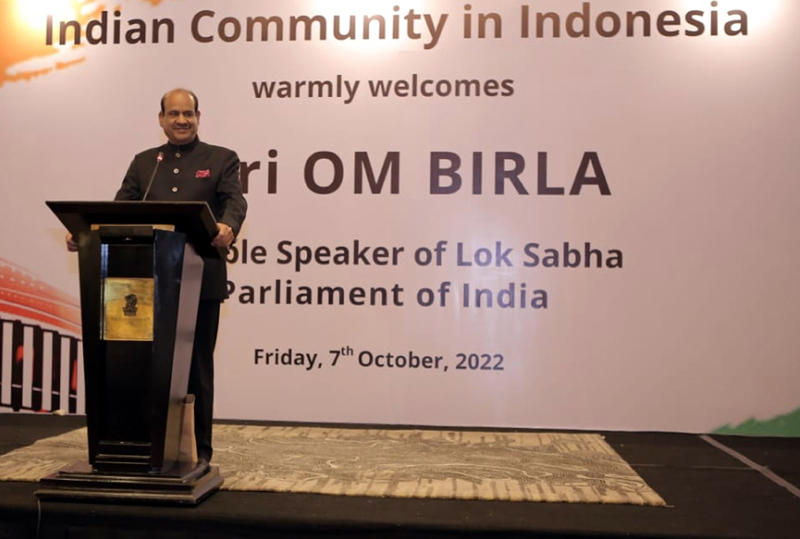
LS Speaker Om Birla addressing at 8th Summit of Speakers of G-20 Parliaments in Jakarta.
Anil Anand
NEW DELHI, Oct 7: Addressing the closing ceremony of the 8th Summit of Speakers of G-20 Parliaments (P20) in Jakarta, Indonesia, Lok Sabha Speaker Om Birla said the summit which began on 6th October 2022 concluded with a purposive note that the spirit of mutual cooperation is the foundation of success of G-20. He congratulated the Parliament of Indonesia for successfully organizing and orderly conduct of the G20 Summit.
Speaking on India’s glorious journey of democracy in the last 75 years, Birla said that smooth transfer of power according to people’s mandate has been a speciality of our Constitution and democracy. He further said that our Parliament protects the interests of the citizens of the country and guides in making laws and policies to fulfill the hopes and aspirations of the people.
On the strategies to deal with the challenges being faced by the world in the 21st century, he observed that we should all lay emphasis on shared efforts, regular sharing of best practices and dialogue to deal with the future challenges. Regular dialogue and shared efforts among ourselves should guide our Parliaments to innovate within our sovereignty and to tackle and solve challenges, Birla added.
He reiterated that India believes that global prosperity, economic opportunities and challenges are interlinked subjects. He opined that Parliaments of the G-20 Member countries should collectively contribute to the strengthening of parliamentary and community participation mechanisms in governance, taking into account shared visions and their concerns,
Inviting his counterparts to the ninth summit of the G20 next year, Birla said that India looks forward to welcoming all the representatives of the P-20 countries next year.
During the summit, he interacted with the Speaker of the House of Representatives of the Thailand National Assembly, Chuan Leekpai. During the meeting, Birla congratulated Leekpai on the completion of ninety years of the House of Representatives of the Thailand National Assembly and emphasized on the strengthening of parliamentary cooperation between India and Thailand.
Noting that India’s Act East Policy and Thailand’s Act West Policy complement each other, Birla emphasized on strengthening ties in global fora including IPU. Improvement of port connectivity, cooperation in infrastructure development, energy security and many other issues of mutual interest were also discussed by the two leaders. He also expressed condolences on the killing of innocent children in the recent Bangkok shooting incident.
Birla also met the President of IPU, Duarte Pacheco, on the concluding day. Appreciating the initiative of the IPU President to strengthen the IPU as a global platform, Birla said that under Pacheco’s leadership, IPU has become a platform to raise the voice of the common man. He emphasized on a common action plan to tackle issues of global concern like climate change. He also discussed about capacity building of legislators and officials through PRIDE, Lok Sabha Secretariat and strengthening research in legislatures. Several other issues related to strengthening parliamentary democracy were also discussed in the meeting.
He also met Speaker of the Parliament of Fiji, Ratu Epeli Nailatikau. The two leaders discussed a wide range of issues of mutual interest, including cooperation in the Indian Ocean, sharing best parliamentary traditions and strengthening bilateral cooperation. The contribution of the Indian Diaspora to the development of Fiji was also discussed.
Later Birla was felicitated by the Indian community in Jakarta. Speaking on the occasion, he said that the Indian community in Indonesia, with their hard work, innovation and innovative thinking, is making a significant contribution to Indonesia’s economic progress. He urged the Indian community in Indonesia to make efforts to invest in various sectors in India, inform Indonesian companies and Indonesian citizens about India’s emerging potential. He called upon them to work for the prosperity of Indonesia as well as motherland, India.
One of the finest means to draw in the site visitor to your website is by creating interesting blog sites. A blog writing directory site with a high web page ranking can do marvels to raise the website traffic of your website.
If you are one of these individuals after that you require to obtain max direct exposure for your blog sites as well as simply composing a blog site is not sufficient any longer. The competitors is strong so locate blog site directory sites as some of them provide a totally free listing.
Sending your blog site in a reliable blogging directory site can
· Boost your site web traffic
· Increase the dimension of your e-mail checklist
· Build depend on with customers and also potential customers
· Can you gain you substantial cash online
If you are looking for an excellent organization concept after that sending your blog site to a directory site like Surreal blog site can produce whole lots of web traffic to your internet site. Unique has actually produced a blogging directory site for any individual that are interested in publishing their blog sites.
The function of this blog site directory site is to assist our lots of blog site authors obtain even more direct exposure for their initial material. As Surreal Blog functions day-to-day to make the website a high web traffic location these solutions will just bring even more direct exposure each month.
If you are one of these individuals after that you require to obtain max direct exposure for your blog sites as well as simply creating a blog site is not adequate any longer. If you are looking for a wonderful company concept after that sending your blog site to a directory site like Surreal blog site can create whole lots of website traffic to your site. Unique has actually produced a blogging directory site for any individual that are interested in uploading their blog sites. The function of this blog site directory site is to aid our numerous blog site authors obtain even more direct exposure for their initial material.
In this study, the coverage depth of each organelle genome reached over 100 × (Magnolia omeiensis: 168 × , M. sinica: 102 × , M. nitida: 132 × , M. kachirachirai: 103 ×). The six CPGs within the subgenus Gynopodium ranged in size, from 160,027 bp (M. kachirachirai) to 160,114 bp (M. lotungensis) (Table 1). All CPGs were a typical quadripartite circular structure (Fig. 1) that included a LSC region and a SSC region divided by a pair of IR regions (Fig. 1 and Table 1). The length of the LSC region ranged from 88,130 bp (M. kachirachirai) to 88,170 bp (M. yunnanensis), and the length of the SSC and IR regions ranged from 18,725 bp (M. kachirachirai) to 18,767 bp (M. lotungensis), and from 26,571 bp (M. sinica) to 26,586 bp (M. kachirachirai), respectively (Table 1). The GC-content was similar in all six CPGs. The GC content of the whole plasmid sequence was 39.3%; the GC content of the IR regions was 43.2%, which was higher than that of in LSC and SSC regions (38% and 34.3%) (Table S1). In addition, 131 genes were annotated in all six CPGs, including 37 transfer RNA (tRNA) genes, 8 ribosomal RNA (rRNA) genes, and 86 protein-coding genes (Fig. 1 and Table 1). There were two copies for seven of the protein-coding genes, seven of the tRNA genes, and four of the rRNA genes; the other 95 genes were all represented by single copies. Eleven genes possessed introns: rps16, rps12, ropC1, rpl2, rpl16, petB, petD, ndhB, ndhA, clpP1, and atpF (Table 2).
Gene map of the CPGs of six subgenus Gynopodium species. The genes inside and outside of the circle are transcribed in the clockwise and counterclockwise directions, respectively. Genes belonging to different functional groups are shown in different colors. The darker gray area in the inner circle indicates the GC content and the lighter gray indicates the AT content of the genome. The thick lines indicate the extent of the inverted repeats (IRa and IRb) that separate the genomes into the small single-copy (SSC) and large single-copy (LSC) regions
The alignments indicated high sequence similarity among the CPGs of the six subgenus Gynopodium species. However, sequence divergence in non-coding regions was greater than that in coding regions, such as trnH–psbA, rps2–rpoC2, ycf4–cemA, petA–psbJ, and ccsA–ndhD (Fig. 2). The greatest variation among coding regions was observed in ycf1. No major genomic rearrangements or insertions were detected among the six CPGs relative to that of M. omeiensis (Fig. S1).
Large repeat sequences were identified using REPuter software [26]. A total of 300 repeats were identified. Palindromic repeats were the most common repeat sequences, and no complement repeat was found in the CPGs of six subgenus Gynopodium species (Fig. 4). Variation was observed in the number of palindromic repeats and reverse repeats among the six CPGs. The lowest number of palindromic repeats (19) was observed in M. sinica, followed by M. omeiensis (20), M. lotungensis (21). M. nitida (22), M. kachirachirai (22), and M. yunnanensis (22). The number of reverse repeats was less in M. nitida, M. kachirachirai, and M. yunnanensis (9) than in M. lotungensis (10), M. omeiensis (12), and M. sinica (13). Among these repeats, nine were over 30 bp and 24 were 20–29 bp; the longest repeat was 39 bp. Over half of the repeats (60%) were located in non-coding regions, and some of the repeats were located in the coding regions of genes, such as psaA, psaB, ndhC, ycf1, ycf2, rpoB, and rpoC2 (Table S2).
Comparison of the numbers of repeats among the CPGs of six subgenus Gynopodium species: Magnolia omeiensis, Magnolia sinica, Magnolia nitida, Magnolia kachirachirai, Magnolia lotungensis, and Magnolia yunnanensis. (F: Forward, P: Palindromic, and R: Reverse repeats)
The nucleotide diversity within a 600-bp window was calculated for all six CPGs, which ranged from 0 to 0.008 (Fig. 6). There were five highly variable regions with Pi values greater than 0.004, including the ycf1 gene and four intergenic regions (psbA-trnH-GUG, petA–psbJ, rpl32-trnL-UAG and ccsA-ndhD). Pi was greatest (0.007) for the intergenic region between ccsA and ndhD. Highly variable regions were located in the LSC region (2) and SSC region (3); no highly variable region was detected in the IR region (Fig. 6), which reflects similar patterns with structure variability of CPGs. In addition, we evaluated the potential utility of the five highly variable regions. The rpl32-trnL-UAG marker (π = 0.007) with the highest discriminatory power can discriminate six haplotypes from the six subgenus Gynopodium species (Table 4). The psbA-trnH-GUG marker (π = 0.006) with high haplotype diversity can discriminate five haplotypes. Similarly, the marker petA-psbJ (π = 0.005), ccsA-ndhD (π = 0.007), and ycf1 (π = 0.004) can discriminate three haplotypes from the six subgenus Gynopodium species (Table 4).
Phylogenetic relationships were reconstructed using both ML and BI approaches, based on the whole CPGs of 22 species covering all known sections within Magnoliaceae. Topologies of the ML and BI trees were concordant and confirmed that Magnoliaceae comprised two subfamilies (Liriodendroideae and Magnolioideae), each with one genus (Liriodendron and Magnolia). Within Magnolia, subgenus Gynopodium was sister to the subgenus Yulania (BS = 100%, PP = 1.00) (Fig. 7). However, due to the non‐monophyly of subgenus Magnolia, three previously established subgenera in Magnolia were not supported (Fig. 7). Subgenus Gynopodium should be treated as a section of genus Magnolia following Wang et al. (2021) [27]. Within Subgenus Gynopodium, M. sinica diverged first (PP = 1, BS = 100), followed by M. nitida, M. kachirachirai, and M. lotungensis (albeit with relatively low support values), and M. omeiensis was sister to M. yunnanensis (PP = 0.97, BS = 50) (Fig. 7, Fig. S3).
Phylogenetic relationship of Magnoliaceae based on the CPGs of 20 Magnolia species and two Liriondendron species. The phylogeny was inferred by Bayesian inference. Numbers above the lines indicate the posterior probabilities from the Bayesian inference
The CPGs of most angiosperms varied in size from 120 to 160 kb [16]. Our results indicated that the CPGs of six subgenus Gynopodium species are similar in size (ca. 160 kb) and structure (quadripartite circular structure) to other Magnolia species [28,29,30] as well as other higher plants [31]. The total number, order, and composition of genes in the CPGs were highly conserved within subgenus Gynopodium, which is also consistent with most Magnolia species [32, 33], suggesting a very conserved structure of CPGs of subgenus Gynopodium.
The overall GC content has been reported to be associated with the phylogenetic position; specifically, the GC content tends to be higher in early diverged lineages, such as magnoliids [34]. Our results are consistent with these previous findings. Of the six subgenus Gynopodium species, the overall GC content of CPGs was approximately 39.3%, which is similar to that of other Magnolia species, such as M. shiluensis [32], M. grandiflora [35], and M. zenii [36] but higher than the average GC content (35%) of most angiosperms [37]. The GC content also varies among different regions of the CPG [34, 38]. IR region (43.2%) contains significantly higher GC content than that of the LSC (38%) and SSC regions (34.3%) (Table S1), which can attribute to the high GC content in the ribosomal RNA (rRNA) genes in IR region (Fig. 1). Identical findings have been reported in other species, such as Magnolia polytepala [39], Magnolia delavayi [40] and Datura stramonium [41].
Conservatisms of the CPGs
We compared the CPGs of six species within the subgenus Gynopodium. The results indicated that the SSC and LSC regions were more divergent than IR regions, and sequences in non-coding regions were more divergent than that in coding regions, which were consistent with previous findings in Magnolia species [29] and other flowering plants [42, 43] In this study, we identified six regions presenting significant variations in the CPGs of subgenus Gynopodium species, such as five intergenic regions: trnH–psbA, rps2–rpoC2, ycf4–cemA, petA–psbJ, and ccsA–ndhD, and one gene ycf1 (Fig. 2). No major genomic rearrangements or insertions were detected among the six CPGs, which further corroborated the results of recently published studies about Magnoliaceae [27]. Previous studies also found that variation in the size of angiosperms CPGs might be largely driven by length variation in IR regions, intergenic regions, and the number of gene copies [44,45,46]. The structure of the six CPGs within subgenus Gynopodium species was highly conserved; no major expansions or contractions were observed in the IR regions. However, variations in sequence length have been observed in both the LSC and SSC regions, which may drive variations in the size of CPGs within the subgenus Gynopodium species, as reported in other species [29, 47, 48].
Large repeats and simple sequence repeats
Knowledge of genetic diversity within subgenus Gynopodium is necessary to develop sustainable conservation management that ensures long-term maintenance of the genetic diversity within these species [3, 49]. Repeat sequences, which are dispersed in CPGs, are an important source of structural variation and play a significant role in genomic evolution [16, 50]. In our study, 300 repeats were identified, of which palindromic repeats were the most common, while complement repeats were missing in CPGs of the subgenus Gynopodium. The different number of forward repeats, palindromic repeats and reverse repeats generated the variations of CPGs [41]. Therefore, genetic variation in large repeats can provide useful information for phylogenetic research and population genetics. Previous studies have indicated that repeat sequences are mostly located in the intergenic spacer regions, followed by the coding regions [14, 32]. Our findings are consistent with this general pattern; 61.22-65.31% of the repeats were located in IGS regions, followed by coding regions and introns (34.69-38.38%) (Table S2).
SSRs are useful molecular markers that have been widely used in species discrimination, breeding and conservation, and phylogenetic studies [51,52,53,54]. In the CPGs of six subgenus Gynopodium species, the number of SSRs located in the LSC and SSC regions accounted for 92.86% of all SSRs, and only ten SSRs were located in the IR region (Table S3). Our findings were consistent with the general pattern of angiosperm that most of the repeats were located in the LSC and SSC regions of CPGs [36, 48]. The SSRs of the CPGs of six subgenus Gynopodium species identified in our study provided valuable sources for developing primers of specific SSR loci and a useful tool for species identification.
Highly variable regions
Highly variable regions provide abundant phylogenetic information and can be used as potential molecular markers to delimit closely related taxa [55]. The Pi of highly variable regions within subgenus Gynopodium species was lower (< 0.008) compared with previously published values of other species [56, 57] and some of Magnolia species [29, 30]. The low genetic diversity of subgenus Gynopodium species and other Magnolia species, e.g., Magnolia ashei may relate to their limited habitat and small populations as threatened species [54, 58, 59].
In the Magnoliaceae, several highly variable regions, such as, matk, ycf1, psbA–trnH and atpB–rbcL have been recognized as potential sites for DNA barcoding [39, 60]. In this study, we recognized five highly variable regions with Pi values greater than 0.004, including one gene (ycf1) and four intergenic regions (psbA-trnH-GUG, petA–psbJ, rpl32-trnL-UAG and ccsA-ndhD). The highly variable regions identified here have high discriminatory power to distinguish 6 (rpl32-trnL-UAG), 5 (psbA-trnH-GUG), 3 (petA-psbJ), 3 (ccsA-ndhD), and 3 (ycf1) plastid haplotypes from six subgenus Gynopodium species (Table 4). These regions could be considered as potential barcoding markers for species identification of subgenus Gynopodium.
Phylogenetic relationship
CPGs have shown substantial power in solving phylogenetic relationships among angiosperms [61]. However, it is still controversial regarding the boundaries of the genera of Magnoliaceae [1, 6]. Based on the whole CPGs of 22 species covering all known sections of Magnoliaceae, topologies of the ML and BI trees all supported that Magnoliaceae consisted of two subfamilies Magnolioideae and Liriodendroideae, each with one genus, Magnolia and Liriodendron, respectively. However, due to the non‐monophyly of subgenus Magnolia, three previously established subgenera in Magnolia were not supported. Our results supported the infrageneric circumscriptions reported by Wang et al. that classified Magnolia into 15 clades corresponding to 15 sections and subgenus Gynopodium treated as a section of Magnolia [27, 62]. And our results also supported merging section Manglietiastrum into section Gynopodium as reported previously [62, 63].
Although we recovered the phylogenetic relationship within subgenus Gynopodium, some of the nodes were poorly supported (Fig. 7). The low nucleotide diversity and nucleotide substitution rate in the CPGs of subgenus Gynopodium species and other Magnolia species might contribute to the lack of phylogenetic resolution in Magnoliaceae [62, 64, 65]. Consequently, genetic markers from the mitochondrial and nuclear genomes should be developed to reconstruct more robust phylogenies of subgenus Gynopodium species.