Amazon has the DEWALT Drive Socket Set, SAE/Metric, 1/4-Inch Drive, 25-Piece for only $19.97! (Reg. $30) With the 25 Piece Socket Set, you can be sure you have the right tool for the job. The socket set metric and standard includes a variety of socket…
Texas State was 0-4 and heading for a fifth consecutive loss when Emily DeWalt was pulled out of the team’s match against Ohio State on Sept. 4.
It was a rare occasion. The senior setter hardly ever comes off the floor for the Bobcats, usually playing all six rotations. But she was sidelined for the next three weeks with a rotator cuff injury that she’d tried to play through early on. The team went 4-4 during the stretch, concluding in the maroon and gold’s worst non-conference record in recent history at 4-9 overall.
DeWalt returned in time for Sun Belt play, helping the team earn a 3-1 road win over Troy on Sept. 24. But it still took some time for her and her teammates to catch back up to speed, losing to South Alabama on Sept. 25 and Louisiana on Oct. 2.
Once the Helotes native returned to full strength, though, the Bobcats were unstoppable. Texas State has since won 12 in a row, losing just three sets throughout the streak. DeWalt claimed four conference Setter of the Week honors and led the league with 11.12 assists per set, helping the team earn the No. 1 West Division seed.
On Wednesday, the Sun Belt named DeWalt its Setter of the Year for a fourth straight season and, for the first time in her career, also tabbed her as the conference’s Player of the Year.
“We got pretty emotional today talking about (Emily), because, two months ago, we were sitting in the office talking about whether she was going to play or not,” Texas State head coach Sean Huiet said in a statement. “For her to play through the type of injury she has and maintain this type of level of play on the court, it says so much about who she is.
“For her to be recognized as not only the Setter of the Year for the fourth time in a row, which is huge, but I really think she’s one of if not the best player in our conference. So, for all the other coaches to give her that award, I think everyone can understand why we were emotional about that today. She’s battled a lot this season, so for her to get these awards, it was a really special moment.”
The Bobcats saw three other players receive honors in the Sun Belt’s postseason awards. Senior outside hitter Janell Fitzgerald joined DeWalt on the all-conference First Team and was voted Offensive Player of the Year after posting 4.06 kills per set in league play.
“When (Janell) got the Preseason Offensive Player of the Year, this was one of our goals,” Huiet stated. “We always talk about those preseason ones, but we also want those to be things we get at the end of the season, too.
“I think, because our team was so balanced, I wasn’t sure what her numbers were going to look like at the end of the season. So, it was nice for us to still be balanced, but for her to have over four kills per set. Her playing the backrow really helps her get some more touches as well. She’s done some really great things this season: she is leading the conference in kills per set and is in the top three in hitting percentage. And that’s definitely someone who deserves to be recognized as the offensive player of the year.”
Graduate outside hitter Jada Gardner and fifth-year senior middle blocker Tyeranee Scott were both Second Team selections. Gardner finished the regular season averaging 3.02 kills per set. Scott averaged 1.98 kills to go along with 0.97 blocks per frame.
“We always say it’s nice when individuals get recognized, but we know it’s a team sport and their teammates helped them get them,” Huiet stated. “I’m really excited for those four kids to be recognized by our conference.”
Texas State heads into the Sun Belt tournament this weekend hoping to walk away with a fourth consecutive conference title. It’s been the goal for the Bobcats all season long.
The team received a first-round bye and will play the winner of Thursday’s match between No. 4 East Division seed Troy and No. 5 West Division seed Little Rock. The second-round matchup takes place on Friday in Foley, Ala., at 7:30 p.m.
“Just being able to play everybody (in the conference), I feel like we know our competition now,” Scott said. “Like our coaches say, we’re going to get everyone’s best. So I think we’re definitely prepared for it.
Stanley Black & Decker has an enviable track record of growth and dividend increases that span decades. The company has attractive financials and continues to grow at a decent pace.
UNIONTOWN, Ohio, Dec. 9, 2021 /PRNewswire/ — The future of security is built around the combination of global presence, connected technology and intelligent use of data and together with Stanley Security, Securitas is perfectly placed to win in this environment with an outstanding offering and client experience. Together, Securitas and Stanley Security will benefit from a strong competitive position in commercial electronic security globally, creating more value for clients and unlocking growth as well as commercial opportunities from add-on sales, combined solutions, and outstanding innovation capabilities.
Headquartered in Indianapolis in the U.S., Stanley Security has an inspiring 30-year history of protecting its clients world-wide through an industry-leading portfolio of tech-enabled security services, ranging from alarm monitoring to systems integration, as well as a specialized healthcare offering. Today, Stanley Security is one of the most recognized electronic security providers worldwide, with approximately 7 800 employees operating through approximately 200 offices and 16 monitoring centers in the U.S., Canada, Mexico, www.securitases.com Telephone: 855 331 0359 Securitas Electronic Security, Inc. Corporate Headquarters 3800 Tabs Drive Uniontown, OH 44685, USA Press release Continuation Page 2/2 United Kingdom, France, Sweden, Belgium, the Netherlands, Denmark, Finland, Norway and Ireland.
“This means that Securitas becomes an exceptional player in the security industry. Together with Stanley Security, our largest acquisition in history, the profile of Securitas changes from a leading guarding company with electronic security and solutions capabilities, to a leading intelligent security solutions partner”, says Magnus Ahlqvist, President and CEO. “The future of security is built around the combination of global presence, connected technology and intelligent use of data and, together with Stanley Security, Securitas is perfectly placed to win in this environment. Together, our offering is cutting edge and we will be in an outstanding position to deliver safety and peace of mind to clients and communities around the world.”
“We are very excited to bring together these two iconic security companies, each with a rich history, a culture of success and with the client at the heart. We look forward to welcoming our new colleagues. The expanded competencies, expertise and leadership across the entire electronic security value chain globally, will serve our respective clients even better and significantly increase our competitive edge,” says Tony Byerly, President Global Electronic Security.
The acquisition is subject to customary regulatory approvals and closing conditions and is expected to complete during the first half year of 2022.
About Securitas
Securitas is the world’s leading intelligent protective services partner. Our guarding, electronic security, fire and safety, and risk management solutions enable more than 150,000 clients to see a different world. We are present in 48 markets and our innovative, data-driven approach makes us a trusted partner to many of the world’s best-known companies. Our 355,000 employees live our values of integrity, vigilance and helpfulness, and our purpose is to help make your world a safer place.
Further Information
Investors: Micaela Sjökvist, Head of Investor Relations; +46 76 116 7443, [email protected]
Much of the benefit of battery-powered tools comes down to how much more portable and nimble they are than their corded brethren. But that can often come at the cost of power, so the power-to-weight (PTW) ratio is a handy gauge of how much oomph they pack into their smaller frames. Tools with a higher PTW are more productive, and—in the construction trades—that can translate to more income because you may get more done in a day’s work. A favorable PTW ratio is also a limb-saver if you’re holding a power tool over your head or working with it at the end of a fully extended arm for any period of time. A tool that’s less tiring to use is one that’s safer. But it’s also a big deal if you’re just a homeowner working on your own place. It can help you achieve more satisfaction from the job and stay safer, and it may even improve your workmanship.
But PTW will suffer if a cordless tool is made too big in an effort to compete with the power of a similar corded model. In so doing, brands can rob their tool of the nimble quality that was supposed to come without a cord attached to a 120-volt outlet. DeWalt has seemingly solved this with the introduction of its Powerstack battery system (which goes on sale next month). And after our testing, we can vouch for the platform. It’s expensive when compared to the company’s existing lithiom-ion batteries, but DeWalt managed to make it smaller and lighter while churning out power comparable to that of a corded tool.
20-Volt Max Powerstack Battery
DeWalt homedepot.com
$149.00
The Powerstack actually produces more watts by more efficiently converting electrochemical energy to mechanical energy with less waste heat, according to DeWalt. The company did away with individual cylindrical cells; instead, they installed layered pouches that achieve weight, size, and performance benefits. The slimmest Powerstack is 15 percent lighter than DeWalt’s most comparable two-amp hour lithium battery while being 50 percent more powerful, per the company’s claim. It’s also important to note that the batteries can power any of the company’s existing 20-volt power tools and recharge via any of the company’s 20-volt chargers.
DeWalt’s illustration of Powerstack next to its existing lithium-ion DCB203 battery.
Courtesy: DeWalt
Courtesy: DeWalt
We were impressed when we used the battery in DeWalt’s new ultra-compact DCF850 impact driver. With the battery, the tool weighs only 2.6 pounds, but it drove No. 10 x three-inch structural screws with a vengeance.
However, impact drivers are short-burst power tools. We know from having conducted hundreds of hours of power-tool testing that if you want to really drain a battery, tax the tool itself and do some work with steady friction. This can be drilling holes through construction lumber with a spade bit or sawing with the blade completely submerged in lumber.
So that’s what we did. After running some test laps using the impact driver, we slid the Powerstack battery into the 6.5-inch cordless circular saw DCS565 (seven pounds with the battery). We lowered the blade to its maximum cutting depth of 2 3⁄8 inches, mounted a Douglas fir 2 x 12 on edge, and plowed straight down the edge of the board. You can make two cuts that way, slightly offsetting them, then flip the board edge for edge and perform it again.
We were amazed at how easily the saw, and therefore the Powerstack battery, handled this work. There was no tripping from thermal overload; we simply ran repeat test cuts until the battery’s full charge was spent. That last point is an important one. A battery that runs cooler is one that will last longer. DeWalt estimates that its Powerstacks will have twice the lifetime of its current batteries. While that’s good news to anybody who uses power tools, it’s particularly welcome to professionals who will likely put more wear and tear on the tool and battery in a week than a homeowner may in a year.
Roy Berendsohn Senior Home Editor Roy Berendsohn has worked for more than 25 years at Popular Mechanics, where he has written on carpentry, masonry, painting, plumbing, electrical, woodworking, blacksmithing, welding, lawn care, chainsaw use, and outdoor power equipment.
This content is created and maintained by a third party, and imported onto this page to help users provide their email addresses. You may be able to find more information about this and similar content at piano.io
Readers—be they professional or tool enthusiasts ask us about two key brands more than any others: Ryobi and DeWalt. However, in the Ryobi vs DeWalt debate, the issue isn’t so much which brand is more Pro. The real question is whether Pros can accomplish the work needed with a lesser-priced, budget-saving tool versus a more premium model. So, rather than address who makes the best tools between these brands, we plan to talk about both to discuss the differences Pros should consider depending upon the type of work they do and the needs they have.
Along the way, we also plan to cover the history of both DeWalt and Ryobi brands, including their size, number of employees, and parent companies. We also want to examine what tools each company makes and where they make them. Both Ryobi and DeWalt have a prominent place in the retail space. Our job is to help readers understand where each brand fits in the tool “ecosphere”…
Look for some DeWalt vs Ryobi Head-to-Head Action? Check out these reviews!
Company Histories of Ryobi and DeWalt
Ryobi Corporation History
Ryobi Limited is a manufacturer of components for automobiles, electronics, and telecommunications industries based in Japan. It also sells printing equipment, building products, and power tools. In 2018, Kyocera Corp purchased the Japan-based Ryobi Limited’s power tool business.
The Ryobi we think of in America is actually Ryobi Power Tools and Ryobi Outdoor Power Equipment. Both are brands of Techtronic Industries, used under license from Ryobi Limited.
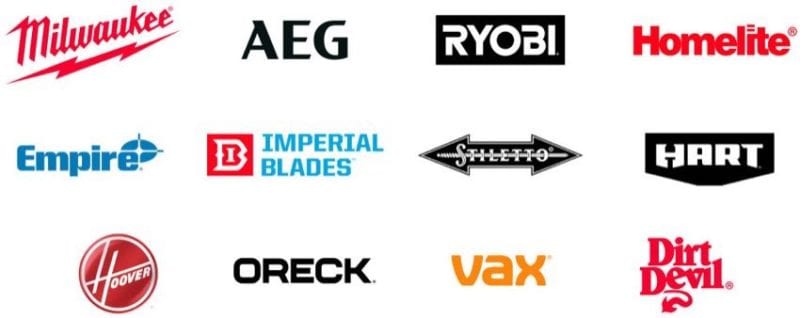
Techtronic Industries (also One World Technologies) is also the parent company behind Milwaukee Electric Tool, AEG (AEG Powertools, licensed from Electrolux), Homelite, Hoover US, Hart Tools, Oreck, Dirt Devil, and Vax. Since 1996, the Ryobi brand in America has operated as a subsidiary of Techtronic Industries (TTI), a Hong Kong company founded in 1985.
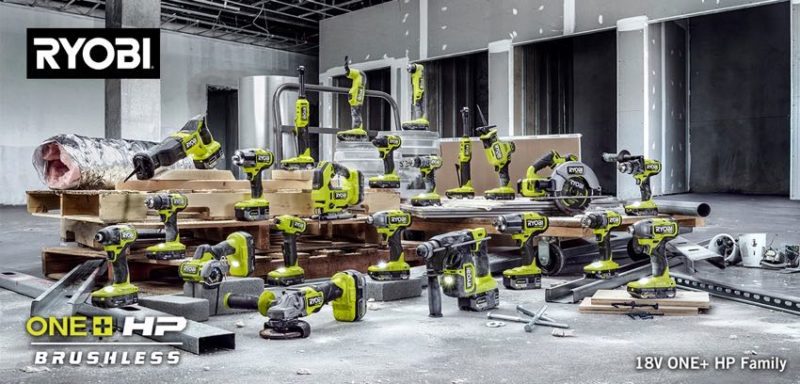
Ryobi manufactures both corded and cordless power tools with 2021 debuting the ONE+ HP brushless tools. They also make hand tools as well as accessories like saw blades and drill/driver bits.
Around 2008, Ryobi did something no other manufacturer had pulled off. They introduced lithium-ion battery technology while maintaining perfect backward compatibility with every tool they ever made. DeWalt tried this…and failed, having to switch from a brief period of lithium-ion stem packs to a whole new slide pack design with the launch of their XR tools in 2013.
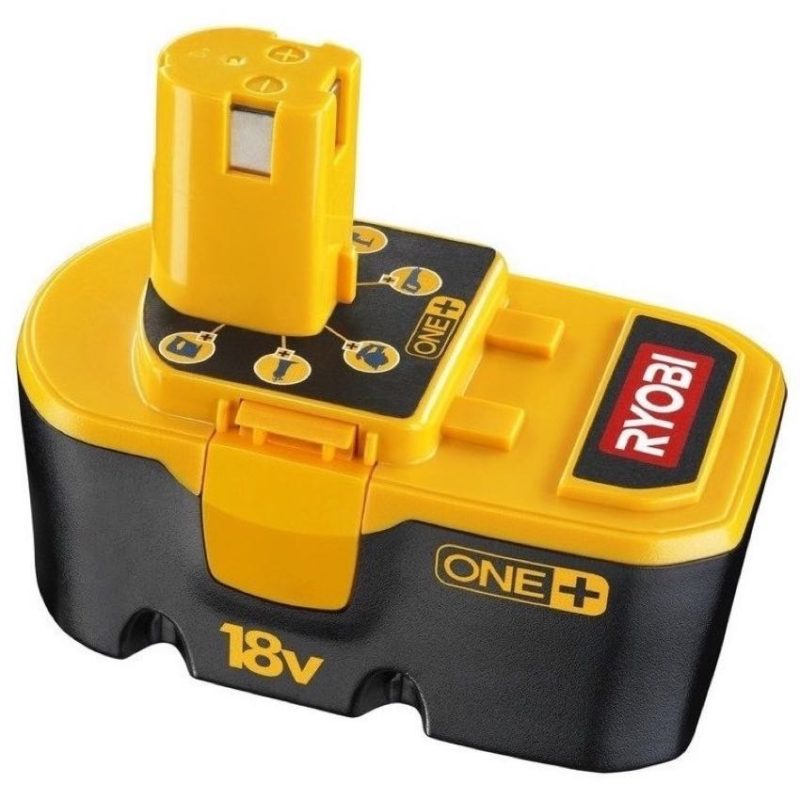
Ryobi 18V NiCad battery
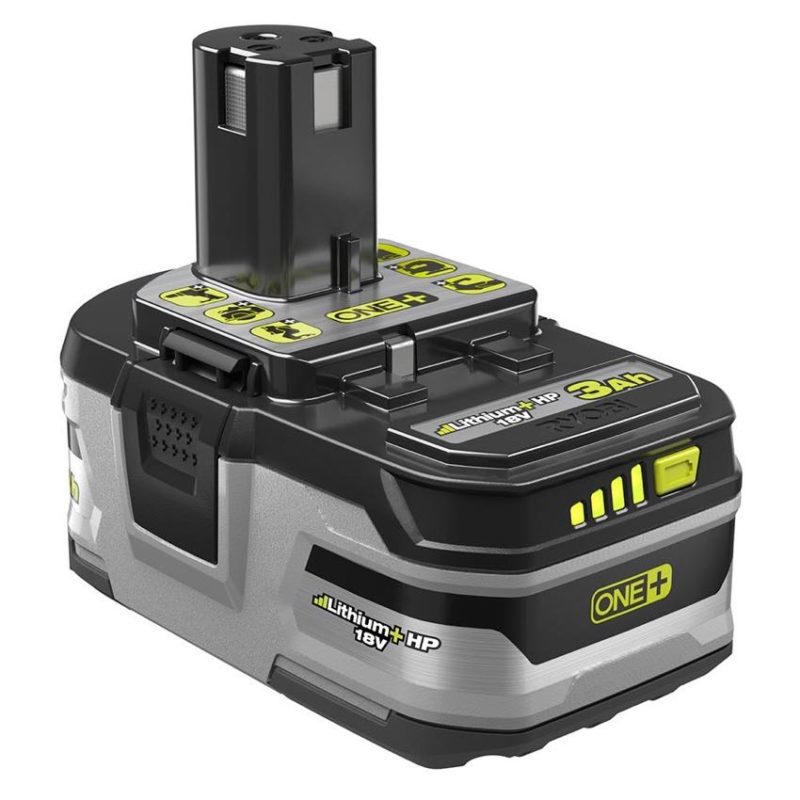
Ryobi 18V HP battery
DeWalt Company History
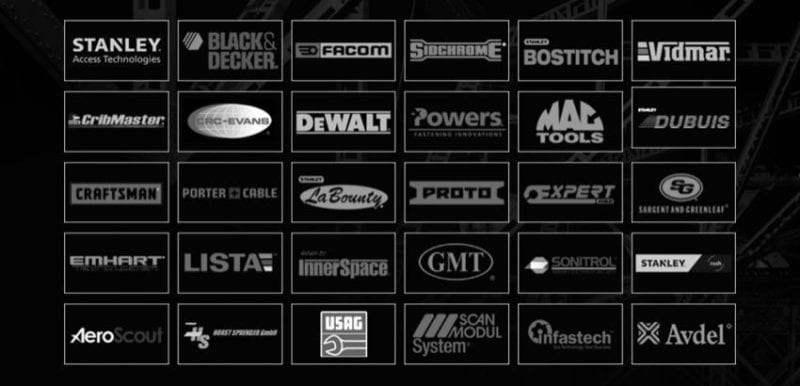
DeWalt is an American company that represents a worldwide brand of power tools for the construction, manufacturing, and woodworking industries. The DeWalt brand actually falls under the umbrella of Stanley Black & Decker. This parent company also owns Irwin Tools, Craftsman, Lenox, Porter-Cable, Proto, Bostitch, Vidmar, and several others.
DeWalt was officially formed in 1923 by Raymond E. DeWalt (who invented the radial arm saw). Eventually, the company was sold to Black & Decker in 1960. Nothing too exciting happened until 2004 when Black and Decker bought Porter-Cable and combined it with DeWalt in Jackson, Tennessee.
DeWalt expanded into the production of hand tools in 2011, and in 2013 they added mechanics’ tools. Three years later, in 2016, DeWalt debuted FlexVolt, the construction industry’s first hybrid voltage battery pack. It runs at either 60V Max (series) or 20V Max (parallel) mode depending upon whether it is placed into a 60V FlexVolt or 20V Max tool.
Ryobi vs DeWalt Main Locations
Ryobi Tool Manufacturing
Internationally, Ryobi and its parent company TTI manufacture a large majority of its cordless power tools and battery-powered products overseas. The company has factories in China, Vietnam, Mexico, Germany, the Czech Republic, and the United States.
In 2016, Ryobi Limited invested $97.5 million into its U.S. subsidiary Ryobi Die Casting USA, purchasing and equipping a 350,000-square-foot facility adjacent to its campus in Shelbyville, Indiana. This facility, however, doesn’t manufacture Ryobi Power Tools which fall under the branding agreement with TTI.
Domestically, Ryobi designs and engineers all of their tools right in Anderson, South Carolina. They also assemble several tool lines in their 1,000,000 square foot manufacturing plant and warehouse. That includes their newest lawnmower line.
DeWalt Manufacturing
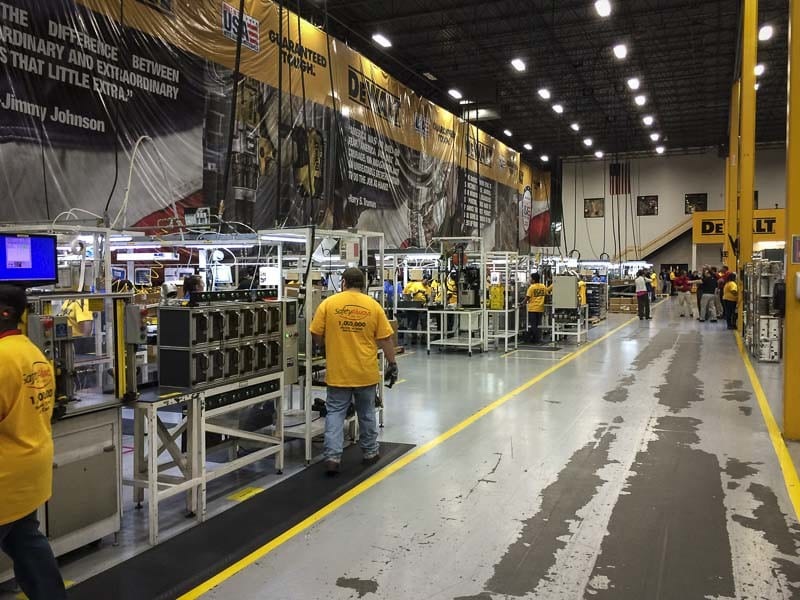
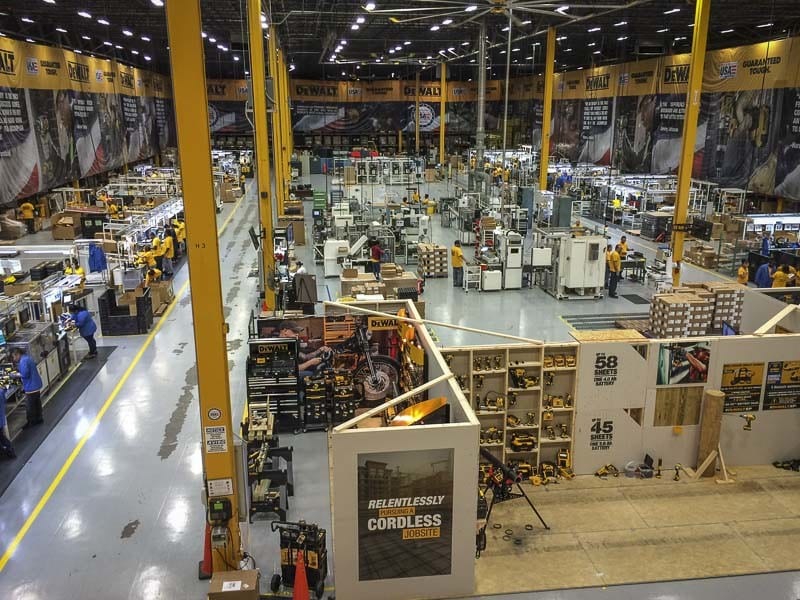
Like most power tool companies, DeWalt manufactures much of its inventory overseas. However, the company has made some recent strides to bring more of its manufacturing back to the USA—at least in part. In December 2013, DeWalt announced it would be assembling certain products domestically from globally sourced parts imported from Brazil, China, the Czech Republic, Italy, Mexico, the UK, and here in the States. You may have already seen or used some of those products bearing the label “Built in the USA with global materials.”
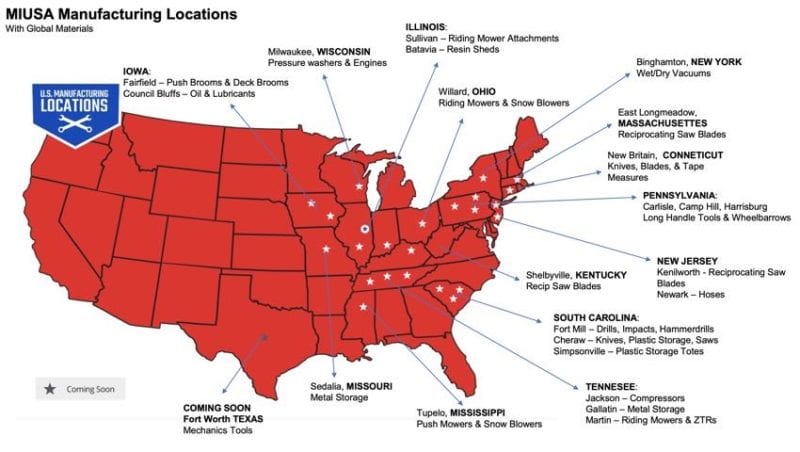
Fast forward to 2015 and DeWalt operated seven domestic manufacturing facilities to build DeWalt tools and products. These facilities are located in New Britain, Connecticut; Hampstead, Maryland; Shelbyville, Kentucky; Greenfield, Indiana; Cheraw, South Carolina; Charlotte, North Carolina; and Jackson, Tennessee.
If you back up to parent company Stanley Black & Decker, USA-based manufacturing occurs on a much wider scale, claiming 48 U.S. manufacturing facilities. The company maintains these facilities across two dozen or so states.
Overseas manufacturing, which still dominates the majority of DeWalt power tools, occurs largely in Brazil, China, the Czech Republic, Italy, Mexico, and the United Kingdom. Given their growth, the Ryobi vs DeWalt debate tilts towards the latter if you want to find tools with at least some production occurring in the United States.
DeWalt vs Ryobi in Number of Employees
With companies owned by parent organizations, it can be difficult to estimate the size. DeWalt claims over 10,000 employees across all of its facilities on its LinkedIn page. Since all of the Stanley Black & Decker brands employ a number about 6X greater than that, 10,000 seems to be a relatively believable figure.
Worldwide, Ryobi’s parent company TTI employs more than 22,000 people. Domestically, the company has more than 4,000 employees. In its Anderson County facility, the latest $100 million expansion should wrap up in 2022 by bringing an additional 525 jobs to the area. This occurred after an $85 million investment in 2015 that created 216 new jobs.
What Parent Companies are Behind Ryobi and DeWalt?
Techtronic Industries (TTI)
The parent company behind Ryobi Power Tools is Techtronic Industries (TTI). Founded in Hong Kong in 1985, TTI includes the following brands:
Milwaukee Electric Tool Corp.
AEG
Empire
Ridgid (licensed)
Ryobi (licensed)
Hart Tools
Imperial Blades
Stiletto
Homelite
Hoover US
Oreck
Vax
Dirt Devil
TTI designs, manufactures, and markets everything from power tools and outdoor power equipment to layout and measurement tools, appliances, and even floor care products. The brands under TTI make products used by tradesmen, consumers, and industrial users across the home, construction, maintenance, and industrial markets.
TTI is listed under the Hong Kong Stock Exchange as Techtronic Ind (669) and was valued at HK$76.050 ($9.81 USD) per share on June 17, 2020, with a market cap of HK$139.25 or $17.9 billion USD. In 2020, TTI saw revenues of $9.8 billion with a gross profit margin of 38.3%, attributing its success to increased strategic investment in new products, manufacturing capacity, geographic expansion, and in-field marketing initiatives.
Stanley Black & Decker, Inc. (SBD)
Behind DeWalt stands Stanley Black & Decker, Inc (SBD). SBD includes the following brands:
Stanley
DeWalt
Black + Decker
Craftsman
Irwin Tools
Porter-Cable
Facom
Lenox
Lista
Mac Tools
Vidmar
Bostitch
Sonitrol
Proto
Paladin
Pengo
Previously known as The Stanley Works, SBD is a Fortune 500 company based in the United States. They manufacture tools, accessories, and fasteners for the industrial, construction, home improvement, and outdoor power equipment markets and also supply security products. Headquartered in New Britain, Connecticut, Stanley Black & Decker arose when Stanley Works and Black & Decker merged in 2010.
As of 2019, Stanley Black & Decker employed around 61,000 people across 60 different countries. Stanley Black & Decker is listed under the New York Stock Exchange as SWK and was valued at $135.31 per share on June 17, 2020, with a market cap of $21.37 billion USD. The company saw $14.4 billion in revenues with an operating margin rate of 13.5%. It attributed its latest growth chiefly to successes in the areas of tools & storage as well as industrial acquisitions.
Ryobi vs DeWalt Depth of Line
When comparing the general cost of tools between Ryobi vs DeWalt you quickly realize that both companies make a lot of tools. Ryobi Tool has over 225 tools in its 18V ONE+ line alone, with another 50 or more 40V tools.
DeWalt boasts more than 200 products in its 20V Max line before adding in their new FlexVolt line of tools (around three dozen or more in this category so far) or their corded products.
Clearly, both brands have a large commitment to making tools, however, DeWalt definitely favors the professional contractor and tradesmen while Ryobi goes after the DIY market and trades that don’t require the highest power or torque. We see a lot of Ryobi tools used in the HVAC trades as well as for those doing punch lists and basic home repairs.
Both brands also cover a host of accessories—from blades and bits to hole saws and specialty fasteners. DeWalt takes the lead here, however, with a much larger and deeper assortment of accessories that cross a much wider span of tools. They also have more options when it comes to saw blades and grinder wheels.
DeWalt carries a decisive advantage in the fasteners category. Its parent company acquired both Powers Fasteners and Infastech in 2012. Ryobi doesn’t make any fasteners, nor are we aware of any plans for them to expand into this area.
Ryobi vs DeWalt General Cost of Tools
In general, having reviewed and used literally hundreds of tools from both companies, Ryobi Tools clearly cost less—by far—than comparable DeWalt power tools. Often HALF as much. This mostly has to do with the target audience. Ryobi targets users who don’t need the most torque or the highest speeds. They aren’t likely driving the most difficult fasteners or using their tool for hours at a time but more periodically or occasionally. There are exceptions, however.
DeWalt also tends to include higher-capacity, advanced batteries in their cordless tool kits. Ryobi sells a majority of its tools without a battery. In fact, Ryobi considers this an advantage since you can buy an initial combo kit and then add tools inexpensively until you have a rather large collection.
DeWalt makes compact and entry-level tools available for their Pros, so you have some choice when choosing from their core tools. Ryobi does something similar with both brushed, compact brushless, and brushless tools available across several key products. Overall, DeWalt provides a lot more options for Pro users depending upon the features and capabilities they need and/or want while Ryobi leads the budget category.
Select Ryobi vs DeWalt pricing examples:
In the examples above, you can see that in some places, DeWalt tools cost as much as twice that of Ryobi tools. In other cases, you can grab a full-size DeWalt 20V circular saw kit for a mere $10 premium over a Ryobi.
DeWalt vs Ryobi Warranty & Service
Ryobi includes a 3-year limited warranty with most of its cordless power tools, chargers, and batteries—including its 20V outdoor power equipment. Some specialty tools include different warranties—but the company notes that on their warranty page. Of note, Ryobi hand tools carry a limited lifetime warranty. Their 40V cordless outdoor products carry a 5-year limited tool warranty and 3-year battery warranty.
Most 18V ONE+ Products
40V Products
40V Products
Hand Tools
You don’t have to register Ryobi tools in order to receive warranty coverage or service. However, the company uses the manufacturing date if you cannot produce a receipt. To get the most out of your warranty, we always recommend registering the tool so you document the purchase date. This goes for DeWalt or Ryobi power tools.
DeWalt includes a 3-year limited warranty on most cordless power tools with a 1-year free service contract and a 90-day money-back guarantee. DeWalt Mechanics Tools are covered by a full lifetime warranty. That means that if any DeWalt mechanics tool fails for any reason, the company will replace it—even without proof of purchase. Other DeWalt hand tools carry a limited lifetime warranty against defects. Finally, a few select DeWalt pneumatic tools carry a 7-year warranty with a 1-year service agreement and a 3-day money-back guarantee.
So let’s look at brand reputation. Both Ryobi and DeWalt both have a good reputation for making great tools. They simply serve different markets. DeWalt is known as one of the go-to brands for professional tradesmen. Their “Yellow-and-Black” coloring is well-recognized across the industry.
Ryobi dominates the consumer and DIY markets, making tools for more than just residential and commercial construction. With inflators, fans, misters, soldering stations, rotary tools, and Bluetooth radios, Ryobi has something for anyone and everyone. They do, however, lack many higher-end trade-focused products like crimpers, cutters, and threaders. Electricians and plumbers who tackle jobs that require these tools might want to stick with a brand that can cover the array of specialty tools that make their jobs easier.
Ryobi also capitalized on DeWalt’s short-lived 18V XRP tool that used lithium-ion stem-packs. That put Big Yellow about 2-years behind the times. The company eventually switched to slide-pack batteries. By that time, however, Ryobi had truly expanded its ONE+ line with new tools that took advantage of higher power lithium-ion batteries.
Lastly, with its impressive 20V and 60V FlexVolt tools, DeWalt makes some of the most innovative tools for the construction trade industry. If this seems like one big seesaw of back-and-forth, it’s simply because both companies have incredible advantages—aimed squarely at different audiences.
Figure out which camp you fit into, choose accordingly, and you’ll do very well for yourself.
DeWalt Brushless vs Ryobi Brushless Tools and Technology
Both DeWalt and Ryobi have long employed brushless tool technology. DeWalt rolled out their brushless tools first, immediately taking advantage of the ability to better control drill and driver speed through electronics. Ryobi has made the move to brushless in just the last few years.
DeWalt Tool Connect
When comparing Ryobi to DeWalt, we also can’t ignore the presence of DeWalt Tool Connect. While the sophisticated Milwaukee ONE-KEY is offered by another TTI brand, Ryobi has no present plans to include this type of technology. If you want some level of tool tracking and inventory control, DeWalt handily wins this contest.
DeWalt Versus Ryobi Core Tools Compared
Dewalt vs Ryobi Drills
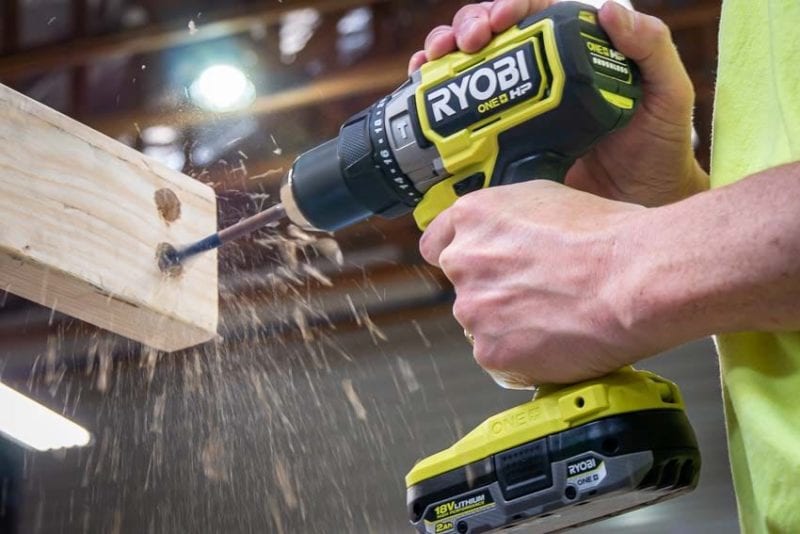
If you want to compare DeWalt vs Ryobi drills, the cost might be your biggest factor. You also need to understand the type of work you typically perform. Do you need to consistently drill through double-stacked headers for running conduit and cable or use large hole saws and self-feed bits? If so, a DeWalt drill like the DeWalt DCD997 can handle a lot more torque for longer periods than something like the Ryobi HP Brushless hammer drill. It also holds up well under load, meaning it slows down very little once you give it a job to do. The DeWalt will also drill much more quickly through concrete.
Where the Ryobi HP brushless drill excels, however, is speed. It placed very high in our test track—meaning it tore through everything we threw at it!
If you only intend to drill 1/2-inch or smaller holes or tackle the occasional Tapcon, Ryobi can definitely handle that. It can also take care of heavier use when it’s not your daily grind. The price of a Ryobi HP Brushless drill runs around half that of DeWalt—so you might begin to see the appeal for some users. When we evaluate the best cordless drills we always consider value—and Ryobi has it in spades.
Ryobi vs DeWalt Hammer Drill Size Differences
Interestingly, Ryobi makes a smaller hammer drill than DeWalt—measuring almost a half-inch less in length. Measuring both tools shows that the Ryobi weighs almost a pound less. You can definitely feel the difference when you pick up each tool, though the Ryobi certainly doesn’t feel cheaply made.
What About Compact or 12V Models?
If you want a more compact tool, DeWalt gives you several choices across the line. They have compact reciprocating saws, compact drills, and compact (Atomic) impact drivers. With Ryobi Tools, you can opt for their Compact HP Brushless line of tools, but no 12V models exist. They do, however, have one-handed reciprocating saws, mini 4-inch circular saws, and other tools that save on space.
For “Yellow” compact tools, check out DeWalt Atomic tools that promise both reduced size and more affordability. Overall, DeWalt has a much broader selection of truly compact tools. Ryobi has prioritized value over size. As a result, their tools typically measure a bit longer, and weigh a tad more, than higher-priced brands.
This DeWalt DCF850 is the smallest impact driver we’ve ever tested.
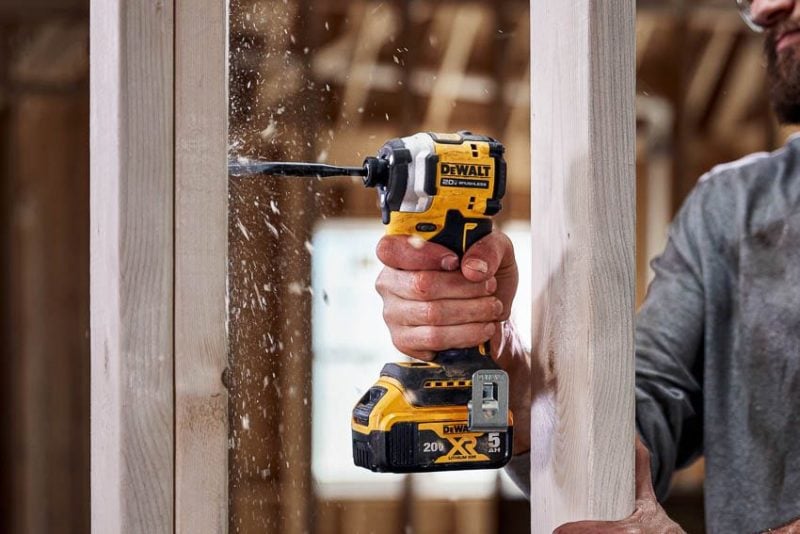
If the above hammer drill comparison indicates anything, it’s that these tools remain fiercely competitive. When comparing the Ryobi vs DeWalt impact driver, two things immediately jumped out. From our best impact driver comparison, we know that the DeWalt DCF850 shaves over 1 1/2-inches off the length of the Ryobi. We also know that DeWalt has significant advantages in both speed and tested torque.
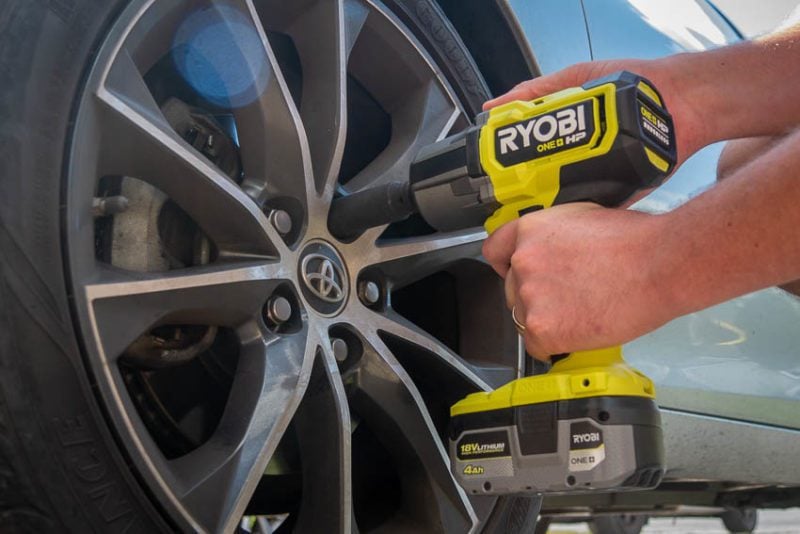
We do like the chuck-based tri-LED light DeWalt uses—it illuminates the work area much more clearly. The DeWalt DCF850 features 3-speeds while the Ryobi gives you 3-speeds as well as an Assist mode that helps when tightening and removing fasteners.
In this contest, both tools do very well, and we expect that—solely based on these two tools alone—this would be a difficult decision. In reality, the choice will have much more to do with the product line you choose as a professional or home user.
Let’s consider some other Ryobi vs DeWalt impact wrench considerations. First, if you want a larger tool, DeWalt makes the DCF897 3/4″ impact wrench. Ryobi, however, stops at a 1/2-inch tool. Second, Ryobi offers something DeWalt doesn’t—an Auto mode for controlling speed while fastening and loosening nuts and bolts.
DeWalt has more compact options with other Atomic impact wrenches. No matter how you slice it, even the smallest Ryobi 3/8-inch impact driver sticks out nearly 1/2-inch past the smallest DeWalt 1/2-inch DCF922 Atomic impact driver.
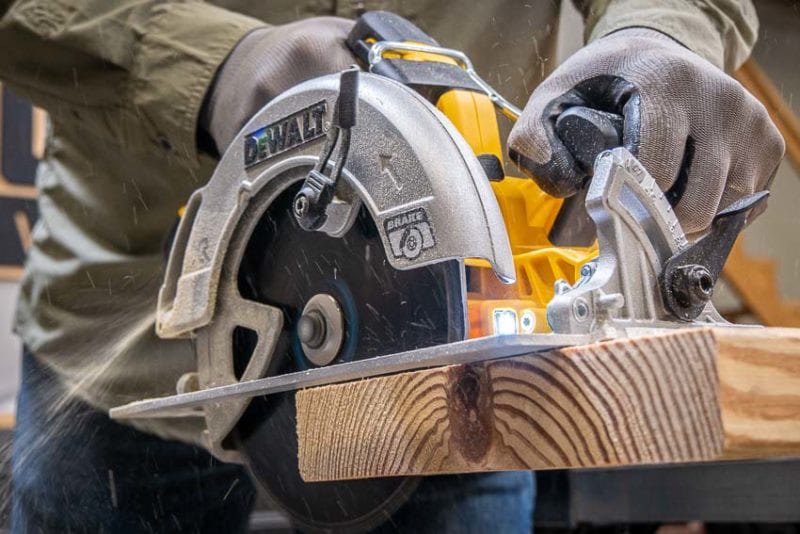
When it comes to buying a DeWalt vs Ryobi circular saw, we have to say that DeWalt gets the clear nod for Pro-level performance. Ryobi makes a great 7-1/4″ cordless saw, but it doesn’t have the professional feel of either of DeWalt’s excellent offerings. Ryobi also doesn’t yet have a rear-handle saw, though they do have both blade-right (7-1/4″) and blade-left (6-1/2″) models.
The price for the tools differs almost as much as their physical traits. The DeWalt 60V DCS578 adds nearly two pounds to the weight of the Ryobi PBLCS300B, making for a heavier-duty tool. The DeWalt also features an aluminum shoe while the Ryobi uses stamped steel. Believe it or not, the Ryobi actually features a slightly better sightline for cutting.
One additional note—of the two brands, only DeWalt has a capable DCS520 track saw. They also have the DWS520 if you want a corded model.
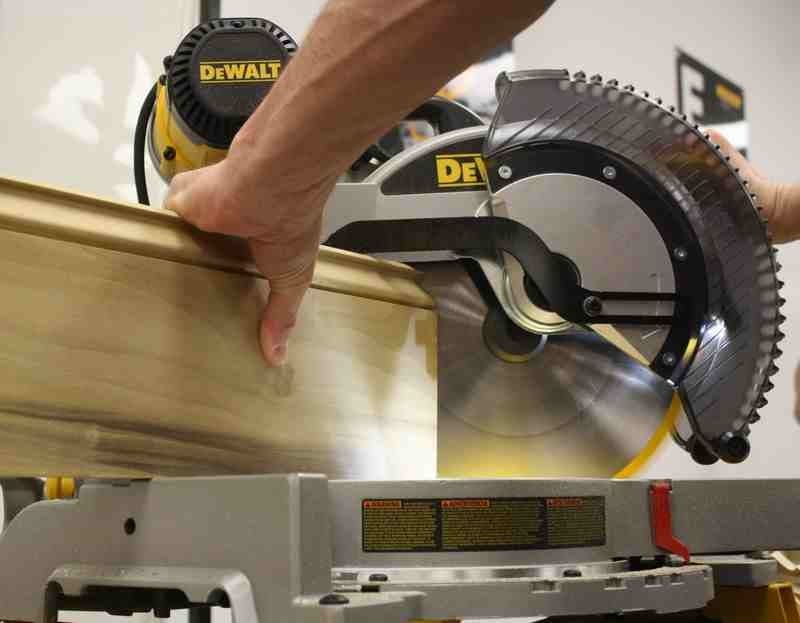
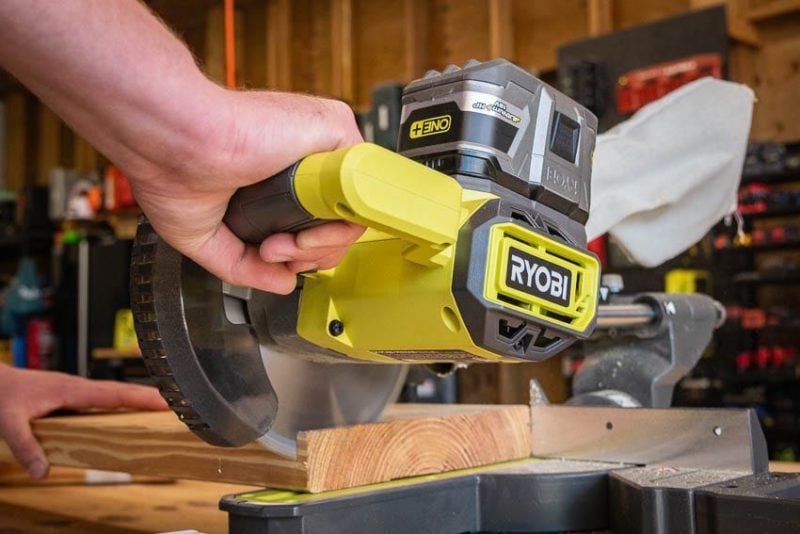
Once again, Ryobi has several miter saws that present an excellent value. For overall performance, however, DeWalt wins this category hands-down. In the Ryobi miter saw vs DeWalt miter saw debate, you first need to decide what kind of work you intend to do.
When we wrote up our best 12-inch miter saws article, we quickly noted models that had excellent fence clearance and above-average capacity. The DeWalt DWS716XPS miter saw remains a favorite of ours. We love the LED cutline that lets you see your cut—even in broad daylight. This saw also cuts 6-1/2 in. vertical base and 6-5/8 in. of vertically nested crown molding.
Like DeWalt, Ryobi has several miter saws to choose from—ranging from 7-1/4″ to 12″. They also have sliding and non-sliding options as well as a basic stand. None of their options, however, provide innovative features or tall rear fences for cutting complex crown molding. Instead, Ryobi prioritizes value. Their most entry-level corded saw runs just $99 on sale.
What About Cordless Miter Saws?
We’re glad you asked that question (even if you technically didn’t!) With cordless saws, we love the Ryobi PBT01B 7-1/4″sliding miter saw. If you already have batteries and a charger, the price is only a $10 premium over their corded model and it cuts almost as well.
The DeWalt FlexVolt DHS790 performs really well—really as a corded replacement. Built on the platform of the well-regarded DWS780 miter saw, this tool packs plenty of power and has an available adapter to let you run it off AC power when needed.
Finally, if you want a compact model, it’s hard to beat the cordless DeWalt DCS361B which packs the ability to cut over 175 2x4s using a single 4Ah 20V Max battery.
OK, so we covered company history, dynamics, technology, and products. After that, it really comes down to doing some of your own research in terms of who you want to get behind with your hard-earned dollars. The question of whether Ryobi is better than DeWalt comes down to who you are and how you intend to use your tools. From our perspective, however, we see two solid companies serving two completely different markets. Both companies provide lots of tool innovation—just in different ways. If you work in the trades and plan to use trade-specific tools all day long, DeWalt makes the better choice. If your trade doesn’t require very specialized tools for plumbing and electrical and you don’t work your tools to the max—Ryobi can save you lots of money.
Disagree with conclusion or have some opinions of your own? Leave them in the comments below!
If you didn’t know that tool manufacturer DeWalt made wireless headphones, don’t worry — we hadn’t either until they started catching on fire. The DeWalt-branded Jobsite Pro Wireless Earphones are being recalled by manufacturer E-filliate for safety concerns of overheating. The company said the recall affects about 301,000 units, which were were sold in stores including Home Depot and Lowes between December 2019 and July 2021.
The US Consumer Product Safety Commission announced the recall on December 1st and said there had been 61 reports of the headphones overheating, including five fire incidents and four minor burn injuries.
E-filliate says customers can contact the company for a free replacement of its $60 headsets but did not mention what the replacements would be. E-filliate didn’t reply to a request for comment from The Verge seeking details about whether the headphones would be remanufactured with design corrections.
The Jobsite Pros themselves follow the neckbuds design, popularized in 2015 by LG’s Tone line and Samsung’s Level-U versions. DeWalt’s headset included wingtips in the buds to secure it to the ear and sports its signature rugged black and yellow look.
DeWalt still has a product page up for the Jobsite Pros and has not yet officially commented on the situation. Reviews from customers mentioned problems with waterproofing, charging, and other quality issues.
If you own the DeWalt Jobsite Pros, please use the contact provided below for information on how to get your replacements.
DeWalt’s Jobsite Pro Wireless Earphones have been recalled because users report some units have burst into flames, according to a new press release from the U.S. Consumer Product Safety Commission. Over 300,000 have been sold in the U.S. since December 2019.
The Bluetooth earphones, made in China and imported by a company called E-filliate in California, retail for $60 and were sold at Home Depot, Lowes, and other retailers, including cyberguys.com, according to the CPSC.
E-filliate has received at least 61 consumer reports of the DeWalt wireless earphones overheating during either charging or use. There have also been at least five reports of the earphones catching fire and four reports of “minor” injuries, though it’s not clear what kind of injuries specifically have been reported.
“Consumers should immediately stop using the wireless earphones and contact E-filliate to receive a pre-paid shipment label to return the product directly to E-filliate in order to receive a free replacement,” the CPSC says.
The website to apply for a replacement can be found here.
The specific manufacturing codes that have been recalled are below:
If your model doesn’t have a manufacturing code the CPSC advises that your earphones are included in this recall.
Curiously, the CPSC only names E-filliate as the company behind the recall and the recall isn’t noted on DeWalt’s website for some unknown reason. Presumably, DeWalt licensed its name to get these earphones made but had nothing to do with the production. DeWalt did not immediately respond to a request for comment early Thursday.
G/O Media may get a commission
Relax, it’s hemp-infused skincare You can still take up to 40% off beauty bundles and accessories for a limited time.
If you need to ask questions about the recall the CPSC encourages consumers to call E-filliate toll-free at 888-979-4439 between 11 a.m. and 8 p.m. ET/ 9 a.m. and 5 p.m. PT, Monday through Friday. Consumers can also email the company about this specific recall at [email protected].
Consumers should immediately stop using the wireless earphones and contact E-filliate to receive a pre-paid shipment label to return the product directly to E-filliate in order to receive a free replacement.