#Funniest #Cats 🐱 and #Dogs 🐶 #Part 29
#Funniest #Cats 🐱 and #Dogs 🐶 #Part 29
https://youtu.be/5n8ea8dK4qM
#Funniest #Cats 🐱 and #Dogs 🐶 #Part 29
https://youtu.be/5n8ea8dK4qM
5 Judges, 6 Contestants – Watch the Smule Mirchi Cover Star Season 3 Finale!
#SmuleMirchiCoverStar
Tomorrow my day will begin long before dawn, just as most days start for the farmers and ranchers I work with. However, instead of heading into the field or a pasture, I will be heading into an airplane for a long flight. It almost feels normal.
The last time I saw my dad it was March 2020. It has been over a year. COVID-19 intervened. But now, fully vaccinated, I will be getting on a plane in the morning as the sun just starts to wash the Capitol in its rise’s orange hue, to make the journey home to celebrate Father’s Day with mine. I am looking forward to it.
It almost feels like normal. But it is not.
The same can be said for the experience of many around the country. This is doubtlessly true for the hearty folks I know who are likewise getting up before the crack of dawn in rural America. They are arising to get their day going, making sure that our nation can eat.
It almost feels normal. But it is not.
I will get to the airport early to check a bag and move at a snail’s pace going through security. My face will be masked as I go about my airport experience and will stay masked as I board the plane, and will remain that way until I depart the terminal at my destination. Not exactly normal.
Farmers and ranchers will go about their daily chores. They will check on their workers to make sure everyone is feeling good before the workers start their day. Someone will be sure to check the temperatures of the crew, others will see to it that the handwashing stations are set to go, while someone else will finish sanitizing the days’ transportation and then ensure that all are appropriately socially distanced as they find their seats for the ride to the field. Not exactly normal.
And, because things are not normal, the National Council of Agricultural Employees (NCAE) has been exploring what employers can do to get us back to normal.
NCAE collaborated with the Centers for Disease Control (CDC) on a pilot project, testing farmworkers for COVID. Nearly 88% of the pilot project’s participants were farm workers of NCAE members. Interestingly, the preliminary data from this project revealed that just 1.3% of all the workers tested were positive for COVID. This project data was used by other governmental agencies as they reviewed proposed new mandatory protocols and ascertained the propriety of what the regulators were presuming to be the necessity of new structures placed on farmers and ranchers. The agencies found necessity to be lacking. A step toward normal.
This collaboration between NCAE and CDC has blossomed into another. The CDC has provided NCAE and our members with information regarding protecting our workers and ourselves from this too often deadly disease. We have held listening sessions between members and the experts at the CDC to discover how the Centers can better assist farm and ranch families in protecting essential workers. And we are consulting with the CDC about additional opportunities to vaccinate farmworkers to protect them against COVID. The agency is extremely impressed with efforts already undertaken by employers to do just that. A step toward normal.
It almost feels normal. But it is not.
However, the steps toward normal we are taking today will allow us to learn how to run once again. The steps we have already taken have been frustrating, time consuming, costly and difficult, but they have proved to be well worth it. If we keep up the good work, together we will return to normal.
I am looking forward to seeing my dad and celebrating with him. It will almost feel normal.
— Michael Marsh, president & CEO, National Council of Agricultural Employers
@Raftaar, @Amaal Mallik, and @DarshanRavalDZ collaborate for the first time ever for their new song “Har Entertainment Mein Mirchi”, revealing Mirchi’s new look, as they foray into the music and entertainment space, going beyond radio. Catch their all-new song and music video NOW!
Singers – @Raftaar @Amaal Mallik @DarshanRavalDZ
Composed by – Rishi Vinod & Ravi Rao
Lyrics by – Vipul Nagar
Rap Lyrics – @Raftaar
#HarEntertainmentMeinMirchi #Mirchi
Conceptualised by: Mirchi Brewery
Production Agency: Kadmus Showbiz Pvt. Ltd.

A bar-tailed godwit. Photo courtesy of Steve Maslowski. 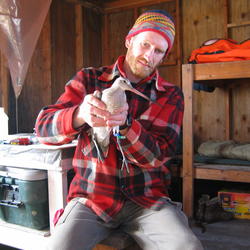 Dan Ruthrauff
Bird migration is one of the natural wonders of the world. Every spring millions of birds stream into Alaska from all over the globe to feed, mate, and raise their young. Their stories include a hummingbird’s journey to Florida and back, a whimbrel’s commute to and from Chile, and the northern wheatear trip from Africa. Their ability to navigate and endure makes them the ultimate endurance athletes. Dan Ruthrauff, a USGS wildlife biologist with the Alaska Science Center, discusses bird migration biology. We’ll also learn about some of the shorebird festivals in Alaska including the Kachemak Bay Shorebird Festival with Melanie Dufour.
HOST: Paul Twardock
GUESTS:
LINKS:
Kachemak Bay Shorebird Festival
Copper River Delta Shorebird Festival
Alaska Fish and Game Birding information
Prince William Sound Natural History Symposium
BROADCAST: Thursday, April 28th, 2022. 10:00 am – 11:00 a.m. AKT
REPEAT BROADCAST: Thursday, April 28th, 2022. 8:00 – 9:00 p.m. AKT
SUBSCRIBE: Receive Outdoor Explorer automatically every week via:
Previous articleState Supreme Court affirms Dunleavy decision that drained fund for Alaska college scholarshipsNext article2022 Alaska Sports Hall of Fame and 100 Miles in May
Eric Bork, or you can just call him “Bork” because everybody else does, is the FM Operations Manager for KSKA-FM. He oversees the day-to-day operations of the FM broadcast. He produces and edits episodes of Outdoor Explorer, the Alaska-focused outdoors program. He also maintains the web posts for that show. You may have heard him filling in for Morning Edition or hosting All Things Considered and can still find him operating the soundboard for any of the live broadcast programs. After escaping the Detroit area when he was 18, Bork made it up to the Upper Peninsula of Michigan, where he earned a degree in Communications/Radio Broadcasting from Northern Michigan University. He spent time managing the college radio station, working for the local NPR affiliate, and then in top 40 radio in Michigan before coming to Alaska to work his first few summers. After then moving to Chicago, it only took five years to convince him to move back to Alaska in 2010. When not involved in great radio programming he’s probably riding a bicycle, thinking about riding bicycles, dreaming about bikes, reading a book, or planning the next place he’ll travel to. Only two continents left to conquer!
❤️ Watch more Peppa here! https://bit.ly/3AagHPQ
#Peppa #PeppaPig #PeppaPigEnglish
Jump into the World of Peppa Pig – filled with lots of learning and fun! Join A little pig named Peppa, and her little brother George have journeys everyday with their family and friends, all while teaching little ones about friendship and compassion in the process. The Peppa Pig Official YouTube channel is a safe place for kids to watch their favourite Peppa Pig clips and full episodes, with special compilations, seasonal content, and exclusive videos, only available on the Official Peppa Pig YouTube channel. Peppa aims to create a safe environment with age-appropriate content so you can have peace of mind whilst your little piggies interact with the Peppa Pig official Channel. We have created a world of Peppa with episodes and compilations to keep even the most dedicated Peppa fans happy. Here at Peppa Pig Official channel, kids can be happy and smart! Watch Peppa Pig clips and episodes where Peppa Pig play games with her friends, Mummy Pig and Daddy Pig tell the bedtime stories, Peppa Pig sings nursery rhymes and songs, Peppa and her family and friends celebrate Christmas and Halloween together! Peppa Pig episodic animation, Peppa Pig songs for kids, Peppa Pig toy play and Peppa Pig Stop motion create a world that centres on the everyday experiences of young children. Enjoy and don’t forget to subscribe. Peppa is a loveable, cheeky little piggy who lives with her little brother George, Mummy Pig and Daddy Pig. Peppa’s favourite things include playing games and music, learning animal sounds, dressing up, days out, shopping, holidays and jumping in muddy puddles. Her adventures always end happily with loud snorts of laughter.
❤️ Peppa Pig Official YouTube Channels ❤️
Peppa Pig – Official Channel: http://bit.ly/2PSSvJu
Peppa Pig Chinese: http://bit.ly/2O38XcX
Peppa Pig Croatian: https://bit.ly/2Git19o
Peppa Pig Czech: https://bit.ly/2HL7BC1
Peppa Pig Danish: http://bit.ly/2JRno1q
Peppa Pig Dutch: http://bit.ly/2pu2Bpe
Peppa Pig Finnish: http://bit.ly/2HRfPbA
Peppa Pig French: http://bit.ly/2Nv2nML
Peppa Pig German: http://bit.ly/2QOIQow
Peppa Pig Greek: http://bit.ly/2GmzVrN
Peppa Pig Hindi: http://bit.ly/2OD2NgG
Peppa Pig Hungarian: http://bit.ly/2Yx9jKq
Peppa Pig Italian: http://bit.ly/2QOvYPm
Peppa Pig Japanese: http://bit.ly/2OOzF64
Peppa Pig Korean: http://bit.ly/2pps03f
Peppa pig Norwegian: https://bit.ly/2SmQVCQ
Peppa Pig Polish: http://bit.ly/2MT5qcr
Peppa Pig Portuguese: http://bit.ly/2pt6CKn
Peppa Pig Russian: http://bit.ly/2pqiMnk
Peppa Pig Serbian: https://bit.ly/3cOtfkl
Peppa Pig Spanish: http://bit.ly/2QPJ8vG
Peppa Pig Swedish: https://bit.ly/3jnn3SR
Peppa Pig Turkish: https://bit.ly/3is8z2K
Peppa Pig Vietnamese: http://bit.ly/2TGMMw0
Meet Peppa Pig and her family:
Peppa Pig is a lovable but slightly bossy little pig. She is four years old and lives with Mummy Pig, Daddy Pig and her little brother George. Peppa likes playing with her best friend Suzy Sheep, visiting Granny and Grandpa Pig and looking after George. Most of all, Peppa loves jumping up and down in muddy puddles, laughing and making loud snorting noises.
George Pig is Peppa’s little brother. He is 18 months old and loves to play with his big sister, Peppa – even when she’s being bossy. George’s favourite thing is his toy dinosaur. He carries it everywhere with him. George can’t speak yet but can say one word very well: ‘Dine-saw!’
Mummy Pig likes jumping up and down in muddy puddles almost as much as Peppa. She works from home on her computer and sometimes lets Peppa and George help, as long as they don’t bash the keyboard. She is better at map reading than Daddy Pig and is very wise about most things.
Daddy Pig is very jolly and laughs all the time, especially when he plays with Peppa and George. Daddy Pig reads the paper and gets excited about trips in the car. He loves cookies and pumpkin pie and Peppa teases him about his big round tummy. Daddy Pig can be a tiny bit grumpy sometimes when he can’t remember where he put his glasses.
Have fun with Peppa Pig and her friends: Suzy Sheep, Rebecca Rabbit, Danny Dog, Candy Cat, Pedro Pony, Zoe Zebra, Emily Elephant, Freddy Fox, Kylie Kangaroo, Wendy Wolf, Gabriella Goat, Gerald Giraffe, Molly Mole, Belinda Bear, Delphine Donkey, Peggi and Pandora Panda, Mandy Mouse, Simon Squirrel!
Our suggestions:
Cocomelon: https://bit.ly/3g3uYpQ
BabyBus – Nursery Rhymes: https://bit.ly/3fs3U0Y
Little Angel: https://bit.ly/3dSmHlP
PEPPA PIG © ASTLEY BAKER DAVIES LTD/ENTERTAINMENT ONE UK LTD 2003. Peppa Pig created by Mark Baker and Neville Astley.
I spent the last days of 2019 with family in a Panamanian duplex, across the street from a “village” of high-end apartments where men worked the yards. Fernanda Melchor’s new novel, Paradais, takes place at a Mexican luxury development that shares the Panamanian complex’s name: Paradise. The coincidence is banal, if illustrative. “Páradais,” the phonetic rendering of an English word, is a clichéd, empty signifier of colonial “luxury,” sort of like an American apartment complex called “Royal Glen” or “High Manor.” But Melchor’s novel owes less to the unimaginative naming conventions of developers than to its chief intertext: José Emilio Pacheco’s 1981 novella Battles in the Desert, the classic tale of a Mexican boy who falls for his best friend’s mother. That boy’s “first passion” for Mariana “hits him like a stab wound out of nowhere,” Melchor writes in an afterword to a recent edition of the book. Paradais delivers that stab wound to Franco Andrade, the teenage Paradise resident obsessed with his neighbor, Señora Marián de Maroño, mother of two and married to a rich bald guy with a TV show.
Pacheco’s novella depicts Mexico City’s incipient “North Americanization” in the wake of World War II, under then-president Miguel Alemán, whose fictive right-hand man is the supposed father of Mariana’s child Jim. This elusive father figure sets the stage for Pacheco’s indictment of Alemán; Jim’s supposed father “earned millions every time the president sneezed: on contracts here, there, and everywhere; on land deals in Acapulco; import and construction permits; on authorizations to set up subsidiaries of North American companies . . . on large tracts of land bought for centavos per meter weeks before the announcement of a new road or development project that would increase their value ten-thousandfold.” Amid such rapacity, the irony of the narrator’s forecast is not lost on us: “Universal well-being and abundance were predicted for the unimaginable year 2000. . . . Machines would do all the work. Streets full of trees and fountains, traversed by silent, smog-free vehicles that would never collide. Paradise on earth. Utopia finally achieved.”
Basically, Battles in the Desert took a cryogenic nap and woke up post apocalypse as Paradais. In Melchor’s novel, “North Americanization” has gone Super Saiyan even in the so-called outpost that is Veracruz. The afore-buzzed-about “utopia” has proven to be nothing but a cruel joke: streets pot-holed, traversed by narcos who hijack taxis and rear-end motorcyclists to steal their bikes. A white Grand Cherokee, Lycra shorts, American nicknames for the kids, “a grotesque display of tastelessness actually encouraged by the Maroños, who the fuck knows why when they didn’t have a gringo gene between them.” A hard drive stuffed with porn to which Franco “fatboy” Andrade tugs his “little stiffy” (chorizo tieso), the fingers stubby and covered in cheese powder, the urethra burning, the mind filled with fantasies of Señora Marián. What machines? Paradise employee Polo, Melchor’s protagonist, does all the work, long back-breaking hours of it in the hot sun getting paid jack shit by that idiot boss Urquiza, then staying after to get wasted in secret with Franco at the decrepit mansion nearby, even though it’s haunted by “the Bloody Countess, the woman who had ordered the house to be built back in the time of the Spaniards and who the estuary dwellers had beaten to death for her depraved, diabolical ways.” (One need not be familiar with the “Witch” of Hurricane Season to know just how suspect this cause of death is.) Only once his family is asleep will Polo bike home, drunk in the dark, to the bumfuck city of Progreso.
Melchor keeps her characters on a tight, miserable leash—they are desperate for a way out. Norma of Hurricane Season, thirteen years old and pregnant by her stepfather, flees Ciudad del Valle, where she grew up in a room “a stone’s throw from the bus station: a single room with no partition walls, a cinder block and cement box in the shadow of a five-story building that robbed them of every last drop of the sun’s warmth,” for Puerto, where she plans to “walk along the same beaches she’d visited with her mother until she found the enormous outcrop to the south of the city, and then climb to the top of that great rock to dive into the dark, choppy waters down below to bring an end to it all.” Polo of Paradais—“he wanted to be free, free goddammit”—is no exception, though we’ve left behind the Yoknapatawpha-esque fictional village of La Matosa, where material decay precedes the spiritual, and entered the posh world of the fraccionamiento, where moral rot is concealed beneath the glossy veneer of opulence. Polo is a teenage dropout with a thirst for drink, like his grandfather, who’s dead. Polo might as well be, now that his mother has forced him to be the family breadwinner. She’s busy caring for Polo’s cousin Zorayda, who’s pregnant with what he secretly fears is his own child. As for his cousin Milton, practically a big brother to him, well, that guy has been swept away by the cartel, and won’t answer the phone.
Polo’s last hope for a way out is Franco, whom he befriends by chance while working a birthday party for the Maroño family on an evening he and Franco have both been humiliated by them. Franco’s humiliation comes in the form of almonds, which the Maroños’ kid Andy and his teenage friends chuck at Franco’s face all evening. Polo’s comes in the form of a small manila envelope: the overtime, plus tip, that Urquiza always cheats him out of, slipped into his pocket by a smiling Señora Marián while he skims the pool. Polo is insulted by the cash as much as by its delivery: “And why the hell hadn’t she just handed him the money like a normal person? Was she afraid Polo would make her dirty, that he’d infect her with his poor, hick ways? Did the bitch really think she could buy him?”
Franco can buy him (he supplies the aguardiente), and Polo hates him for it. To Polo, Franco is “always alone, always dragging his feet, with that formidable belly of his, that rosy face covered in whiteheads and those blond curls that made him look ridiculous, like an overfed cherub; a monstrous man-child whose soulless eyes only lit up when they hit upon Maroño’s wife.” Polo tells himself he’s only sticking around for the booze, but his scorn betrays another motive:
Polo always resisted the urge to look at her . . . he always overcame the involuntary twitch he felt in his neck, the almost mechanical pull that demanded he turn his head in the direction of that pert ass as it bounced around the development, mainly because he didn’t want anyone—not her, and not her husband or Urquiza either, but especially not that bitch—to catch him looking at her.
For all his mockery of Franco, one thing ties Polo to him: desire for Señora Marián, which, stifled, becomes hatred. Franco’s sexual fantasies—which he divulges to Polo at great length in Melchor’s acidic free-indirect prose—give Polo the pleasure of vicariously indulging his own. At the same time, Polo congratulates himself for his moral superiority over a kid who, thanks to his class privilege, is actually able to consort with Señora Marián, if only under the pretense of neighborly friendliness. It is no wonder, then, that Polo complies with the plot hatched by the increasingly obsessed Franco: the latter will have Señora Marián—“it was he who reached the conclusion that he’d have to do it by force”—and Polo will have the Grand Cherokee, chock-full of the Maroños’ jewelry, an admission ticket, he imagines, to Milton’s creed. Except Milton has already said that he won’t let Polo join the cartel—so what is he really doing it for? Not even Polo knows: “Why not? Why the fuck not? Nothing made much sense anymore, he really couldn’t give a fuck. At the end of the day, why should he care what happened to that slut and her unbearable family.”
Like Munra of Hurricane Season, Polo is an accomplice to a violent crime who assuages his guilt by telling himself that he is not the one who has committed it, even if his participation has made it possible—which is to say, even though he has. “He had nothing against [the Maroños] personally and zero intention of killing or raping anyone,” he tells himself. “No one could pin anything other than robbery on Polo, and when they came asking questions, he’d tell them the truth: that it was all fatboy’s fault.” But Melchor makes clear the extent of his delusion: the scene of the crime is not so cut and dry. Munra was able to avert his eyes from the violence he enabled, whereas Polo is called upon to assist in it: “help me tie her up, this is harder than I thought, she won’t let me do anything.” And he is called upon to stop it, too: “Polo, help us, you don’t have to do this, Polo, I know you’re a good man, help us, please.”
Paradais is a novel of rape. To the extent that it is from the perspective of an accomplice who also desires the victim, it is a novel of vicarious rape. This is one of its great horrors—that Polo, who initially believes himself uninterested in causing harm to anyone, can, in the moment of the crime, privately scold Franco not for his cruelty, but for his inefficiency: “what was he doing fucking wasting time like that! Why didn’t he hurry up and fuck her so they could get out of there?”
Melchor has spoken of wanting to avoid the “pornographic” in her depictions of violence—and, like Marlon James, of being willing to risk doing just that, so fundamental is it to her vision of human life: “violence is present in all the human interactions.” She has set herself a tall task with Paradais. With Hurricane Season, Melchor adopted a spiraling structure that made its central victim (and its central perpetrator) the eye of the storm. But her new novel follows the alienated Polo on his arrow-straight path to violence. Melchor confines us to his perspective, delivered in a claustrophobic third-person soliloquy, chronological but inflected with hindsight, broken up into three acts—and, in Sebaldian fashion, occasionally interrupted by the monologues of other characters. Those monologues notwithstanding, our understanding of the other characters is limited by Polo’s bitter worldview: his mother is oppressive, his cousin “predaceous.” He does not lay himself bare; he sheaths himself in cloaks of defense. The only other voices we hear from at any length—the only voices Polo lets in—are those of Franco and Milton, the latter of whom tells Polo about his abduction by the cartel and his violent entry into narco life.
From the outside, Paradais might sound like a recipe for sensationalism of a sort especially liable to be consumed by Americans, particularly those narcodrama junkies whose pants moisten at the book jacket’s promise to deliver an exploration of the “explosive fragility of Mexican society—with its racist, classist, hyperviolent tendencies.” If sensationalism distorts its subjects in service of fantasy, that’s a dead-on description of what Franco is up to; his repulsive pipe dreams of power and virility are cribbed straight from the videos he binges. But Melchor is not responsible for that distortion, only for documenting it. She exposes Franco’s delusion by miring herself in it. Paradais proves J. M. Coetzee’s point that it is “hard, perhaps impossible, to make a novel that is recognisably a novel out of the life of someone who is from beginning to end comfortably sustained by fictions. We make a novel only by exposing those fictions.”
Melchor explodes Franco’s fictions; his fantasies are a far cry from the scene of the crime itself, during which he implores his accomplice to help, “his left hand tugging away at his dick to save his mediocre erection and his right hand wielding the gun.” Polo shits himself. “I write from a wound inside myself,” Melchor has said, “I try to liberate and name the most awkward feelings that I can find in there.” It is precisely this awkwardness that animates Melchor’s depictions of violence and underlines its degradation. The violence of Paradais is as devastating as it is embarrassing. At the Walmart checkout on the evening of the crime, Franco plops duct tape, flashlights, spare batteries, black pants, hoodies, and women’s black tights (balaclavas are out of season) onto the conveyor belt, “finally adding two boxes of condoms that he took from the shelf next to the magazines and chocolate bars. Almost forgot, he said with a wink, and Polo felt his stomach turn.” Mine turned too.
Bolaño refused to depict the femicides of Ciudad Juárez in his novel 2666, instead portraying their aftermath, and thereby inviting the reader to piece together each crime—or rather, implicating the reader in its reconstruction. Melchor doesn’t go so far as to avoid depicting the crime altogether, but she too distances the reader from its violence by describing the crime with a long list of discrete images and panicked moments. “What happened next, between the hours of three and seven on that Monday morning in late July, Polo would recall as a series of independent, almost soundless instants,” starts the sentence that will carry us along for seven harrowing pages, “the freezing rain falling in heavy, plump drops onto their masked faces; the urge to pee confused with fear as they snuck in through the kitchen door, which, just as fatboy had predicted, was neither locked nor bolted,” and so on. This drawn out, freeze-frame sentence, with its countless gerunds and semicolons, doesn’t force us to fill in the blanks so much as it reflects the crumbling of narrative logic, a senselessness perhaps imposed by Polo in self-defense, so unbearable would it be to understand his place in the causal chain.
If what Sergio González Rodríguez termed the “femicide machine” likes to work in the dark, Melchor shines an inspector’s flashlight on its greasy gears. She does not fix it or throw a wrench in it; she scrutinizes it up close, as if to see if it will malfunction under pressure, perhaps even setting the flashlight down to man the machine herself. Her hands get dirty—but no dirtier than the reader’s, holding the book, laughing at its cruel humor, wincing hypocritically when that humor metamorphoses into violence.
Angelo Hernandez-Sias is an MFA candidate in fiction at Syracuse University. His writing has appeared in n+1and Socrates on the Beach.
Това е най-лесната рецепта, която някога съм правила. Вкусно предястие с минимум съставки!
Лесно и бързо! Семейството ми ме моли да ги правя всеки ден! Всички ще бъдат приятно изненадани от това невероятно хрупкаво и вкусно ястие. Лесно, бързо и невероятно вкусно! Толкова е лесно, че всеки може да го приготви.
Всички ще харесат тази бърза и лесна рецепта!
Видеото има субтитри. Изберете вашия език.
Посетете страницата ми във Фейсбук, където се забавляваме заедно с над 130 000 приятели: https://www.facebook.com/domahnakuhnya
Посетете сайта ми, където можете да видите над 2000 рецепти: https://domashnakunyasdani.com
Абонирайте се за моя YouTube канал, за да получавате нова рецепта всеки ден безплатно. Кликнете на линка по-долу:
https://www.youtube.com/channel/UC9ePrkUE-jBSsjDF7MrC87A?sub_confirmation=1
Благодаря ви!
Съставки за 2 рула
Бутер тесто – 2 x 250 г
Кайма – 300 г
Лук – 1 бр
Яйца – 1 бр
Кашкавал – 400 г
Яйце за намазване – 1 бр
Черен пипер
Червен пипер
Чубрица
Кимион
Сол
Начин на приготвяне
Овкусяваме каймата, като към нея добавяме лук, яйце, сол, кимион, черен пипер, червен пипер и чубрица. Разбъркваме добре.
Разстиламе първият лист бутер тесто, нанасяме половината количество кайма и я разстиламе на тънък слой върху бутер тестото. Поръсваме обилно с настърган кашкавал (около 200 г).
Намазваме с разбито яйце единият край на бутер тестото, за да прилепне добре. Навиваме на руло.
По същият начин приготвяме и второто руло.
Нарязваме рула с дебелина 3 пръста.
Подреждаме ги в тава.
Печем в предварително загрята фурна на 200°C/ 392°F за 30 минути.
Добър апетит!
#кухня #предястие #рецепта
This site uses cookies to store information on your computer. Some of these cookies are essential to make the site work
and others help us to improve services by giving us some insight into how the site is used.
This content was originally published here.
The Justice League is the most powerful team in the DC Universe. Over the years, the greatest DC heroes have called themselves members of the League. They’re the Multiverse’s first and last line of defense and have starred in some amazing adventures battling the most dangerous threats ever. The members of the League are among the biggest stars in comics and some of them are rather hard to overshadow.
That doesn’t mean it’s impossible, of course. The team’s villains are often just as interesting as their members and there have been times when they have stolen the spotlight. The Justice League is the best of the best, as are their villains; it’s not exactly surprising that they can steal the show.
Deathstroke has been a team buster since his early battles against the Teen Titans. He always has a plan and is even prepared for the Justice League, as revealed in Identity Crisis #3, by writer Brad Meltzer and artist Rags Morales. Hired by Doctor Light to protect him from members of the Justice League, Deathstroke defeated Wally West, Kyle Rayner, Zatanna, Black Canary, Green Arrow, Hawkman, the Atom, and Elongated Man in seconds.
While the team would strike back, the fact that Deathstroke so easily dispatched them was yet another scene-stealing moment for the villain. He made the Justice League look like a bunch of chumps, running through several of the most dangerous members of the team as if they weren’t even there.
The biggest event book of the Rebirth years, Dark Knights: Metal, by writer Scott Snyder and artist Greg Capullo, pit the Justice League and their fellow heroes against the dark god Barbatos and his Dark Knights, versions of Batman from the Dark Multiverse who stole the abilities of League members and destroyed their teammates. Barbatos was barely a factor in the book, but the Dark Knights were easily the stars of the show.
Prominently placed in the tie-ins and the series itself, they were great visuals and did the heavy lifting for the story. They’d also end up introducing readers to the Batman Who Laughs, who would become one of DC’s most dangerous villains in the years ahead.
Grant Morrison is one of DC’s most prolific writers and when they launched JLA along with artist Howard Porter, they threw a completely new threat at the team. The villains of the book’s opening story arc, “New World Order,” were the Hyperclan, a mysterious group of heroes who appeared and took a more proactive approach to heroism. Eventually, the team would attack the League, easily defeating the most powerful heroes in the DC Universe.
The mystery of whom the Hyperclan were and how they were able to so easily defeat the League was the focus of the story. Morrison made them the center of attention for a reason—they wanted to sell the threat of the Hyperclan to show how powerful the League was once they won. It worked perfectly, as the Hyperclan definitely stole the show.
Darkseid is one of DC’s most important villains and his biggest story in years was Final Crisis, by writer Grant Morrison and artists J.G. Jones, Carlos Pacheco, and Doug Mahnke. Darkseid and his minions, their bodies destroyed in the war against New Genesis, possessed the bodies of people on Earth and beyond. Using the Anti-Life Equation, the God of Evil was able to conquer half the Earth in seconds and defeated the Justice League soundly.
Darkseid and his minions were definitely the stars of Final Crisis, especially in the early stages of the battle, as they led the Justice League around by the nose and put them in a position to be easily defeated. All the biggest moments of the story revolved around Darkseid and the plans he created, driving the story and helping make it legendary.
Lex Luthor has long been one of DC’s most dastardly villains, but fans got to see another side of him in Forever Evil, by writer Geoff Johns and artist David Finch. The Crime Syndicate was able to defeat the Justice League and was ready to strike against the Earth. Luthor took exception to this and gathered a group of villains to battle them, eventually defeating the team of villains, saving the Earth, and earning a place in the Justice League.
Lex Luthor wasn’t the villain of the story, but he was still a villain at that point. He definitely stole the show in the book, especially because of his relationship with B-0, a Bizarro-esque Superman clone. Fans got to see another side of the villain, and it kicked off a period of him being a more heroic Lex for years.
The Crime Syndicate is one of the most influential teams in comic history. They’re the most famous example of multiversal doppelgangers, but fans thought they had seen the last of them after Crisis On Infinite Earths. Writer Grant Morrison and artist Frank Quitely decided to bring them back in JLA: Earth-2, a one-shot that introduced a new version of the storied team.
Morrison and Quitely worked their magic on the Syndicate, subtly tweaking them from the versions that fans had seen last. The differences really made them shine, and they were definitely the draws for the story. Fans got to see one of the greatest villain teams ever in an entirely new light, and it was a joy to behold.
Batman is known for planning for the impossible and that was fully on display in JLA: Tower Of Babel, by writer Mark Waid and artist Howard Porter. While Ra’s al Ghul is the “villain” of the book, everyone who’s ever read it knows the truth: Batman is the real villain. Ra’s may have stolen his anti-Justice League plans and used them on the team, but Batman was the one who never told the team that he made them, and it almost cost them their lives.
Batman’s plans and lies were the focus of the story. Even with al Ghul being the one who did it, Batman is still the focus of the story and his actions are the focus. He was kicked out of the League over the situation and this story has gone down in history as one of the Caped Crusader’s lowest moments.
Prometheus is part of an exclusive club of villains that embarrassed the Justice League the first time he fought them. His hatred of heroes spurred on by the death of his parents, he was able to sneak onto the Watchtower and enact his plan against the League. He soloed most of the team and booby-trapped the Justice League’s headquarters, almost completely destroying the team.
His battle against the League in JLA #16-17, by writer Grant Morrison and artists Howard Porter and Arnie Jorgensen, made him look like a million bucks until the end. Catwoman defeated him with a whip strike and even that ending still keeps up his scene-stealing, even if it’s not the best look for him.
David Harth has been reading comics for close to 30 years. He writes for several websites, makes killer pizza, goes to Disney World more than his budget allows, and has the cutest daughter in the world. He can prove it. Follow him on Twitter- https://www.twitter.com/harth_david.
