Bad News For Europe: North Korea’s Kim Jong Un Travels To Russia To Meet Putin – TheSpy

By Spy Uganda Correspondent

North Korea and Russia have confirmed North Korean leader Kim Jong Un will visit Russia for talks with Russian President Vladimir Putin.

The Kremlin said on Monday Kim’s visit was at Putin’s invitation and would take place “in the coming days”. The official visit was also reported by North Korea’s KCNA state news agency, which said he would meet Putin soon.

Putin arrived in the Russian far eastern city of Vladivostok on Monday to attend the Eastern Economic Forum. The city was also the site of Putin’s first meeting with Kim in 2019.

Earlier on Monday, South Korean media, quoting unnamed government sources, reported that Kim appeared to have left on a special train bound for Russia for a summit with Putin that could take place as early as Tuesday.

Kim does not travel abroad often and, when he does, it is often shrouded in secrecy and security. He travels by train with signature olive green carriages said to be armoured and equipped with communications systems, along with a personal suite for Kim to work and confer with aides.

The meeting between Kim and Putin will likely focus on military cooperation, and possibly a deal to supply arms, US and South Korean officials and analysts say.

The United States has said it would be a “huge mistake” for North Korea to supply Russia with weapons to use in Ukraine and warned Pyongyang would “pay a price”.

The deepening relationship between Kim and Putin signals a further global split over the war, said Ramon Pacheco Pardo, the Korea Chair at the Brussels School of Governance.

“North Korea’s support will allow Putin to wage his war for longer, which is bad news for Europe,” he said. “It is further proof that much of the world doesn’t support Ukraine in the way the US and Europe do, and some countries such as North Korea will openly support Russia without fear of any real consequences.”

North Korea has possibly tens of millions of artillery shells and rockets based on Soviet designs that could potentially give a huge boost to the Russian army, analysts say.

SHARING IS CARING

North Korea’s Kim to visit Russia for talks with Putin

Kim will visit Russia in the coming days at the invitation of Putin, the Kremlin said, while North Korean state news agency KCNA said the two would “meet and have a talk”, without elaborating.

U.S. officials have said the pair would discuss possible arms deals to aid Russia’s war in Ukraine and provide North Korea with a much-needed economic and political lifeline.

Whether Kim made the trip for his second summit with Putin had been closely watched by governments because of recent overtures that signalled closer military cooperation between the nuclear-armed North and Russia as it wages its war in Ukraine.

Despite denials by both Pyongyang and Moscow, the United States has said talks are advancing actively for North Korea to supply arms to Russia which has expended vast stocks of weapons in more than 18 months of war in Ukraine.

The North Korean leader appeared to have left aboard a special train bound for Russia, South Korean media reported on Monday, citing unnamed senior government sources, but neither Moscow nor Pyongyang immediately confirmed an exact schedule for the visit.

North Korea is one of the few countries to have openly supported Russia since the invasion of Ukraine last year, and Putin pledged last week to “expand bilateral ties in all respects in a planned way by pooling efforts”.

Kim’s last trip abroad in 2019 was also to Vladivostok for his first summit with Putin after the collapse of North Korea’s nuclear disarmament talks with former U.S. President Donald Trump.

South Korea’s Chosun Ilbo newspaper said Kim left Pyongyang late on Sunday and would meet Putin as early as Tuesday.

The broadcaster YTN reported the special train would take Kim to North Korea’s northeastern border with Russia and the summit was likely to be on Tuesday or Wednesday. Both reports cited unnamed senior South Korean government sources.

SECRECY AND SECURITY

Japanese media reported security was being stepped up and refurbishment was taking place at the main train station in the Russian border city of Khasan, where Kim is expected to enter Russia.

Kim does not travel abroad often and, when he does, it is often shrouded in secrecy and security. He travels by a special train with its signature olive green carriages that are said to be armoured and equipped with communications systems and a personal suite for Kim to work and confer with aides.

South Korea’s foreign ministry said it was monitoring developments but declined to confirm any details. Officials at South Korea’s unification ministry said they had no information to provide, while officials at the National Intelligence Service could not be reached.

A summit between Kim and Putin would likely focus on military cooperation and possibly a deal to supply arms, U.S. and South Korean officials and analysts have said.

The United States has said it would be a “huge mistake” for North Korea to supply Russia with weapons to use in Ukraine and warned Pyongyang would “pay a price”.

The deepening relationship between Kim and Putin signals a further global split over the war, said Ramon Pacheco Pardo, the Korea Chair at the Brussels School of Governance.

“North Korea’s support will allow Putin to wage his war for longer, which is bad news for Europe,” he said. “It is further proof that much of the world doesn’t support Ukraine in the way the U.S. and Europe do, and some countries such as North Korea will openly support Russia without fear of any real consequences.”

In Vladivostok, there was a higher police presence than usual on the streets but no North Korean flags had been put up – unlike ahead of Kim’s previous trip when the city was adorned with the red five pointed stars that grace the North’s flag.

By Soo-hyang Choi and Ju-min Park

(Reporting by Soo-hyang Choi, Ju-min Park, Josh Smith and Jack Kim in Seoul, Guy Falconbridge and Reuters staff in Vladivostok; Editing Himani Sarkar, Simon Cameron-Moore and Nick Macfie)

Create an After-School Connection Ritual

When my five-year-old started kindergarten this August, I realized that I needed to create an after-school connection ritual with my children in elementary school. Before this year, when I’d had one kid in all-day school, staying close felt doable, although definitely more difficult than when he’d been home with me all day; however, I quickly realized that with two of my three kids spending the majority of their hours at school, I was going to need to figure out a plan.

Historically, the after-school hours are madness in our house. My oldest came home disgruntled and exhausted from being on his best behavior all day, my younger two were verging on meltdowns, and I was trying to juggle making dinner, teaching piano students,After School helping with homework, and settling kids. I felt like I was growling at my oldest when he came in the door to our chaotic home, which didn’t help his own frazzled nerves. As summer waned and we approached another school year, I wondered what I could do differently.

The idea snuck up on me. I’d received a cute lemon serving tray in a subscription box, and I decided I needed to create a use for it. On the first day of school, I made cookies for my kids and arranged them on the tray, with bright mugs of milk lined up next to them. As my kids dashed off the bus, throwing their backpacks and masks on the floor, they halted at the table. Instead of disappearing into their rooms or tearing around the kitchen complaining that they didn’t have enough to eat, they sat down with me, and through mouthfuls of chocolate chip cookies, told me the highlights and low points of their day. It wasn’t all joy––my oldest teared up as he cried that the school day was too long, and my kindergartener looked at me with huge eyes and said he’d missed me, but at least we’d had that after-school moment of connection. I wasn’t wondering how they felt, because we’d taken the time together.

As the school year has continued on, I’ve set different things on my tray. Sometimes, it’s a box of store-bought madeleines and a mug of chocolate milk. Sometimes, it’s homemade sourdough bread. Sometimes, it’s plastic bowls of goldfish crackers. I try to vary the snack from day to day, but I’ve quickly realized the crucial part is our meeting together before the afternoon busyness sets in.

I’ve read many a social media post that posits the most important minutes of a child’s day are right when they wake up, right when the come home, and right before they go to bed. I don’t know if this concept has been studied in depth or if it’s simply a nice idea someone came up with while they pondered the ways they wanted to parent their own children, but I will say this–practicing after-school connection has made our own transition into the school year so much easier this year, despite the rockiness of pandemic education and the typical ups and downs of parenting.

Want to create your own after-school connection ritual? 

You don’t have to set treats on a tray and sit at the table. Maybe your family connects best on the go, and you need to institute an after-school walk or bike ride. Maybe the first three minutes after your kid gets home are absolutely not the best time for them to connect, and they need to spend a few minutes alone decompressing before they’re ready to connect with you.

The only ingredients you need are consistency and a desire to connect with your kid after school. It may take some trial and error. Maybe some days you will have twenty minutes to be with your kid, and some days, you’ll need to trim that special after-school connection time down to five minutes. The point of a ritual isn’t to do it perfectly every time; it’s to do it often enough so it becomes a rhythm, something to anchor you in your day and bring you and your children peace and steadiness.

So take a few minutes and think about how you and your children connect after school. No matter what works best for your family, you can find a ritual to connect you with your kids as they walk through the door after school and back into your home.

A very Jewish Toronto market trip: Phoebe Maltz Bovy on shutting the phone off to touch grass

The internet is quite possibly not the most Jew-friendly place these days. Elon Musk, the billionaire owner of the company once called Twitter but now going by the more mysterious “X,” is contemplating suing the Anti-Defamation League, the well-known antisemitism-fighting organization. He claims that the ADL has tarnished the good name of… whatever the social media platform’s name is, accusing it of harbouring antisemitism, and that the site’s reputation as an antisemitic cesspool has cost it advertisers. Will he go ahead with the lawsuit? Maybe, maybe not.

But it is Musk’s belief, evidently, that “The ADL, because they are so aggressive in their demands to ban social media accounts for even minor infractions, are ironically the biggest generators of antisemitism on this platform!”

I don’t know, Elon, I sort of think the many accounts that tweeted at me yesterday with the (I would have thought passé) triple-parentheses, used as code that someone is a Jew, are more of an antisemitism generator than the ADL, whatever you think of the efficacy of its efforts. But well done, Twitter trolls, you found me out. You outed me, a senior editor at The Canadian Jewish News, as Jewish. Your sleuthing skills impress.

Things are looking quite a bit rosier for (((people like me))) in the offline sphere. Specifically, at the local west Toronto farmers market. Last week I spotted a man in a hat that said “challah” on it, and of course complimented him on this garment. Turns out it’s from Lev Bakery, as in heart in Hebrew. They sell challah, babka, and more at farmers markets around the GTA.

Then at yesterday’s market I noticed that a band—Joseph Landau and Andrew Pacheco—was playing something klezmerish and then heard lyrics, “mayim, mayim,” and then a musician explaining that this means water, which prompted my two-year-old to ask for her water bottle, and prompted her 40-year-old mom to realize that the Sorauren Farmers Market in the heart of Roncesvalles, Toronto, is actually Jewier than you’d think.

There is also the garlic seller, The Cutting Veg, who made a 2011 appearance in our pages. We grow his garlic in our yard and our basement is now a delightful garlic dungeon.

The gist of all of this is a trite but no less true suggestion that we—all of us, but maybe, this week, Jews especially—get offline and experience the world of actual irl people. You’re less likely to be accused of Jewishness by a complete stranger halfway across the world, and more likely to experience the joys of Jewish culture, ones that include but are not limited to listening to klezmer, buying babka, and, yard-permitting, growing unfathomable amounts of garlic.

The CJN’s senior editor Phoebe Maltz Bovy can be reached at [email protected], @phoebebovy.bsky.social, and @bovymaltz

Tropical Storm Lee expected to become third major hurricane of season

Meteorologists are monitoring a Tropical Storm far to the island’s south, which is expected to become the third major hurricane of the season.

As of yesterday afternoon the system, Tropical Storm Lee, was still almost 2,000 miles southeast of Bermuda and moving west-northwest at about 16mph.

The depression had maximum sustained winds of 45mph with tropical-storm force winds recorded up to 70 miles from the centre.

However, forecasts suggest the depression will strengthen further and become Hurricane Lee by tomorrow morning.

The system is expected to reach Category 4 strength by this weekend with winds of almost 140mph.

If it does, the storm would be the third major hurricane of the season after Hurricane Franklin and Hurricane Idalia, both of which passed the island in the past two weeks.

The US National Hurricane Centre said yesterday: “Lee is forecast to be a hurricane within a couple of days and will likely become a major hurricane by Friday.”

The Bermuda Weather Service said last night that Tropical Storm Lee was not considered a threat to the island as the storm’s closest point of approach in the next three days was still more than 1,000 miles to Bermuda’s south-southeast.

However, the BWS warned the system could get closer to the island after that time.

The BWS said: “The long-range forecast brings Lee near the Leeward Islands this weekend as a major hurricane.

“Lee is then forecast to continue on its general track, which will bring it to the south of Bermuda. It is too early by several days to know what impacts we may have, but please continue to monitor its progress.”

Early forecasts have suggested the storm could take a northern turn next week before reaching the US, which would bring its path closer to the island.

Bermuda yesterday marked 20 years since it was rocked by Hurricane Fabian, the most devastating storm to strike the island in decades.

Hurricane Fabian made a direct hit on Bermuda on the morning of September 5, 2003, as a Category 3 Hurricane with gusts peaking at 164mph.

The storm was estimated to have caused more than $300 million in damages, tearing roofs off homes across the island and leaving 25,000 homes without power.

Even more tragically, the hurricane was the first to cause death on the island since 1926.

Manuel Pacheco, Gladys Saunders, Pc Stephen Symons and Pc Nicole O’Connor lost their lives when the storm destroyed a large section of the Causeway.

Mr Pacheco, 23, was on his way home after securing his boat in St David’s when his car stalled on the Causeway.

Ms Saunders, a 48-year-old police station duty officer, was being given a ride across the Causeway by Mr Symons and Ms O’Connor.

Despite attempts to rescue the four, both of their vehicles were swept off the Causeway.

A memorial was subsequently erected on the eastern side of the Causeway.

The 2023 hurricane season has been forecast to be busier than usual as warmer than normal water temperatures offset El Niño, a weather phenomenon known to limit hurricane development in the Atlantic.

The National Oceanic and Atmospheric Administration estimated that the season could include 14 to 21 named storms, of which between six and 11 could reach hurricane strength.

Of those storms, it is estimated two to five could become major hurricanes reaching at least Category 3 strength with winds of 111mph or greater.

So far this year, the Atlantic has recorded 12 named storms including three hurricanes, two of which became major hurricanes.

Marvel’s Future Fantastic Four Expose the Original Team’s Unbelievably Dark Legacy

To many Marvel Comics fans – and to many citizens within the Marvel Universe itself – the Fantastic Four are considered the world’s greatest heroes. While their roster might not always be as stacked as teams like the Avengers or the X-Men, Reed Richards, Sue Storm, and the rest of their family truly bring something special to the House of Ideas and have saved the universe on more than one occasion. With such a sterling track record, there should always be a Fantastic Four, but maintaining the team’s awe-inspiring legacy comes at a dark price.

SCREENRANT VIDEO OF THE DAY

SCROLL TO CONTINUE WITH CONTENT

Fantastic Four 2099 #1 by Karla Pacheco, Steven Cummings, Chris Sotomayor, and VC’s Travis Lanham examines the cost reuniting the world’s most fantastic family. The 2020 issue sees the original team’s trusty robo-helper HERBIE unites a new group of superhumans as the Fantastic Four of the future. Unfortunately, their combined abilities prove to be unstable when joined together. Three members of the titular team are killed before HERBIE reveals that he used cosmic rays to empower these seemingly random individuals in order to recreate his long-lost family. Lamenting yet another failure, HERBIE immediately murders his witnesses – Venture and the Invisible Boy – and promises to start the process all over again.

The Richards’ Legacy Isn’t So Fantastic

Earlier in the issue, HERBIE rewatches an old recording of the one and only Valeria Richards, who instructs him to bring back the Fantastic Four should anything go wrong. Based on the android’s monologue, it’s made expressly clear that this group is far from the first to be bombarded by HERBIE’s cosmic rays. Like all the other iterations before this one, it’s clear that the Fantastic Four’s old ally considers their replacements to be a failed experiment. But while it’s no surprise that HERBIE wants to recreate his family, the cost of upholding the team’s legacy is clearly higher than any of the original members would be willing to pay.

Both as their own team and alongside other heroes of the Marvel Universe, the Fantastic Four have saved the world more times than anyone can count. From celestial beings like Galactus to otherworldly threats like Annihilus, the Richardses have defeated enough foes to prove that the Marvel Universe will always need a Fantastic Four. But there’s no way they would expect HERBIE to go to such macabre lengths to keep their team going. And with how many lives that have been shattered by the well-meaning machine’s malevolent machinations, the Fantastic Four’s legacy could be tarnished beyond repair.

This Isn’t What The Fantastic Four Would Want

As heroes, the Fantastic Four truly live up to their name, but the Richards family may be the only ones fantastic enough to bear the weight of their legacy. While the universe will always need its greatest heroes, there’s no way the likes of Mister Fantastic or the Thing would sign off on others dying to fill their superheroic shoes. Reed Richards, Susan Storm, Johnny Storm, and Ben Grimm may be Marvel Comics’ Fantastic Four, but thanks to HERBIE, their legacy is anything but fantastic.

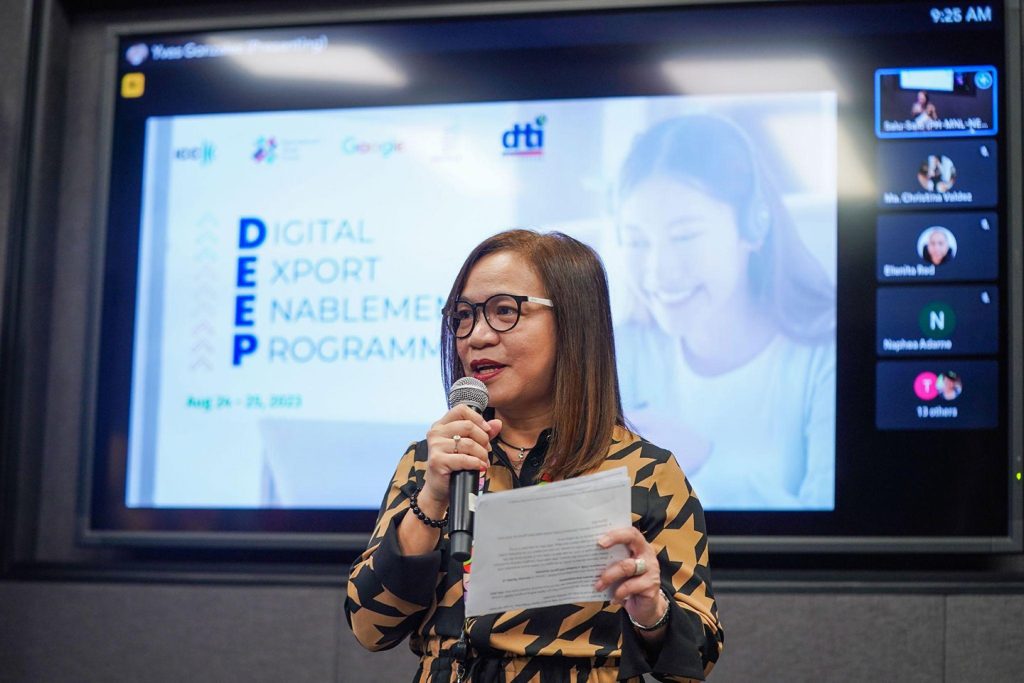
Google Philippines upskills MSMEs with the Digital Export Enablement Programme (DEEP)

MANILA, PHILIPPINES — Local micro, small, and medium enterprises (MSMEs) will get the opportunity to modernize and perform better with the launch of the Digital Export Enablement Programme (DEEP), a training program that upskills entrepreneurs on how to maximize Google tools for their businesses.

Google Philippines partnered with the Department of Trade Industry, International Trade Centre (ITC), and the International Chamber of Commerce (ICC) to make DEEP happen. In the free two-day workshop, participating entrepreneurs learned how to properly use Google’s Business Profile feature, as well as other important digital export-relevant skills and tools.

By combining the resources and expertise of all three organizations, DEEP aims to facilitate a unique cross-border entrepreneurial journey for small businesses from Southeast Asia. The program will continue to guide MSMEs, from identifying and comparing trade opportunities, understanding market access conditions, exploring trade finance options and the Incoterms governing contracts, to sharpening their skills in digital marketing and successfully growing their business through ecommerce channels.

“MSMEs are the beating heart of the economy. They make up nearly 99% of all businesses and their digitization promises great benefits for the country’s digital future and equitable growth,” said Bernadette Nacario, Google Philippines Country Director. “Together with our partners from across sectors, Google is committed to helping small business owners succeed by equipping them with the right digital tools and opportunities such as the DEEP program.”

“The Department of Trade and Industry is proud to support and participate in the Digital Export Enablement Programme (DEEP) program. In addition to training opportunities, this initiative will raise awareness of the free digital tools available to MSMEs to help them grow their business,” said Jean Pacheco, DTI Assistant Secretary and Digital Philippines and Ecommerce Lead. “We look forward to working closely with Google and other stakeholders to help more MSMEs succeed.”

DEEP is the latest in a long line of Google’s initiatives to help Filipino MSMEs through training and digital tools. Examples of these digital tools include the aforementioned Google Business Profile, which makes businesses easily searchable; Grow With Google, which educates people on the right skills needed to upgrade and succeed further; and Google Market Finder, which guides entrepreneurs in expanding into the international market.

Google has always been committed to digitizing MSMEs as part of its efforts to help build a Digital Philippines. Last year alone, the company announced that its digital skilling program MSME Caravan, together with partners like the DTI, successfully trained more than 100,000 MSME owners and employees in the country.

Entrepreneurs and business owners looking to achieve the next level of success can get started today by visiting the Google Business website.

The post Google Philippines upskills MSMEs with the Digital Export Enablement Programme (DEEP) appeared first on adobo Magazine Online.

Ubi night vegetable market to end operations in August

A vegetable night market operating out of an open-air carpark in Ubi will call it a day in August, joining the fate of a similar market in Toa Payoh which will also shutter that month.

JTC Corporation – which oversees the Kampong Ubi Industrial Estate, where the market is based – said the site’s three vendors are operating under a temporary occupation licence, which is due to expire at the end of March.

“JTC is facilitating an extension of the (temporary occupation licence) from March 31, 2023, to Aug 31, 2023, to allow the vendors more time for relocation,” said a JTC spokesman, describing the market as a “distribution site”.

The industrial developer said it is working with the Singapore Food Agency (SFA) to identify “suitable relocation sites with shelter and proper facilities” where the vendors can continue their businesses.

These sites include the Pasir Panjang Wholesale Centre, market stalls in centres managed by the National Environment Agency or stalls in single-operator markets, it added.

JTC did not say why the vendors’ licences are not being renewed.

The market, which is open from around 11pm to 7am, has been operating at the location since around 2010.

Last month, SFA said a wholesale vegetable night market, which had been operating along Toa Payoh East for more than five decades, would shutter on Aug 19, due to higher expected road traffic amid upcoming housing developments in the area.

When The Straits Times visited the site at Ubi Avenue 3 on Thursday night, sellers said they have no idea why their licences are not being renewed.

The open-air market there differs from the one in Toa Payoh East in that vendors are licensed and pay rent for the use of the site.

More On This Topic

One seller, Mr Derrick Tan, told ST he pays about $3,000 monthly to set up shop there, which includes paying JTC for the rental of the carpark spaces as well as contractors for cleaning services and the use of a small portable toilet.

The 48-year-old, who took over the business from his uncle about eight years ago, said the market sees fewer customers now. When it started, there were more than 15 vendors hawking their produce at the site.

Most have either retired or quit, he said.

Though walk-in customers were previously more common, sellers now largely use the site for packing and distribution. “You wait for half an hour, you won’t see any customers here,” Mr Tan said.

A news report in 2013 showed that vendors occupied more than 30 parking spaces at the Ubi carpark at the time.

The vegetable wholesale market in Ubi Avenue in June 2013. PHOTO: THE NEW PAPER
 

Mr Tan said his customers – who are mostly hawkers and restaurateurs – pay less for produce at the open-air market. For example, 1kg of chye sim is priced at 80 cents, while a 10kg bag of potatoes costs just $8 – a fraction of what people would pay at regular markets.

Mr Tan said he is now bidding for a unit at a nearby building. He said the Pasir Panjang Wholesale Centre would be inconvenient for his customers – most of whom are located in the east – while a typical market stall would be too small.

JTC said it is working with SFA to identify “suitable relocation sites with shelter and proper facilities” where the vendors can continue their businesses.  ST PHOTO: DESMOND FOO
 

Another vendor, Mr Richard Poh, said he has been selling vegetables in various locations for 30 years and began operating at the Ubi site about four years ago.

The 53-year-old said he is considering switching to a delivery model of business, without operating a physical stall.

One of Mr Poh’s customers, 64-year-old Zheng Qiurong, said she turns up every other day at the open-air carpark to buy vegetables because of the convenient location and competitive prices.

Ms Zheng, who runs a ban mian stall at the Old Airport Road Food Centre with her husband, said she will continue buying from Mr Poh via delivery once the Ubi site closes.

More On This Topic

This content was originally published here.

2 Ways To Approach The Art Of Making Money Blogging

2 Ways To Approach The Art Of Making Money Blogging

Blog sites are a present from the Internet gods for those people that would love to have an on the internet visibility, however do not recognize the initial point regarding establishing sites in the conventional fashion, as well as have neither the moment to find out neither the financial resources to pay somebody else to do it for us.

There are 2 methods which we resourceful blog owners can discover ourselves earning money blogging.

1.) Earning Money Blogging By Giving Your Blog A Job To Do

Blog sites exist due to the fact that some individuals enjoy to share themselves as well as be listened to, as well as due to the fact that other individuals enjoy to find out and also simply perhaps to sleuth on someone else’s ideas.

By beginning a blog site, or collection of blog sites, you can place your voice available, sharing you point of views, or sharing the expertise you have actually gathered over a life time. If you have an interest in generating income blogging, advertising an item in which you think by reviewing associated subjects, and after that including you associate web links to the firms which market that item.

Earning money blogging by offering you blog a task to do can likewise suggest putting on Google AdSense to make sure that you can have AdWords pertaining to your blog site subjects published in your blog site, where your visitors might be inclined to click them and also make you some cash in doing so.

Or it can suggest utilizing your blog site to offer educational items. If your blog site has to do with expanding blossoms, why not create your very own digital book regarding your keys to having an attractive flowering yard as well as provide it to your visitors for a little cost? You can place a web link to the download website in your blog site.

If your blog site has to do with expanding blossoms and also there are some Internet websites whose blossom expanding items you extremely suggest, why not see regarding coming to be an associate for those websites and also uploading your associate web links in your blog site? Simply another means to generate income blogging by offering your blog site a task to so.

2.) Earning Money Blogging By Building Interest In Your Offline Business

The 2nd method which some individuals earn money blogging is by transforming their blog sites right into marketing locations for offline services they have. Several, lots of companies have actually connected web sites, and also utilize their web sites to offer the very same items they perform in their brick-and-mortar shops.

While you would not in fact generate income blogging by transforming your blog site right into a 2nd store front supplying its very own stock and also buying system, you definitely can utilize your blog site to speak about whatever your offline service offers or does, obtaining your visitors thinking about it, and also you can develop much more rate of interest by welcoming your offline clients to see your blog site by leaving leaflets with your blog site’s link at your company signs up.

If sufficient rate of interest is produced in your offline company from you blog, you could also take into consideration developing an on the internet shop, and also you can connect it to it in your blog site to make sure that your visitors will certainly obtain the very same fantastic solution that your offline consumers do!

Borders Kill, but Not the Passport Privileged – Public Books

The Spanish Civil War was just coming to a close when, on the other side of the Atlantic, the Mexican government undertook one of the world’s most intricate international rescues of refugees. Already, Mexico had provided significant material support to the leftist/anti-Fascist Republicans in Spain; this contrasted sharply with the US, France, and UK, whose disengagement directly led to Francisco Franco’s 36-year fascist dictatorship. But now, in 1939, Mexican president Lázaro Cárdenas was extending an open offer of refuge to any Spaniard displaced by the war.

First, Cárdenas directed the Mexican ambassador to France, Narciso Basols, to coordinate the migration of tens of thousands of exiles to Mexico. Next, the Mexican government founded La Casa de España: a resettlement hub to help the exiles get connected with Mexico’s cultural and political elite. When these huge numbers of exiles arrived in Mexico, as Sebastiaan Faber writes in Exile and Cultural Hegemony, La Casa de España offered them jobs in the government, higher education, and newspapers and journals; Lázaro Cárdenas even launched a nationwide, government-sponsored propaganda campaign to convince a reticent public that the leftist (and often anti-Catholic) exiles would not threaten Mexican values. One exile even remarked that 99 percent of the exiles who arrived in Mexico “climbed three or four steps on the social and financial ladder.”1 The Spanish exiles in academia both earned more than their Mexican colleagues and became the first university professors in Mexico to have full-time employment.2

Fast forward to the present, nearly 90 years after the Spanish exile. The year 2022 was, according to the UNHCR, a record-breaking year for forced migration. At least 100 million people (although this is likely an underestimate) are currently displaced, mostly from countries that are non–white majority, lower income, and formerly colonized.

Given the vast scale of the crisis, it would seem logical that the decades of effort to prevent a repeat of World War II violence (at least in the global North)—the myriad international declarations, human rights commissions, promises, commitments, and cultural archives of historic memory—would encourage governments to act differently than in the past. Perhaps the 1939 example of Mexico’s comprehensive rescue and resettlement of the Spanish exiles would become a model to apply to all forced migrants, especially knowing the fate of Jewish, Spanish, and other World War II–era refugees who were refused asylum in the 1940s.

Surely we wouldn’t erect borders and checkpoints that force migrants to take precarious routes across oceans, seas, jungles, and narco-controlled territories? Surely we would not turn a blind eye to the assault, rape, kidnapping, slavery, and death to which this bordering policy directly leads?

That we learned nothing—and are willingly and knowingly doing all of the above, arguably with more sophisticated methods of containment than before—is shown, indisputably, by the 2022 book Inside Siglo XXI: Locked Up in Mexico’s Largest Immigration Detention Center. However, the novelty of Inside Siglo XXI is its recounting of another story, one that often goes unquestioned and is thus naturalized. It is the story of the author herself: US-born, Mexico-based Al Jazeera columnist Belén Fernández; a self-described globe-trotting, passport-privileged, and (to borrow her own words) nomadic “imperial emissary.”

Due to a forged immigration document she obtained from a “dude in Mexico City … who came recommended by other lazy white tourists,” Fernández was detained at the Tapachula, Chiapas airport in July 2021. Flaunting her US passport and journalistic privilege and mustering her “best self-righteous gringa demeanor,” however, didn’t stop her from getting incarcerated. She was sent to Siglo XXI, Mexico’s largest immigration detention center, known for countless reports of human rights abuses and for a policy barring journalists and activists from entering.

An autoethnographic chronicle of passport privilege, Inside Siglo XXI complements the vital reporting of the violence migrants face, and does so by returning the gaze to a white, privileged US subject who navigates borders and detention with ease. In her writing, Fernández is focused on the structural: intervention, capitalism, racism, imperialism. But—in a departure from the naturalization of the chronicler or journalist as all-knowing and beneficent—Fernández implicates herself as a fundamental part of the structures she excoriates. This may appear to center a privileged voice, which takes up space that could be used to highlight those most affected by the necropolitical migration regime in Mexico.

Yet Fernández is not motivated by guilt or a desire to present herself as a good gringa; instead, she is driven by an urge to expose empire’s death-making machine, even if it means exposing her own absurd participation in it. She writes—after a migrant recounts her story of witnessing dead bodies in the Darién Gap—that “I would never again throw a fit when a dog barked in the middle of the night or the eggshell did not perfectly separate itself from the hardboiled egg without taking bits of egg white along with it.”

By Carl Lindskoog et al.

When her efforts to avoid incarceration initially failed, Fernández did get “a little bit excited about the inside view [she] had finagled of the migrant detention apparatus.” But she is also careful to liken it to “the grotesque privilege obviously enjoyed by anyone who is able to experience excitement at being detained.”

Ultimately, she is incarcerated for only 24 hours. Fernández nevertheless packs the book’s 193 pages: observing the center’s decrepit conditions; discussing its nonexistent COVID policy, even at a time when recorded cases were spiking in Mexico; and, most importantly, reflecting sharply and unforgivingly—with an anti-imperialist lens—on the US’s border and foreign policies, which simultaneously force migrants to leave and punish them for doing so at every step of the journey northward.

Even while she was incarcerated, many other migrants and the INM guards (Instituto Nacional de Migración—the Mexican government agency that coordinates border enforcement and detentions) remarked on the anomaly of a “gringa” in INM custody. Accustomed to migration enforcement only being applied to other nationalities—Haitian, Salvadoran, Venezuelan, Honduran, Guatemalan, et cetera—the incredulity triggered by Fernández’s presence is a reminder that the system was never meant for certain passport holders.

Once inside Siglo XXI, Fernández remarks on the “emotional solidarity” directed toward her by other detained women, all of whom have endured much more during their migration and detention process. Such support she considers to be “an anti-systemic fuck you to U.S.-backed policies playing out on migrant bodies.” But she’s also aware that the global hierarchy of concern and care is conditioned by race and nationality:

I had in fact spent most of my contemporary life being treated very well by people my country had treated very badly … Iranians of the Axis of Evil, Syrians of the expanded Axis of Evil, and the Mexican “rapists” Trump had determined were inhabiting the most proximate section of the U.S. Backyard had welcomed me with relentless hospitality unmerited by an imperial emissary—and yet my treatment as a human being by those whose dehumanization underpinned imperial conquest only further demonstrated how the whole arrangement sucked.

As politically unsatisfying as the conclusion that “the whole arrangement sucked” might be, it is, at least, honest. This honesty, and Fernández’s willingness to intersperse her immense privilege with both the hardship that surrounds her and the imperial causes of that hardship, are a highlight of the book. Fernández admits that her biggest concern about deportation to the US is that it might jeopardize an upcoming trip to Cuba—where her right-wing ancestors are from—by way of Istanbul, Turkey: “a circuitous route, no doubt, but nothing compared to trekking through fourteen countries and encountering corpses in the Darién [Gap].”

Confronted with women who face death trying to reach the US, Fernández is forced to justify why she despises her “heinous homeland,” an instructive exercise to those of us who agree with her: “Squirming, I presented my usual arguments for avoiding the homeland—‘I don’t like it’; ‘It’s scary and disconnected from humanity’; ‘There is no life there … ’—which were no doubt compelling to people running for their lives, and were processed with a mix of amusement, bewilderment, and apparent concern for my soundness of mind.” Feeling like a “ludicrous asshole,” Fernández is forced to deconstruct how her anti-imperialist hot takes might sound to the women around her who experience empire more directly.

The sum of these condensed moments of tension and imbalance, in the contact zone of Siglo XXI, is the other side of the imperial coin. To understand the countless reports of violence and precarity faced by migrants, it is equally important to understand the complete lack of such barriers for those with desirable passports, resources, and social capital. Unlike the other incarcerated women who spend weeks and months in Siglo XXI, Fernández knows she will get out soon and return to a comfortable home in the beachside boho town of Zipolite, write op-eds, read books trashing empire, and earn US dollars in Mexico.

Despite a heavy topic and a hefty summary of the histories of virtually every country targeted by US empire, Fernández’s book is blisteringly humorous. She is sarcastic and witty in the quip style of the tweet. She paraphrases a migrant detainee who jokes that if this is the 21st century (a nod to the name of the detention center, Siglo XXI, which translates to 21st century), then why would anyone want to continue to the 22nd century? Her humor, though, is political. It gives the (presumably USian, well-educated, leftist) reader a break, as they process Fernández’s survey of the 1954 US-backed coup against leftist Jacobo Árbenz in Guatemala, the debt imposed on Haiti, “homicide-happy” Honduras and its support by the US, or the bitcoin farms displacing Salvadorans and coordinated by the “world’s coolest dictator” Nayib Bukele. Writing about Alejandro Mayorkas, secretary of Homeland Security—who emigrated to the US as a child but who has been a spokesperson for kicking away the ladder that allowed his family to do so—Fernández muses that “over the course of imperial U.S. history, there has been a rich supply of can’t-make-this-shit-up moments.” When everything sucks, this type of humorous writing, admittedly, feels good.

International correspondent journalism is a class position, removed to a large degree from the violence and persecution that local journalists face.

The tone works for Inside Siglo XXI and its readership. However, it does not do, and does not claim to do, what other books about migration in Mexico have done. Perhaps one of the best examples of tonal contrast is Óscar Martínez’s devastating book The Beast: Riding the Rails and Dodging Narcos on the Migrant Trail (2013), originally published in Spanish as Los migrantes que no importan. Martínez, a seasoned reporter for the valiant Salvadoran newspaper El Faro, accompanies gangs, Border Patrol, rape and trafficking victims, kidnappers, and migrants who had limbs amputated while riding “the Beast,” the unspeakably dangerous train system that transports migrants through Mexico.

Martínez’s reporting is categorically different from Fernández’s: he offers instructions to unseasoned migrants, joins them as they walk through territory controlled by the narco group Los Zetas, and even rides the Beast, putting himself in great danger.3 His tone is somber, devastating, and unsettling; there are no jokes or anti-imperial quips. However, as Sherene Razack has argued, for most (white) audiences of the global North who only know México as Cancún or Cabo San Lucas, reading testimonies like these without an understanding of the global North’s ongoing and direct participation in global violence can quickly devolve into a “peculiar process of consumption, one that is antithesis to genuine outrage.”4 The effect is a “stealing [of] the pain of others,” in which privileged audiences read about unimaginable violence and believe that reading and being “aware” is enough, especially when the bar for real, globally oriented action has been set outrageously low.

Fernández pushes back against this logic of gore consumption in her book by implicitly urging those like her, with the power of the word and mobility, to consider themselves “imperial emissaries.” This is a break from standard journalistic practice. Though, in this current era, few would deny the importance of fact checking, journalistic neutrality is more complicated. Equally complicated is the reality that international correspondent journalism is a class position, removed to a large degree from the violence and persecution that local journalists face, especially in countries like Mexico. It is often discouraged, if not impossible, to reflect on these power structures in standard journalistic writing.

Fernández’s choice to present facts and insider observations of Siglo XXI, but also her own class and political subjectivity, aligns Inside Siglo XXI with the outwardly political genre of the crónica, or chronicle. In Mexico, this genre has particular resonance. A hybrid of journalism, essay, and testimony with an aesthetics oriented more toward the literary than the journalistic, the chronicle has been embraced by some of México’s most decorated writers, including Salvador Novo, José Emilio Pacheco, Carlos Monsiváis, and Elena Poniatowska, just to name a few, as well as other big-name Latin American writers like Gabriel García Márquez, José Martí, and Rubén Darío.

The chronicle is “not only about giving voice” to marginalized groups, Monsiváis writes in his seminal essay “Homero en Tenochtitlan,” but also about “opposing and destroying the idea of the news as merchandise, refusing assimilation and ideological capture by the dominant class.”5 For Poniatowska, a chronicle, in addition to the “how, where, when, and why” typical of journalism, must also ask, “What for? … Why does it matter? … Why are you telling something?”6 In the chronicle, Lynn Stephen underscores in her book Stories That Make History (2021), “a writer’s politics will likely influence how they document and interpret particular events,”7 purposefully eschewing journalistic neutrality and allowing its practitioners to take a stance.

Inside Siglo XXI is a 21st-century, made-for-Twitter iteration of the chronicle. However, Fernández breaks with the tradition of solely amplifying marginalized voices, the hallmark of Elena Poniatowska’s groundbreaking chronicles. She conducts no formal interviews and records no names, even though she worries that this might perpetuate “the mainstream perception of a dehumanized blob of migrants.” While she elaborately tells the stories of imperial intervention in the home countries of her companions in Siglo XXI, she recognizes that it is, perhaps, not her place to ask more of the women she meets. Having spent time as a privileged outsider in many of the countries other migrants flee from, Fernández does what many chroniclers were never willing to do: refuse to take for granted the entitlement to traumatizing testimonies represented by the chronicler herself:

keen though I was to know everyone’s story, I was also wary of using my fellow inmates as my own personal captive population for journalistic exploitation. People who were already physically and emotionally exposed on every level did not need some gringa running around interrogating them about their tragedies to boot …

Fernández’s release is much more expeditious than her fellow inmates’. This is thanks to her romantic connection with La Jornada journalist Arturo Cano, who knew Mexican president Andrés Manuel López Obrador’s spokesperson, and whose political connections permitted a direct avenue of communication to the INM.

After leaving Siglo XXI, Fernández writes, she returned to Zipolite, then flew to Turkey, Albania, and Cuba. Finally, she lands in the US “for the first time in six years, my self-imposed exile having been thwarted by the birth of my first nephew.”

While Fernández continued to globe-trot, other migrants in Mexico experienced the tightening of their already restricted mobility. The Migrant Protection Protocols and the Title 42 protocol, which used the pandemic as an excuse to keep migrants out while letting (wealthy) tourists and travelers in, left thousands in northern border towns in Mexico exposed to violence, assault, rape, kidnappings, and death.

On March 27, 2023, a fire at an overcrowded migrant detention center in Ciudad Juárez killed 39 people and left 27 injured. Those who died had migrated from Guatemala, Honduras, El Salvador, Venezuela, and Colombia.

On April 20 and April 21, fires were set at several migrant encampments in Matamoros, Mexico. Living there temporarily were around 2,000 Haitian, Venezuelan, and Mexican migrants.

Yet there was no gringa collateral damage, very little international outrage, and, as activists in a recent webinar remarked, no hope that anything would change. After all, only one person has been sentenced in the 2011 massacre of over 72 migrants in San Fernando, Tamaulipas, one of the most high-profile killings of migrants in recent Mexican and global history. Mexico has consistently accepted its role as a militarized arm of the US war against migration, formalized in the 2000s through its participation in Plan Sur (2000), the Mérida Initiative (2008), the Southern Border Program (2014), and the Migrant Protection Protocols (2019), as well as through the 2019 deployment of the military (Guardia Nacional) to its southern and northern borders.8 There seem to be no potential shifts away from Mexico functioning as a vertical border of death and deterrence.

Compassionate and intelligent, Inside Siglo XXI poses difficult, unsettling, and self-reflective questions for its readers, especially those that share Fernández’s class and passport privilege. What, then, does an imperial emissary do in these times?

As I read Inside Siglo XXI, I considered the ridiculousness of my own three years as a white gringo living in México. I had potentially even more gringo status than Fernández, whose Spanish last name and Latina roots might have made her blend in better with her counterparts in Siglo XXI, despite the blue passport. As for me, I earned an upper-middle-class salary as a 22-year-old Fulbright graduate student researcher, which allowed me to buy stupidly expensive vanilla lattes, Uber home to my comfortable apartment in a relatively wealthy Mexico City neighborhood, travel to more parts of Mexico than most Mexican nationals could, and write a thesis as a student at the Universidad Nacional Autonóma de México about US empire’s impacts on queer and trans refugees in Mexico.

I returned to Mexico again this summer with US dollars and with a similar agenda. If empire sucks so much, am I making it suck more?

Fernández arrives at no resolution, proposes no direct action, and does not change any of her globe-trotting practices. She also leaves out the devastating environmental impacts of elite travel, which, rather than being interrogated in an era of climate upheaval, are promoted by governments and corporations, with 2023 breaking historical travel records. However, Fernández convincingly exposes herself and her immense passport privilege and seems to ask empire and its Mexican emissaries: Why do you keep letting me do this? Why, after all we have done to you, did you treat me so well?

Importantly, she also offers a lens through which to scrutinize current privileged mobilities to Mexico. Many of these are facilitated by the Mexican state itself, even while it continues to mark other migrants (and its own citizens) for death and servility: tourists in the Yucatan will benefit from the construction of the Tren Maya, at the expense of local ecologies and Indigenous peoples; gentrifying digital nomads can live an upper-class life in Mexico City unattainable in New York, San Francisco, or Paris; travel vloggers, researchers, Fulbrighters, et cetera, can continue uninhibitedly crossing borders, often with favorable foreign currencies.

Rolling out the red carpet for rich foreigners at the expense of Mexico’s own citizens and other migrant populations even extends back to the oft-lauded case of the Spanish exiles in 1939 that began this essay. White, European, and generally elite, the exiles from Spain were welcomed with open arms; this dovetailed perfectly with Mexico’s 20th-century ontological state project of mestizaje, or racial intermixture, which in practice meant disavowing Blackness, anchoring indigeneity to a mythic past, and routing the futurity of the nation toward Europe.9 Additionally, many of the exiles, as Faber writes, offered intellectual support and legitimacy to Mexico’s 71-year-long, single party dictablanda (soft dictatorship), which was ultimately responsible for—among other acts of political repression—the 1968 Tlatelolco Massacre of hundreds of protesting students.10

Belén Fernández’s chronicle of passport privilege (finally) turns the gaze northward, to an empire that is simultaneously crumbling, sending more of its emissaries abroad, and fortifying its borders at an alarming pace. To sustain this gaze, in our present and past, is perhaps one of the most transformative acts of compassion that the unwilling emissaries of empire can engage in. But, frankly, it is the absolute least we can do. icon

« Previous Page — Next Page »