Kakiage is a type of Japanese tempura made from an assortment of thinly sliced vegetables. It’s deep-fried to golden perfection making it so crispy and delicious.
Kakiage is a popular type of Japanese tempura that makes for the perfect crowd-pleasing party platter food, appetiser, or side dish. It’s made from an assortment of thinly sliced vegetables (and sometimes seafood) woven together in a batter to create crispy tempura fritters. Although its intricate presentation and delicious flavour can make it seem complex, it’s relatively easy to make. It can also be made vegan-friendly and served in many different ways such as kakiage donburi, kakiage soba, and kakiage udon so it’s a fantastic and versatile dish!
What is Kakiage?
Kakiage tempura is a popular Japanese dish that consists of mixed vegetables and sometimes seafood deep-fried in tempura batter. It’s a popular side dish and can be served in many different ways, such as kakiage donburi, kakiage soba noodles and kakiage udon. The word “kakiage” translates to “mixed frying” in English, which perfectly describes the essence of this dish. The main ingredients used for kakiage are thinly sliced vegetables such as onions, carrots, green beans, gobo burdock root, and sometimes shrimp or squid. These ingredients are then lightly coated in a tempura batter made from flour, water, and sometimes egg and fried together to create deliciously crispy fritters.
Common Ingredients Used in Making Kakiage
Typical kakiage vegetable ingredients are: onion, carrot, sweet potato, green beans, kabocha squash (pumpkin), gobo burdock roots, renkon (lotus roots) and shiitake mushrooms.
These vegetables add great texture, a touch of sweetness, and all taste delicious no matter which you choose to put together.
Adding seafood to kakiage is a great way to bring in more flavour, complementary textures, and a dose of protein.
Seafood suggestions are: shrimp, squid or calamari, scallops, fake crab sticks (kanikama/surimi).
Flavour Enhancers
To bring some aromatic warmth, freshness, and flavour to the kakiage, try adding things like ginger, scallions (green onion), or Japanese herbs like shiso leaves or mitsuba.
Batter Mixtures
The batter plays an integral role in achieving that perfect crispy texture for your kakiage. It typically consists of flour mixed with ice-cold water. Some variations may also include additional ingredients like egg, baking soda, or even carbonated drinks to create an extra airy and crispy coating.
Dipping Sauces
To further elevate the flavours of kakiage, various dipping sauces are commonly served alongside it. The most popular options include soy sauce-based ponzu sauce (citrusy and tangy) and tentsuyu (tempura dipping sauce).
Step by Step Instructions
Tempura is simple and although it requires a little bit of skill to make perfectly crispy tempura every time, it is achievable by following these steps.
Tips for Making Kakiage
Serving Suggestions
Kakiage can be enjoyed on its own served with a dipping sauce like tentsuyu (tempura dipping sauce made from dashi, mirin, and soy sauce) or ponzu (citrus-based soy sauce). Tentsuyu is my personal recommendation because its savoury-sweet umami flavour is crafted to accompany tempura and truly elevates every bite. Kakiage can also be topped with flavoured salt which has become a trendy addition in other countries but isn’t traditional in Japan.
Pairing suggestions with other dishes or soups
Kakiage also works wonderfully as a side dish as it adds a delicious crunchiness to any meal. It pairs well with steamed rice, noodles, and soups.
Q : What is the difference between tempura and kakiage?
A : Kakiage is a type of tempura. Tempura is typically characterized by its individual pieces of lightly battered seafood or vegetables however kakiage consists of various ingredients mixed together in a fritter-like form. It’s still delicate and light like other tempura but is more substantial.
A : Kakiage is a type of tempura. Tempura is typically characterized by its individual pieces of lightly battered seafood or vegetables however kakiage consists of various ingredients mixed together in a fritter-like form. It’s still delicate and light like other tempura but is more substantial.
Japanese Kakiage Tempura : Crispy Vegetable Fritters
Kakiage is a type of Japanese tempura made from an assortment of thinly sliced vegetables. It’s deep-fried to golden perfection making it so crispy and delicious.
Course: Main Dish, Side Dish
Prep Time 15 minutes minutes
Vegetables
Tempura Batter
Sift flour into a bowl and refrigerate with water in another bowl.
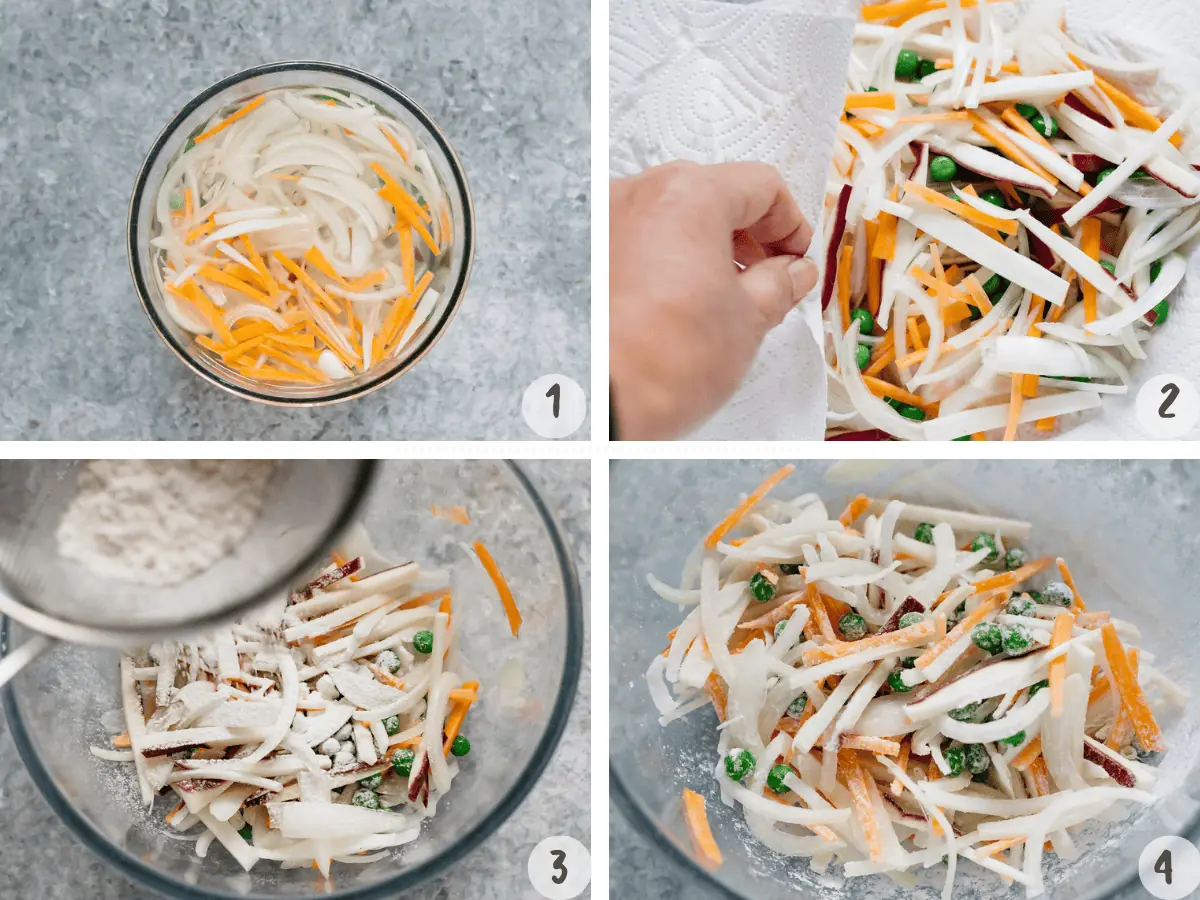
Peel and cut the onion in half, then slice thinly. Cut the carrot into sticks and put them aside. Cut the shiso leaves thinly. Cut the sweet potato into sticks same as the carrot.
Soak them in ice water for around 10-15 minutes. *3
Drain the vegetables well using a colander or paper towels to remove excess moisture completely.
Start heating oil in a deep frying pan to 170 degrees (350°F).
Place the sliced vegetables in a bowl and coat with 2 tbsp flour.
Remove the water bowl and flour bowl from the fridge. Sift in the flour and some salt into the water bowl and mix together. Try to avoid mixing it too much to avoid the batter becoming glutinous.
Add the sliced vegetables and mix them with batter, try not to over mix.
Scoop the mixture with a ladle and with a pair of chopsticks, slide the batter and vegetable mixture into the oil gently.
Deep fry the batter till golden brown on both sides.
Serve with salt or tempura dipping sauce. *4
*1 When I updated the images, I did not have shiso leaves so instead, I used green peas.
*2 Nutritional value is indication only as it is difficult to calculate accurately. Oil absorption is culcurated 10% of ingredients weight. Oil amount displayed in the ingredients list is the absorbed amount. It is required more than 50ml to deep fry.
*3 This step helps to crisp up the vegetables while removing any excess starch.
*4 See tentsuyu recipe here
Calories: 81kcal | Carbohydrates: 6g | Fat: 6g | Saturated Fat: 5g | Sodium: 151mg | Potassium: 50mg | Vitamin A: 1215IU | Vitamin C: 1.2mg | Calcium: 4mg | Iron: 0.3mg
This content was originally published here.