The skin, as an external organ, protects the entire body against harmful external factors. One of these factors is ultraviolet (UV) radiation, which in excessive amounts can lead to premature skin aging, DNA damage, and even skin cancer. Therefore, it is worth supporting skin protection not only with commercially available preparations, but also with a proper diet. Consuming certain vegetables and applying them topically may reduce the effects of UV radiation. The aim of the review was to collect information on the effects of vegetables and their compounds on the skin when used externally or included in the diet. This review summarizes studies on vegetables, such as broccoli, cucumber, kale, tomato, and carrot, which have shown significant activity in skin photoprotection. Additionally, it outlines the bioactive substances present in these vegetables and their effects.
Unions and farmers are at odds over changes to the way foreign workers are employed on Australian farms.
Key points:
Growers say they’ll be forced to employ fewer workers from the Pacific as the Australian government introduces changes to its Pacific worker program.
Under the Pacific Australia Labour Mobility (PALM) scheme workers must be offered 30 hours of work per week.
Currently the hours can be averaged over the duration of the employment, typically nine months for short-term farm workers.
But new guidelines introduced by the federal government will mean that from July next year, the employers will no longer be able to average the hours and must ensure 30 hours are offered each week.
The changes are part of the government’s plan to expand the PALM scheme, merging the former Pacific Labour Scheme and Seasonal Worker Program.
Australian Fresh Produce Alliance chief executive Claire McClelland said the changes would make it harder for farmers to employ workers via the scheme.
“We’ll have no choice but to reduce the number of PALM workers engaged in our workforce,” Ms McClelland said.
“That’s going to have a really significant impact on our relationship with the Pacific, which is something that we’ve built over 10 years through the program.
“It’s particularly disappointing that it will force employers to turn away from a regulated visa program and to focus again on employing backpackers.”
Farmers urge flexibility
As of February, there were more than 35,000 workers on the PALM scheme in Australia, the majority employed in farming.
The alliance’s members are responsible for about 50 per cent of the Australian horticulture sector’s turnover and employ around 7,000 workers on the PALM scheme.
Ms McClelland said farmers required the flexibility to average the hours to factor in weather changes that could delay fruit picking or other farm tasks.
“The challenge with 30 hours a week is that when there’s a weather event or rain or extreme heat, we lose a couple of days of being able to safely have workers access our production sites,” she said.
“Despite there being work about work available across a longer period of time, we can’t actually get into the farm to meet those requirements.
“We need to be able to average those work hours to meet our seasonal fluctuations.”
Changes sensible, union says
A spokesman for the Department of Employment, which has oversight of the PALM scheme, said the guidelines would allow for exceptional circumstances such as extreme weather to be considered when meeting the minimum hour requirement.
But Ms McClelland believed averaging the hours over a four-week period would be a more appropriate outcome for the industry.
Australian Workers’ Union national secretary Dan Walton described the changes as sensible and reasonable.
“There’s a bit of hysteria about [the idea] people are not going to be able to operate,” Mr Walton said.
“If you don’t want to engage PALM workers, then you need to focus on … opportunities for local workers to work on your farms.
“It is unfair entirely to say that we’re going to bring workers in from the other side of the world and sit them on their backside to get paid two hours or an hour or four hours because I didn’t actually get organised and ready to get the harvest underway at the time they arrived.
“Essentially, that is saying that you’re poorly prepared, poorly organised and put in place poor farming practices.
“What we say is workers are not slaves.”
Changes to the PALM guidelines will also require employers to appoint a welfare support person within 200 kilometres of a worker placement.
The requirement will see one welfare support person appointed for every 120 PALM workers.
Thank you for signing up to LivingEtc. You will receive a verification email shortly.
There was a problem. Please refresh the page and try again.
Even though the gardening season is slowly winding down and your kitchen counter is (hopefully) stacked high with a bumper harvest of fresh produce, your vegetable growing activities don’t have to stop now.
If you’re wondering what to do with your vegetable beds or vegetable container garden in fall the good news is you can continue to grow crops right through winter if you want to. Choose the right varieties and they will thrive whatever your climate.
Alternatively if you’re looking forward to taking a break from your vegetable beds now is the time to make sure they’re in the best shape possible before you pack away your spade and head indoors to browse the seed catalogs and plan what you’re going to grow in spring.
Our easy 7 point checklist on what to do with your vegetable beds in fall works either way. Simply skip over points 2 and 6 if you’re taking a winter break.
1. Clean out spent crops
A turban squash will keep for up to 3 months when stored in a cool place away from sunlight
‘It can be tricky to tell when it’s time to pull out a crop,’ says horticulturalist Gail Pabst, who works for the National Garden Bureau . ‘Sometimes vegetables like peas and beans keep producing a few pods here and there, and you may hesitate to pull them out. I remove vegetable plants as soon as production declines. This means you can make way for the fall vegetable garden.’
Remove any spent stems and debris to avoid harboring pests and diseases. Cut down the dying leaves of potatoes, pumpkins and squashes once you’ve harvested the remaining crop. When summer produce like tomatoes are finished they can be added to the compost bin as long as they are disease free. Remove, clean and store any canes you’ve used as supports.
If you have grown beans or peas you can simply cut them back and leave the roots in the earth to decompose. They will feed the soil as they’re packed with nitrogen.
2. Plan your fall vegetable garden
Arugula is a good choice for a tasty winter crop
(Image credit: Jurgute/Getty Images)
Timing is everything when planning a fall garden. Check your expected first frost date in your area, and then count backwards to know when to sow seeds or plants. ‘Look for the “days to maturity” info on seed packets or plant tags to know when to start your fall veggie garden to ensure a good harvest before the first freeze,’ says Gail Pabst. ‘Consider adding low tunnels. These covers help protect crops from cold and extend the harvest season.’ These low tunnels on Amazon will be perfect.
Cooler temperatures not only reduce the amount of time spent watering and the likelihood of pest infestations, but many fall crops taste best when kissed by frost. ‘Some crops, like arugula, taste bitter and bolt when temperatures rise and daylight lengthens, but taste sweetly savory during chilly autumn days,’ says Gail. ‘Kale and Brussels sprouts actually taste the sweetest after a frosty coating.’
Always check the growing information on seed packets or plant tags to see what temperatures your chosen vegetables can tolerate.
3. Dig over the soil in your vegetable beds
(Image credit: April Simpson/Getty Images)
It’s always best to work the soil in fall, particularly if it’s a heavy consistency, as the task will be that much harder in spring. This will make sure the soil is in the best condition for an early start next year.
Pick a sunny day and work over the surface. Don’t dig too deep as this can harm the microbial life in the soil. You can leave large clumps and the frost will do the rest of the work for you by breaking it down.
If you run out of time and can’t work the soil in fall, you can make do by adding a layer of mature compost to the surface followed by a layer of mulch that will remain in place all winter.
4. Plant a cover crop if your plot is going to be dormant
Planted in late summer, crimson clover provides good groundcover and weed control. It looks good too
(Image credit: McKensa/Getty Images)
If you’re more of a summer gardener and your vegetable beds are going to be dormant during fall and winter, now is your chance to inject nutrients into your soil and improve its structure.
Plants grown expressly for building soil are called cover crops or ‘green manure’ and there is still time to sow them. They will be ready for digging in to the soil early next spring. They add carbon and nitrogen to your soil, increase the organic matter, and stop weeds in their tracks.
Reliable cover crop varieties include fall rye, crimson clover, and oats or barley. It beats looking at a patch of bare soil all winter too.
Crimson clover seeds
5. Feed the soil if you’re planting vegetables in fall
Fork out your home made compost in fall
(Image credit: Nikamata Getty Images)
It’s time to enrich the soil in your vegetable plot, especially if you plan to extend your growing season through fall and winter. The scraps you’ve been adding to your composter all summer long should be good and ready, and now is the time to spread a thick layer on your cleared and dug vegetable beds, along with leaf mold or any other soil improvers such as pellet compost.
You’ll know when your compost is good to go as it will have a dark crumbly texture, as well as smelling rich and loamy. Adding this to your vegetable beds in fall will help improve soil structure, balance pH, and feed healthy micro-organisms found in it. There’s no need to turn it in, as rain will wash nutrients down to root level, while worms will also help by pulling down organic matter.
6. Plant a selection of fall vegetables
Kohlrabi is a favorite to plant in fall vegetable beds
(Image credit: Liz Minkert Johnson/Getty Images)
If you live in cooler parts of the country you’ll want to plant fast-finish crops that are ready for harvest before frost arrives. ‘Leafy lettuce greens grow super-fast,’ say the team at Burpee. ‘You can harvest in just a few weeks and keep coming back for a month or more. ‘
Fall vegetables to consider growing include broccoli, Brussels sprouts, cabbage, collards, kale, kohlrabi, and lettuce. According to Burpee, if you live in a warmer climate, it’s much more flexible. ‘All of these can be planted in fall for an all-winter harvest. They love the cooler temperatures and can even take some frost.’
Extending your harvest is easy with coverings built to fit your vegetable bed. A simple cloche can help insulate crops from winter chill. A sturdier cold frame built to cover your whole bed will also protect crops.
7. Mulch any exposed soil
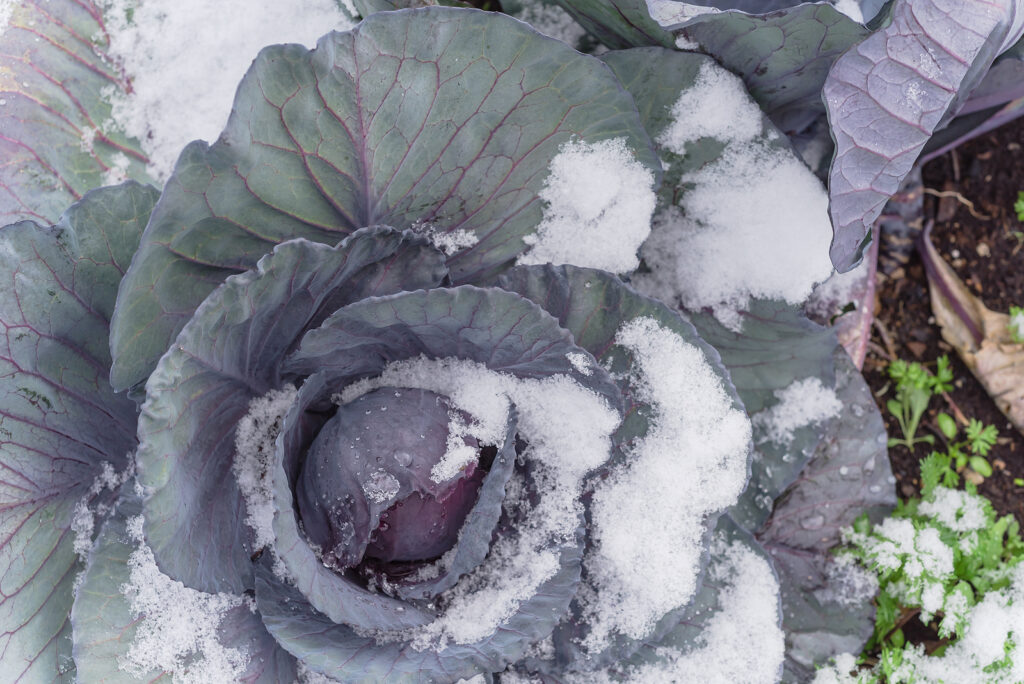
Winter cabbage plants mulched with straw
(Image credit: Ada Summer/Getty Images)
If you have planted crops to grow over winter, it’s important to cover up any exposed soil to hold in warmth. The best way to do this is by adding a protective mulch to your soil. A layer of organic matter spread over the soil surface helps to insulate plants and keep weeds away.
You can use a good thick layer (around 2 inches) of leaf mold or straw. Just pile the stuff on top of the soil, but do keep an eye on it as it will rot down fairly quickly, and top up if necessary. You can also use a single layer of cardboard as a mulch.
Tucking mulch around winter vegetable plants and over exposed soil will also help reduce weeds in spring.
That’s it when it comes to what to do with your vegetable beds in fall. Then all you have to do is either keep an eye on the vegetables you’ve just planted, especially if extreme weather threatens, or alternatively sit back and enjoy the break before you head back to the vegetable bed in spring.
December brings early winter, but not much of a slowdown in the all-year vegetable garden. Cool-season crops planted early in autumn will come to harvest in the next several weeks. (If crops have slowed down, don’t fret. Once daylight drops to less than 10 hours, cool-weather vegetables slip into a no-growth mode. Growth will resume when the light each day increases in January and February.)
If temperatures are in the high 20s or low 30sF, cabbage, chard, and head lettuce and carrots, turnips, and Brussels sprouts can be harvested this month–even from under a blanket of snow. Scallions and fall leeks can be harvested also; the leeks will be about the size of scallions. Onions can stay in the garden under a protective layer of mulch.
If snow has fallen on your winter vegetable garden, do not despair. Snow is akin to an insulating blanket and the cool-season vegetables beneath can still be harvested.
A killing frost or freeze will do the most damage to your vegetable garden in winter–not snow. Protect crops from freezing temperatures with mulch, plastic tunnels, or cold frames. Loose straw or fallen leaves will protect plants from freezing temperatures also.
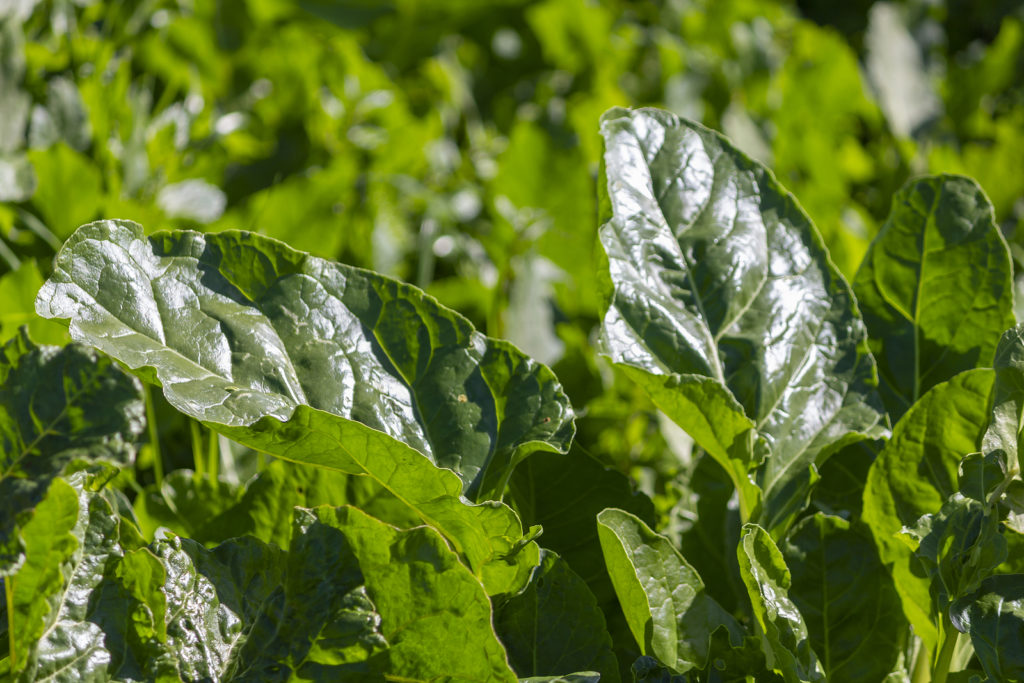
Chard in the winter sun
December harvest tips
December harvest in the Northern Hemisphere
Here is a list of some of the vegetables and fruits that will come to harvest in December: Vegetables: beets (beetroot), broccoli, Brussels sprouts, carrot, cauliflower, celeriac, chicories, chilies, Chinese cabbage, chard, collards, corn, dandelions, fennel, frisse, kale, kohlrabi, lettuce, mustards, stinging nettles, parsnip, peas, peas, purslane, radicchio, radish, rapini, rutabaga (Swede), spinach, butternut squash, sweet potato, turnips. Fruit: late apples, avocadoes, banana, Buddha’s hand citrons, cherimoyas, feijoa, grapefruit, guava, kiwifruit, kumquat, limes, early mandarins, olives, blood oranges, Cara Cara oranges, passionfruit, persimmons, pomelos.
Also at the farmers’ market this month: Meats: Dungeness crab, beef, lamb. Holiday items: wreaths, Christmas trees, pinecones, mistletoe, dried fruits, smoked salmon, nuts, cheeses, oils, pickled vegetables, and fruits.
Harder to find this month: pastured eggs, apples, pomegranates, pears, and avocadoes.
Going out of season: strawberries, raspberries, tomatoes, peppers, fresh goat cheese, chicken.
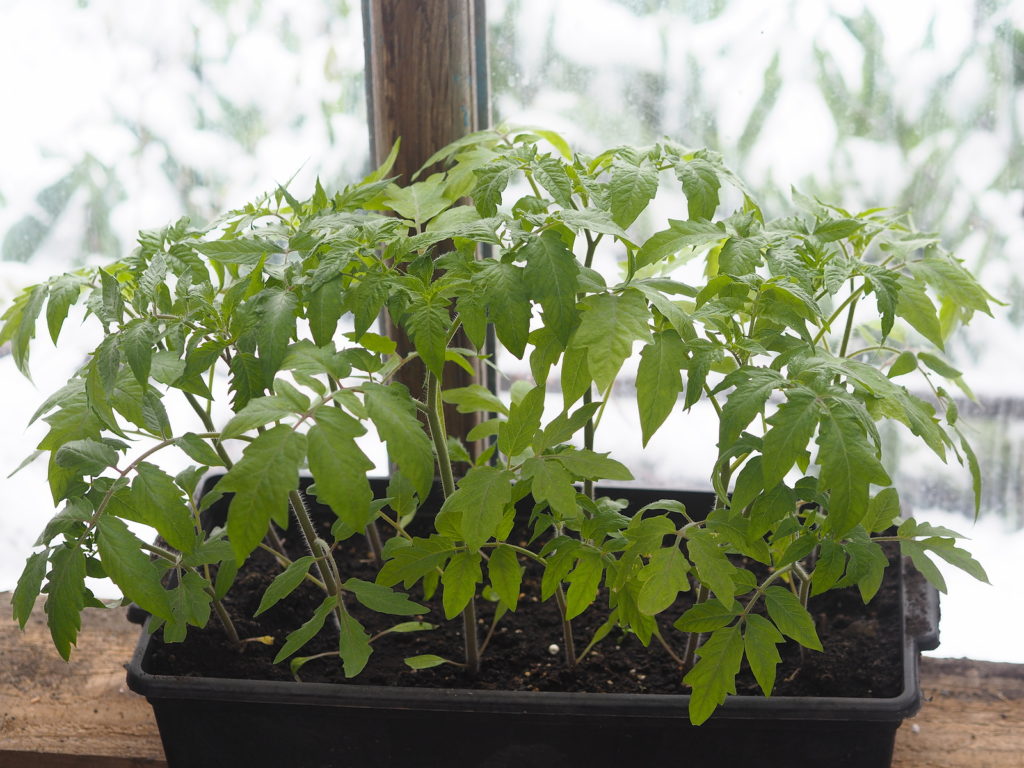
Tomato seedlings
December planting tips
Be patient, crops grow slowly during short winter days. (There is no growth when the daylight is less than 10 hours. Don’t expect new growth until mid-January.)
If you are planting this month, here are some suggestions by region:
General garden clean-up. Clean up parts of the garden that are not being used. Place compost and leaf mulch on the vacant part of the garden. Check windbreaks, mulches, and other winter protection before and after storms. Install burlap screens and add mulch if necessary. After storms remove broken branches from orchard trees and check the weight of snow still on branches. Water trees and the garden in dry winter regions. Make sure tools have been cleansed, sharpened, and stored in a dry place. Coat the metal part of tools with light oil to prevent rust. Wooden handles can be painted a bright color to make them easier to find. Store tomato, bean, and other poles undercover. Store hoses coiled and shut off garden faucets. Check your outdoor storage areas for leaks.
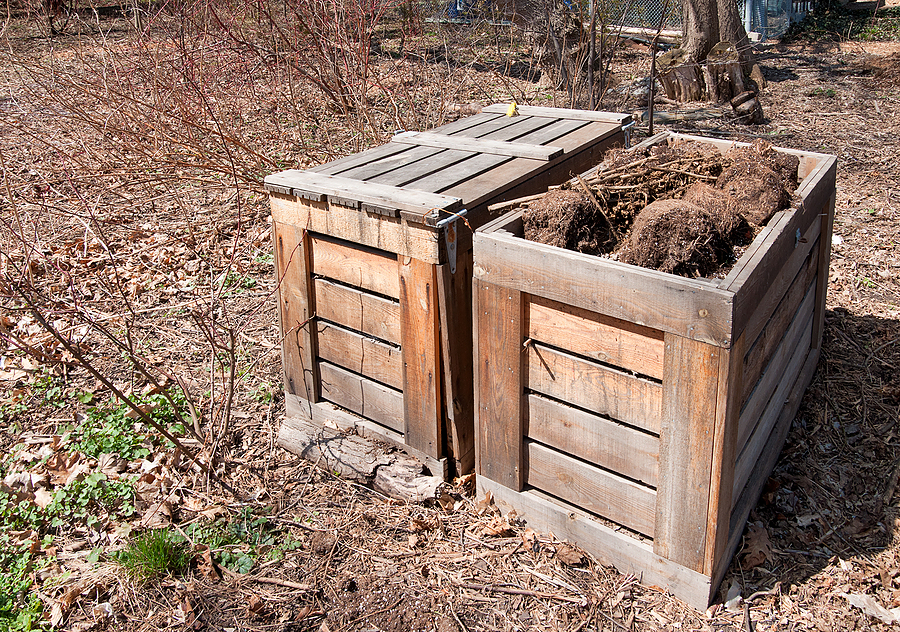
Compost. Turn the compost pile with a fork and water to speed winter disintegration. You can build a compost bin with wire or boards as small as 3 or 4 feet (.9-1.2m) across and 4 or 5 feet (1.2-1.5m) high. Place and pack leaves in the bin in layers 1 foot (30cm) thick; add a few shovelfuls of aged cow or horse manure to each layer. Separate layers with 1 inch of garden soil. Keep the pile moist not wet and turn it every 2 or 3 months.
Soil preparation. Turn under the last of the vegetable remains. Test soil. If acid, add a layer of lime. If lacking in nutrients add ground phosphate rock, granite dust, or greensand to the garden by broadcasting these rock powders over the soil. The newly broken ground can be left rough through the winter; rain and frost will work the rock powders into the soil. Now is a good time to incorporate compost and green manure into the soil. It will blend in with the soil over winter. Rotary till or spade the material into the garden soil and let sit on the rough surface until spring. Add well-rotted manure to the area or trenches where you will plant next year’s runner beans.
Winter cold frame tune-up
Greenhouse and Cold Frame. Clean, disinfect, and ready the greenhouse for winter. Check insulation to make sure the greenhouse can maintain the minimum temperature. Clean the glass to allow for the greatest winter light. Clear gutters before the first storms. Ventilate the greenhouse on mild and warm days; lack of air movement can encourage diseases. Gradually give plants less water so that they will better tolerate low temperatures; disease will also be less of a problem. Check plants regularly to pick off any dead or dying leaves before they start to rot. Toward the end of the month in less severe winter regions, you can start seeds of many spring plants that can go into the cold frame or into the garden in February and March. Witloof chicory and rhubarb can be started this month for harvest in spring. Onion seed, cabbage, cauliflower, broccoli, leaf lettuce, mustard, radish, and spinach can be sown in the cold frame now.
Check the seal between the lid and the top of your cold frame to make sure it is tight. The frame edge can be lined with weather stripping or a strip of used carpet underpad to ensure cold air does not enter the frame.
Where temperatures are very cold, a piece of plastic sheeting can be stretched over single-layer lids made of glass, plastic, or Plexiglas. Double layers of glass–or an added layer of plastic sheeting–will provide the greatest insulation.
The height of a cold frame should be just taller than the height of the tallest crop that you are growing in the frame. Always make a frame slightly taller than the crop you are growing at maturity.
A stackable cold frame will serve this purpose. Low frames are all that is needed for spring crops. But for winter growing, stackable frame units 6 to 8 inches (15-20cm) tall all around can be used to raise the frame. A cabbage plant may require four 8-inch (20cm) units. Place the sloping unit–sloping toward the South–on top. You can secure stacking frame units with pegs that fit into the unit below. Plastic sheeting, a tarp, or an old carpet can be stretched around the inside of the frame to insulate and keep wind and cold from coming through the gaps.
Container gardens
Move tender container plants indoors or into cold frames for winter. Half-hardy container plants can go into the cold frame; sink clay pots with plants into the ground. Shallow containers should be sheltered away from frost and freezing weather. Set containers up on low supports so that they drain freely. Check these plants regularly. Remove spent plants from containers and compost them. Clean unused containers and store them for winter. In mild regions, move container plants away from eves into sheltered positions.
Winter pruning fruit trees
Orchard and fruit
Strawberries. Select strawberry beds now and work in plenty of compost. You can start a new bed with the strongest runners from old strawberry plants. A strawberry bed should be good for three years; even so, start a new bed each year. Mulch existing beds with chopped leaves.
Planting fruit trees. Plant container-grown fruit trees where the ground has not frozen. Plant bare-root fruit trees in mild-winter regions.
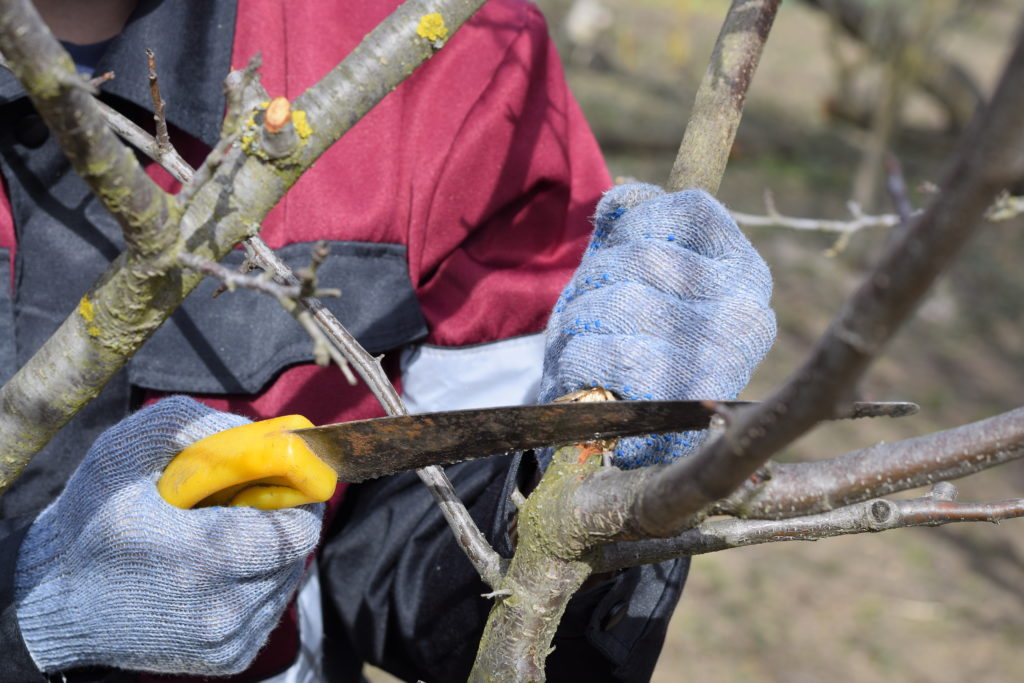
Pruning fruit trees. Prune established apple and pear trees. Do not winter-prune cherries, damsons, peaches, or plums.
Put old fruit trees on a three-year pruning schedule: cut back one-third of the tree’s branches each year for three years to revitalize the tree. Allow one-third of the new vertical shoots to remain and your harvest will be renewed next summer.
Prune out broken, dead, or diseased branches and crossing branches. Make sure tree stakes are held firmly in place. Apply dormant oil to control over-wintering pests and disease.
Prune back newly planted apple and other fruit trees immediately after planting reducing side shoots to about one-half. Insert tree stakes before planting and make sure newly planted trees are secure. Water new trees deeply and add a fresh layer of mulch after planting.
Prune berries. Prune black currants, gooseberries, raspberries, and brambles after a hard frost. Pruning can continue until late winter. Cut blackberry and hybrid berry canes that fruited this year back to soil level; tie newly formed canes to supports. Prune established black currant bushes by removing old shoot from the center. Shorten the lead shoots of gooseberries and red currants by half and side shoots to 2 inches. Remove all weak shoots. After pruning, apply a mulch of well-rotted manure or compost.
Prune grapes. Prune grapes as soon as they are dormant; remove one-third to one-half of the old wood and thin out undergrowth. Grapevines can be severely cut back to 3-bud spurs along the main branch.
Fruit maintenance. Clean up dropped fruit and leaves. Compost leaves and fruit are not affected by pests or diseases. Place mouse guards, tree wraps, hardware cloth, or chicken wire around tree trunks to protect them from rodents, rabbits, and deer this winter. Paint the lower trunks of young trees to prevent winter sunscald. Before the soil freezes, mulch trees in a ring 8-12 inches (20-30cm) from the trunk.
Remove nests of tent caterpillars and cocoons attached to branches with a stiff brush or broom. Save the egg masses of the praying mantis. Learn to distinguish between the cocoons of both. On a mild day, apply a dormant oil spray to smother scale and aphids.
Southern Hemisphere vegetable garden in December
December brings the arrival of summer to the Southern Hemisphere vegetable garden. Warm-season crops can still be planted this month. Spring-planted crops will come to harvest this month.
If you are preparing for your summer Christmas holiday, make sure that the vegetable garden is well-mulched before you go. Mulch will keep the weeds down and conserve the moisture in the soil while you are away.
December is not too early to consider breaking out the shade cloth to protect the tender plants from the summer heat that should be upon us next month.
And December is the month to plan ahead for winter in the southern hemisphere. Winter crops such as beets, broccoli, Brussels sprouts, cabbage, cauliflower, celery, leeks, and cool-weather Chinese vegetables can be planted before this month is finished. By the time they are up to size, the summer weather will be on its way out.
Look for the first harvest of early tomatoes towards the end of this month. How about a garden-fresh tomato sandwich on Christmas Day! Pinch out the growing tips on cucumbers, pumpkins, and squash now before they get a firm grip on the rest of the garden. Also, begin to monitor fruit trees to make sure young limbs aren’t carrying too much weight.
Here is a planting schedule by region for the southern hemisphere in December:
December is the “frosty month” in the northern hemisphere. Frosty, but not the coldest, true winter is yet to come.
Winter arrives this year on December 22, the winter solstice. On the first day of winter, the sun reaches the solstice when it will go no further south. This will be the shortest day of the year in the northern hemisphere (and the longest in the southern hemisphere).
With the shortest day of the year at the winter solstice, every day after will grow longer as the sun turns northward. The ancient Romans celebrated the sun’s return with a holiday called Saturnalia. The goddess of the hearth–and home, Vesta, had her special time in December.
Ancient Celtic priests of northern Europe, known as Druids, also had a special festival for their sun god in December. They celebrated with sprigs of mistletoe which were considered a charm.
The Norse and Anglo-Saxon tribes of ancient Europe burned a huge oak log once a year during December to honor Thor, the god of thunder. That was the Juul (pronounced yool) log, which we now call the Yule Log.
The ancient people of Scandinavia once worshipped trees. About 1,200 years ago, the Christian missionary Winfrid (now known as Boniface) stopped the sacrifice of a boy prince on an oak tree. Winfrid cut down the “blood oak”, and legend says a young fir tree appeared in its place. Winfrid told the gathered people that the new fir was the tree of life, representing Christ.
The exact date of Christ’s birth is not known, but in A.D. 354 the Christian Bishop Liberius of Rome decreed that the people of Rome would celebrate Christ’s birth on December 25, usurping the day they already observed as the Feast of Saturn, celebrating the birthday of the sun.
So in December, just days after the winter solstice, the celebration of The Light of the World is marked with mistletoe, Yule logs, and Christmas trees.
In 2010 Manti Maifadi wrote a children’s book in Sesotho called Tshimong ya Meroho le Naledi (In the Vegetable Garden with Naledi). She was on maternity leave from her job in the National Department of Health as a Medical Scientist, while expecting the birth of her youngest child, Naledi.
The book is a fictional story that centres on a vegetable garden and was self-published in 2012. In the same year, Manti and her husband Sam, decided that they wanted to create a real-life vegetable garden; a physical space where children could come and “walk into the book”, to learn how food grows, roam around barefoot, and engage with the plants and the land.
In 2015 they found some land on the outskirts of Pretoria and moved from their city home to the three-hectare plot that they named Naledi Farm.
“The idea was to create a centre for teaching and healing. To get people away from the buzz of the city, to unwind and relax.”
They started with a simple ‘Harvest Table’ where friends would come once a month to enjoy the food from their garden and listen to the musings of an invited speaker. This soon grew into a more diverse operation that hosted sustainability workshops, children’s camps as well as an events venue and an artist residency programme.
Naledi Farm is a business, and there is no getting away from that, but it is an enterprise that aims to change people’s lives. They advocate for sustainable practices that promote self-care, independence and environmental responsibility.
“We provide the space where people can breathe a little before going back to the ever-demanding modern world. Hopefully, we inspire them to start their own little patch and grow a few rows of edible gardens. If we can do it, then anyone can do it…If we can inspire one person then our job is done.”
Manti is aware that many people are going through a lot, living behind high walls, bombarded by traffic, noise and other inescapable features of urban life that negatively affect their emotional and mental health. Trapped in this concrete jungle, with little to no chance of breaking free. It is the experience and values of her childhood growing up in QwaQwa, in the Free State, that she wants to extend to others.
“I don’t remember a day we had to buy vegetables. We were not wealthy but there was always plenty for us to eat from my father’s garden. That was my upbringing.”
To advocate for others to have peace in their lives is no small mission, and Manti has made it the centre of her business; a business that wants to heal the world, one busy city dweller at a time. DM
It’s Women’s Month in South Africa and so, throughout August, The Actionists will exclusively be featuring stories of inspiring women who are working to make a positive change in the world around them.
The Actionists was launched in early 2023 by photographer Thom Pierce. It consists of on-the-ground problem solvers, community activists, climate campaigners and human rights defenders who engage in direct action. They are people anyone can turn to in difficult circumstances: a growing community of people who care about the future of South Africa. Through a series of photographic stories, Pierce profiles these people. Through a website, discussion forum and social media, the aim is to provide ways for people to get involved.
Nominate Actionists in your circle at www.theactionists.co.za or email [email protected]
Japan has a lot of quasi-holidays, and one of them is Vegetable Day. It’s observed on August 31, or 8-31, because the numbers 8, 3, and 1 can be read in Japanese as ya, sa, and i, and yasai is the Japanese word for “vegetable.”
Since Vegetable Day isn’t an official holiday, students and workers don’t get the day off. Instead, it’s an occasion for supermarkets, restaurants, and nutritionists to have a little pun-based fun in their marketing and offerings. This year, McDonald’s Japan decided to mark Vegetable Day by putting out a tweet saying “Did you know…potatoes are actually vegetables? August 31 is Vegetable Day.” Underneath the text is a picture of a pack of McDonald’s French fries standing in a potato field, with giant-font text encouraging “Let’s eat vegetables.”
“Potatoes are vegetables” might seem like an obvious observation but there’s a bit of a linguistic wrinkle here. The Japanese word for potato is “imo,” with “jagaimo” being the easiest way to specify russet potatoes or similar types (as opposed to, say sweet potatoes). For example, if a Japanese person were talking about the potatoes in a plate of curry rice, or in the traditional simmered dish niku jaga, they’d call those potatoes “imo” or “jagaimo.” Those are also the most common way to refer to whole potatoes harvested from a field or sitting in a market.
“Potato” itself exists in Japanese too, though, as an English loanword. However, it’s usually used to talk about potatoes used in Western-style cooking. French fries, for example, are called “fried potato” (pronounced like “furaido poteeto”) in Japanese. But with French fries being the most popular way to eat Western-style “potatoes” in Japan, and “furaido” taking an extra four syllables to say, a lot of French fry fans simple call them “potatoes” in conversation, so McDonald’s Japan’s assertation that “Potatoes are vegetables” probably sounds closer to “French fries count as vegetables too!” to a lot of deep-fried spud supporters.
Either way, though, the championing of such a deliciously indulgent choice of vegetable on Vegetable Day had a lot of commenters simultaneously chuckling and craving fries.
“Since French fries are vegetables, it’s OK for me to eat them while dieting, right?” “I make a point of eating French fries regularly, for my health.” “Ah, so no need to resist the urge to eat them!” “A high vegetable intake promotes personal well-being.” “I always suspected French fries were diet food…and burgers [with tomato and lettuce] count as vegetables too, right?”
▼ This is basically a salad bar, right?
It’s worth noting the cultural context that McDonald’s Japan’s message comes in. Unlike school lunch debates in the U.S. where certain parties attempted to count French fries and ketchup as fulfilling vegetable nutrition quotas, it’s widely accepted in Japanese society that French fries are, in fact, not very healthy, and are meant to be more of an occasional indulgence than a major component of your daily diet. You can see similar manifestations of that sort of thinking in how Japan has no shortage of dessert cafes and restaurants specializing in things like pork cutlet, but still a relatively slender population overall.
▼ And McDonald’s Japan itself has both side salads and cups of edamame and corn on its menu.
So it’s pretty clear that McDonald’s Vegetable Day tweet about fries in the stomach was made with tongue in cheek. Still, if you were having trouble between deciding on an order of fries or the new White Chocolate Strawberry Frappe & Macaron Raspberry dessert drink for your next McDonald’s cheat day visit, you now have an excuse to order both, since you’re actually just eating the fries to get your veggies for the day.
A delicious vegetable lasagna no pasta noodles necessary! Yes, it’s all veggies, cheeses and marinara sauce for a tasty gluten free, vegetarian dinner. (You won’t miss the noodles!) This is the perfect dish for using fresh veggies from the garden or just when you are craving Italian food on a gluten free diet.
This post contains affiliate links. For more information visit our policies page.
I’ve been wanting to try this for a long time. I love zucchini and eggplant by my husband does not. So one night when he wasn’t going to be home for dinner I made this vegetable lasagna without noodles for myself and I loved it.
I knew I would. What’s not to love? It’s full of a variety of cheeses and creamy ricotta and some of my favorite veggies. I also liked it because it was gluten free and vegetarian which is a nice change sometimes.
Unfortunately neither my hubby nor my son will eat this but maybe that’s a good thing as that means more for me. I frozen a few pieces for a quick and tasty lunch!
I pretty much followed the same method as my mom’s unforgettable lasagna. For a traditional lasagna I really think it’s the best I ever had so check it out.
However I skipped the meat sauce in the original recipe. If you want you can easily add ground beef, ground turkey or even Italian sausage to the marinara sauce to make a meat sauce.
Just heat up a pan to medium heat and brown the ground beef. Then add the sauce and mix well. Cook for a few minutes so the flavors blend together well.
Recipe ingredients I used.
The basic ingredients I used I this vegetable lasagna were vegetables, ricotta cheese, egg yolks, fresh parsley, marinara sauce and cheeses. If you want to add a bit of heat you can also use some hot pepper flakes. Mix it in with the sauce.
Fresh Vegetables I used eggplant, zucchini and bell peppers for this dish. There aren’t many other veggies that I think would work well as “noodles” so I would stick with these three or use just one of them if you want. Fresh spinach would also work well in addition to the noodle layers made with the veggies.
Ricotta Cheese I like whole milk ricotta cheese because it’s richer and tastier in my opinion but you can use lower fat if you want.
Marinara Sauce I love Rao’s marinara sauce and it was great in this recipe. I also love Trader Joes marinara in a can. I really like the taste of both and I use them a lot in my cooking because of their amazing flavor. However you can just use your favorite pasta sauce for this recipe.
Cheeses I like the combination of parmesan and mozzarella cheese for this dish. The parmesan adds flavor while the mozzarella as that gooey cheese factor. Provolone is also good in a dish like this.
Egg Yolks & Parsley This helps thicken the ricotta mixture and is necessary. The fresh parsley is for flavor and color. You could also use fresh basil leaves if you love that flavor but parsley works great.
How to cut the veggies.
Start by cutting off the tops and bottoms of the bell peppers and cleaned out the seeds. It should look like wide tube. Cut that in half and you will get two flat pieces of peppers.
The key for the eggplant and zucchini is to slice them very thin. I use one of my favorite kitchen tools – this mandoline that I bought at a tupperware party. However I also have one from Aldi that was $5 and it works great too! If you have good knife skills just make sure you slice them lengthwise very thin.
If you decide to use other veggies just make sure you slice them thinly and if they are a harder vegetable like carrots for instance, you will want to precook them in the microwave or by boiling them first.
How to make vegetable lasagna no pasta.
Preheat oven to 400°F and spray a baking or casserole dish with nonstick cooking spray and set aside.
Step 1: The hardest thing about this dish is getting the veggies soft. Get a large pot of water boiling over high heat. Cut the peppers as mentioned above and then add the peppers and cook for 6 minutes. Take them out and let them cool. Peel off the skins if you can and set aside.
You can also cook them in the microwave for about 5 minutes. It’s hard to get the skins off though but you can keep them on if you want.
Step 2: Get out a medium bowl and add the ricotta, egg yolks and chopped fresh parsley. Mix well and set aside.
Step 3: Get out the prepared baking dish and add a single layer of eggplant, then spoon ⅓ of the ricotta mixture over top. Pour ⅓ of the tomato sauce over the layer of ricotta filling and then top the layer of marinara sauce with ⅓ of the parmesan cheese and then ⅓ of the mozzarella cheese.
I did a layer each of peppers, zucchini slices and eggplant slices.
Step 4: Begin again with the zucchini slices for the next 2nd layer and finally with the peppers for the 3rd layer. The order for each layer is veggies -> ricotta -> marinara -> cheese then repeat.
Step 5: Cover with a piece of aluminum foil and place the preheated oven. Bake for 30 minutes then take off the foil and bake for 15 minutes more until the veggie lasagna is fork tender and the cheese is golden brown. Note baking time may vary depending on the thickness of the veggies.
You can also place it under the broiler for 3-4 minutes to brown the cheese if it is not to your liking after baking for a total of 45 minutes.
Step 6: Let set for 15 minutes to cool and set up before serving. Store leftovers in an airtight container. Please scroll down to view a printable recipe card.
As you can see below this is a bit runny because of the liquid in the veggies but it does not taste watery in my opinion. This also has a lot of ricotta cheese which I like but if you want you can skip the top layer if you don’t like it as much as I do.
Serve this veggie lasagna with a simple green salad and add some garlic bread if you aren’t gluten free of course!
More gluten free vegetable main dishes to try.
Below are some of my favorite recipes for veggie main dishes that don’t have any bread, pasta, etc. so they are gluten free too. These recipes are perfect for meatless meals or when you you want something a bit lighter for dinner.
Well I hope you like this veggie lasagna without pasta as much as I did. Unfortunately my husband doesn’t eat zucchini nor eggplant so this was all for me. But maybe that’s a good thing? 😉
Cook Time: 45 minutes
Total Time: 1 hour
A delicious veggie lasagna no pasta! Yes, it’s all veggies, cheeses and marinara sauce for a tasty gluten free, vegetarian dinner. (You won’t miss the noodles!)
Instructions
Notes
I like Rao’s marinara and Trader Joe’s Tuscan Marinara in a can because these sauces have more of the savory garlic and onion flavor and are not too sweet. However you can use whatever pasta sauce you like best.
If you want to add a bit of heat you can also use some hot pepper flakes and mix it in with the sauce.
Also I did not use added salt or black pepper. The sauce and cheeses tend to add enough of salt for my tastes but you can sprinkle salt and ground black pepper over the veggies if you wish.
Lastly if you want you can use minced fresh basil leaves in place of the parsley or in addition to it if you like that flavor.
Kakiage is a type of Japanese tempura made from an assortment of thinly sliced vegetables. It’s deep-fried to golden perfection making it so crispy and delicious.
Kakiage is a popular type of Japanese tempura that makes for the perfect crowd-pleasing party platter food, appetiser, or side dish. It’s made from an assortment of thinly sliced vegetables (and sometimes seafood) woven together in a batter to create crispy tempura fritters. Although its intricate presentation and delicious flavour can make it seem complex, it’s relatively easy to make. It can also be made vegan-friendly and served in many different ways such as kakiage donburi, kakiage soba, and kakiage udon so it’s a fantastic and versatile dish!
What is Kakiage?
Kakiage tempura is a popular Japanese dish that consists of mixed vegetables and sometimes seafood deep-fried in tempura batter. It’s a popular side dish and can be served in many different ways, such as kakiage donburi, kakiage soba noodles and kakiage udon. The word “kakiage” translates to “mixed frying” in English, which perfectly describes the essence of this dish. The main ingredients used for kakiage are thinly sliced vegetables such as onions, carrots, green beans, gobo burdock root, and sometimes shrimp or squid. These ingredients are then lightly coated in a tempura batter made from flour, water, and sometimes egg and fried together to create deliciously crispy fritters.
To bring some aromatic warmth, freshness, and flavour to the kakiage, try adding things like ginger, scallions (green onion), or Japanese herbs like shiso leaves or mitsuba.
Batter Mixtures
The batter plays an integral role in achieving that perfect crispy texture for your kakiage. It typically consists of flour mixed with ice-cold water. Some variations may also include additional ingredients like egg, baking soda, or even carbonated drinks to create an extra airy and crispy coating.
Dipping Sauces
To further elevate the flavours of kakiage, various dipping sauces are commonly served alongside it. The most popular options include soy sauce-based ponzu sauce (citrusy and tangy) and tentsuyu (tempura dipping sauce).
Step by Step Instructions
Tempura is simple and although it requires a little bit of skill to make perfectly crispy tempura every time, it is achievable by following these steps.
Tips for Making Kakiage
Serving Suggestions
Kakiage can be enjoyed on its own served with a dipping sauce like tentsuyu (tempura dipping sauce made from dashi, mirin, and soy sauce) or ponzu (citrus-based soy sauce). Tentsuyu is my personal recommendation because its savoury-sweet umami flavour is crafted to accompany tempura and truly elevates every bite. Kakiage can also be topped with flavoured salt which has become a trendy addition in other countries but isn’t traditional in Japan.
Pairing suggestions with other dishes or soups
Kakiage also works wonderfully as a side dish as it adds a delicious crunchiness to any meal. It pairs well with steamed rice, noodles, and soups.
Q : What is the difference between tempura and kakiage?
A : Kakiage is a type of tempura. Tempura is typically characterized by its individual pieces of lightly battered seafood or vegetables however kakiage consists of various ingredients mixed together in a fritter-like form. It’s still delicate and light like other tempura but is more substantial.
A : Kakiage is a type of tempura. Tempura is typically characterized by its individual pieces of lightly battered seafood or vegetables however kakiage consists of various ingredients mixed together in a fritter-like form. It’s still delicate and light like other tempura but is more substantial.
Japanese Kakiage Tempura : Crispy Vegetable Fritters
Kakiage is a type of Japanese tempura made from an assortment of thinly sliced vegetables. It’s deep-fried to golden perfection making it so crispy and delicious.
Course: Main Dish, Side Dish
Prep Time 15 minutesminutes
Vegetables
Tempura Batter
Sift flour into a bowl and refrigerate with water in another bowl.
Peel and cut the onion in half, then slice thinly. Cut the carrot into sticks and put them aside. Cut the shiso leaves thinly. Cut the sweet potato into sticks same as the carrot.
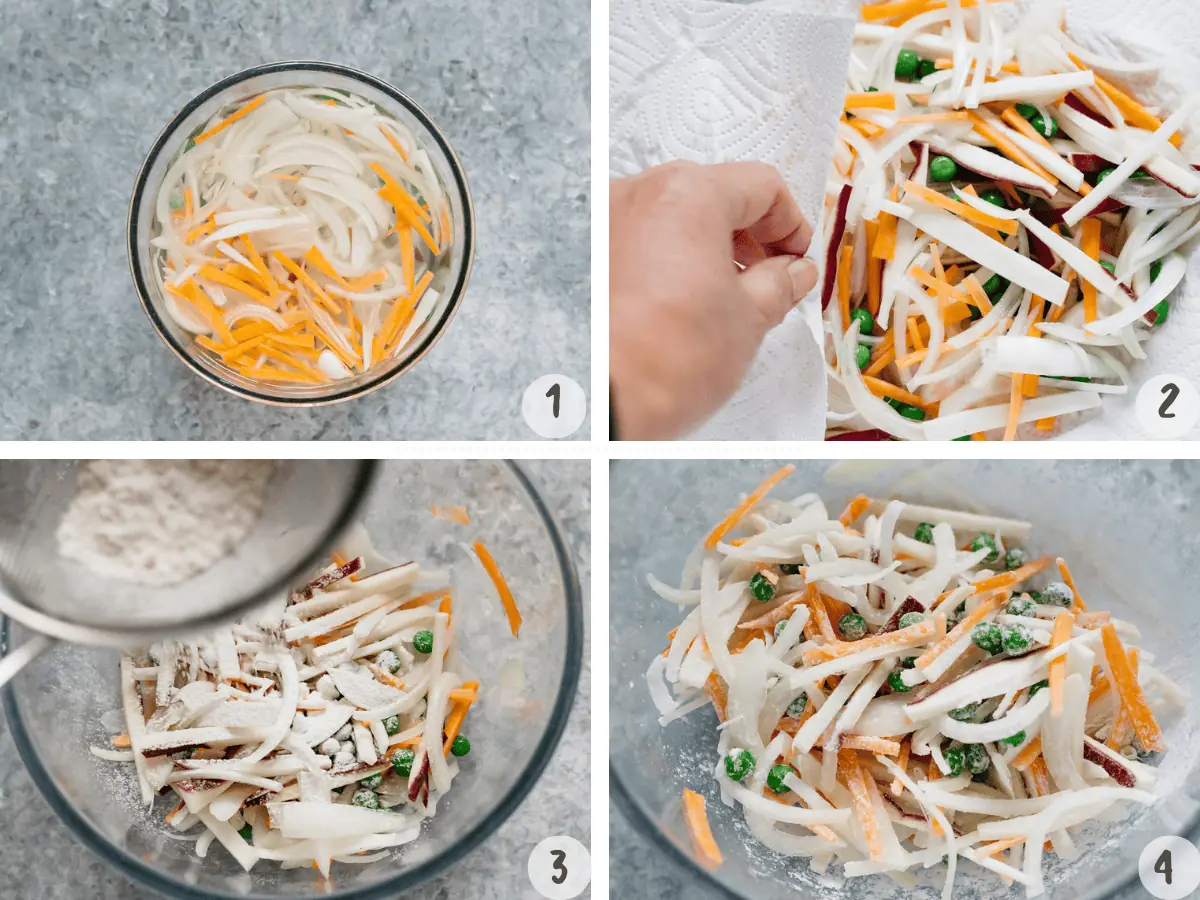
Soak them in ice water for around 10-15 minutes. *3
Drain the vegetables well using a colander or paper towels to remove excess moisture completely.
Start heating oil in a deep frying pan to 170 degrees (350°F).
Place the sliced vegetables in a bowl and coat with 2 tbsp flour.
Remove the water bowl and flour bowl from the fridge. Sift in the flour and some salt into the water bowl and mix together. Try to avoidmixing it too much to avoid the batter becoming glutinous.
Add the sliced vegetables and mix them with batter, try not to over mix.
Scoop the mixture with a ladle and with a pair of chopsticks, slide the batter and vegetable mixture into the oil gently.
Deep fry the batter till golden brown on both sides.
Serve with salt or tempura dipping sauce. *4
*1 When I updated the images, I did not have shiso leaves so instead, I used green peas.
*2 Nutritional value is indication only as it is difficult to calculate accurately. Oil absorption is culcurated 10% of ingredients weight. Oil amount displayed in the ingredients list is the absorbed amount. It is required more than 50ml to deep fry.
*3 This step helps to crisp up the vegetables while removing any excess starch.
“Prescribing” fruits and vegetables to adults and children is associated with increased consumption of these foods and multiple health benefits, according to a new study.
The analysis, published in the American Heart Association’s peer-reviewed journal Circulation, looked at people at increased risk for cardiovascular disease who participated in produce prescription programs for an average of six months, and found they increased their consumption of fruits and vegetables. This shift was associated with improved body mass index, blood sugar and blood pressure levels, researchers found, as well as a decrease in food insecurity.
“Poor nutrition and nutrition insecurity are major drivers of chronic disease globally, including cardiometabolic conditions like Type 2 diabetes and their cardiovascular consequences, including heart failure, heart attack and stroke,” Dr. Mitchell Elkind, chief clinical science officer of the American Heart Association and a tenured professor of neurology and epidemiology at Columbia University, said in a news release. “This analysis of produce prescription programs illustrates the potential of subsidized produce prescriptions to increase consumption of nutritious fruits and vegetables, reduce food insecurity and, hopefully, improve subjective and objective health measures.”
In produce prescription programs, patients receive electronic cards or vouchers to access free or discounted produce at grocery stores or farmers’ markets, the authors explain.
The analysis, which is thought to be the largest study of the impact of produce prescriptions, encompassed more than 3,800 participants across nine programs around the country. Almost half (1,817) were children with the average age of 9, while 2,064 were adults with an average age of 54. More than half of households in the study reported experiencing food insecurity.
Participants received a median of $63 per month to buy produce and completed questionnaires about fruit and vegetable consumption, food insecurity and health status. Routine testing was also performed to check health status, but there was no control group to compare results, a limitation of the study.
Still, the results suggest produce prescriptions could be an important tool for improved health. For example, adults reported their fruits and vegetables intake increased by nearly one cup per day, and children’s intake increased by about a quarter cup per day. The odds of being food insecure also dropped by one-third.
“Future research will need to include randomized controlled trials to offset any potential bias and prove more rigorously the benefits of produce prescription programs,” Elkind added. “The American Heart Association’s new Food Is Medicine Initiative will be focused on supporting such trials.”
By Rubén Morales Iglesias: The recently established Vegetable Interdiction Team (VIT) confiscated over 4,700 pounds of contraband vegetables, including cabbage, onions, tomatoes, habanero peppers, sweet peppers valued at $16,000 plus, according to the Ministry of Agriculture, Food Security, and Enterprise (MAFSE).
In a press release circulated by the Government of Belize Press Office, MAFSE said the VIT had pledged “to intensify collaborative efforts and increase the frequency and effectiveness of its operations”.
“Farmers have complained about contraband and the MAFSE has acted on their complaints,” MAFSE said in an accompanying social media post.
“The Vegetable Interdiction Team has recently been on the move and several thousand pounds of illegal vegetables have been confiscated. Contraband affects the sale of local products- don’t obtain them or buy from vendors who sell.”
These proactive measures, said the release, have resulted in increased surveillance which have in turn led to the confiscation of 1,278 pounds of cabbage, 2,253 pounds of onions, 983 pounds of tomatoes, 86 pounds of habanero peppers and 130 pounds of sweet peppers, which have a total value of $16,190.40.
MAFSE said that in response to farmers’ complaints it set up the VT comprising officials from various government departments and agencies, including its own Extension Service and Supplies Control Unit, the Customs Department, the Belize Agricultural Health Authority, Belize Marketing and Development Corporation, and the Mobile Interdiction Team of the Police Department.
The confiscation came after Minister of Agriculture Jose Abelardo Mai, Chief Executive Officer Servulo Baeza, and members of the VIT met with farmers and producers from the Orange Walk, Corozal, and Belize Districts at the Yo Creek Agriculture Station in the Orange Walk on July 24.
“During the meeting, concerns were raised about the increase in contraband activities, the presence of illegal vegetables and fruits in local markets, and the challenges farmers face in selling their products due to the competition with contraband items,” the press release said.
“Acquiring illegally obtained vegetable products may result in the confiscation of such products and imposition of fines,” MAFSE said.
“The VIT will continue its heightened frequency of actions to ensure Belizean products are protected, and the ministry assures its unwavering support for farmers as they relentlessly work to ensure the food security of the nation.”
Advertise with the mоѕt vіѕіtеd nеwѕ ѕіtе іn Belize ~ We offer fully customizable and flexible digital marketing packages. Your content is delivered instantly to thousands of users in Belize and abroad! Contact us at mаrkеtі[email protected]еаkіngbеlіzеnеwѕ.соm or call us at 501-601-0315.